
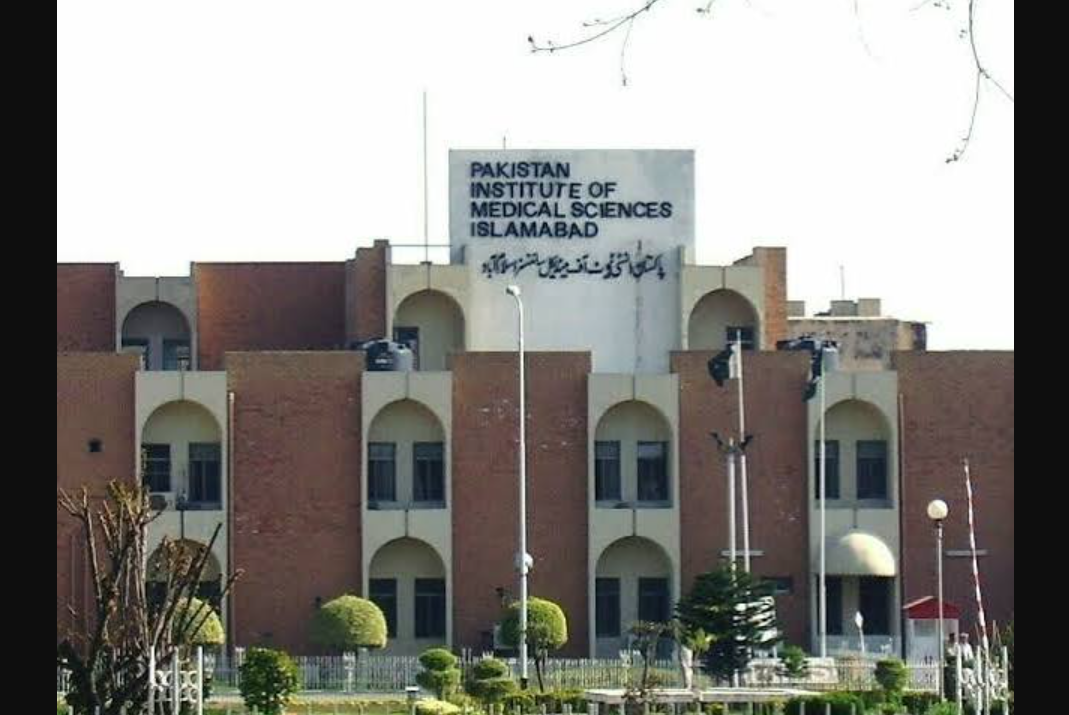

The appointment of Capt (Retd) Muhammad Mahmood as Federal Health Secretary has sparked controversy following the tragic fire at the Pakistan Institute of Medical Sciences (PIMS), where 14 newborns reportedly died.
The development came after Prime Minister Shehbaz Sharif suspended then Health Secretary Muhammad Aslam Ghauri following the deadly incident.
Mahmood, a BS-21 Pakistan Administrative Service officer, was serving as Secretary Housing and Works when he was given additional charge of Federal Health Secretary for three months.
The appointment has triggered questions about the government’s decision at a time when the authorities are facing intense scrutiny over the PIMS fire and the safety of newborn patients.
PIMS Fire Inquiry Is Being Led by Shahid Khan
Government officials have clarified that Mahmood is not heading the inquiry into the PIMS nursery fire.
The high-level investigation committee is headed by former Interior Secretary Shahid Khan.
The committee has been tasked with determining how the fire started and whether safety procedures were properly followed.
It will also examine possible administrative failures and determine whether negligence contributed to the deaths.
The investigation is expected to establish responsibility for any shortcomings identified during the probe.
The clarification is significant because the appointment of a new Health Secretary immediately after the tragedy had raised questions about whether the official would also have a role in the investigation.
Officials have stressed that the inquiry is being handled separately under Shahid Khan’s leadership.
Mahmood’s Previous Controversies Come Under Spotlight
Mahmood’s appointment has nevertheless brought renewed attention to several controversies and inquiries associated with his previous government positions.
One of the most prominent cases was the Rawalpindi Ring Road controversy.
In May 2021, Mahmood was arrested while serving as Commissioner Rawalpindi over allegations involving changes to the proposed Ring Road alignment and irregularities in the bidding process.
He was later acquitted in 2022.
Mahmood also faced scrutiny over the wheat import controversy.
In 2023, he was suspended while serving as Additional Secretary Food Security after his name emerged in connection with decisions surrounding wheat imports.
Another controversy emerged in the information technology sector.
In August 2024, Mahmood was removed as Secretary IT following allegations that defaulting long-distance and international companies had been given favourable treatment.
The controversy involved approximately Rs76 billion in outstanding dues and a proposal allowing companies to pay the amount through instalments.
Mahmood was also removed as Managing Director of the Nandipur Power Plant in November 2015 amid allegations concerning irregularities and delays at the project.
However, the allegations and administrative actions against him do not by themselves establish wrongdoing. Mahmood has defended himself in previous cases, and he was acquitted in the Rawalpindi Ring Road case.
Appointment Raises Accountability Debate
The timing of Mahmood’s appointment has become the central issue in the latest controversy.
Critics argue that assigning additional charge of the Health Ministry to an official whose career has included several controversial episodes could weaken public confidence in the government’s commitment to accountability.
The debate comes at a particularly sensitive moment for the health sector.
The PIMS fire has already raised serious questions about hospital safety, emergency preparedness and administrative oversight.
The deaths of newborn babies have intensified demands for a transparent investigation and clear accountability.
Families affected by the tragedy are seeking answers about what happened inside the nursery and whether adequate safety measures were in place.
They also want authorities to determine whether the deaths could have been prevented.
Focus Shifts From Fire to Health Ministry Appointment
The controversy surrounding Mahmood’s appointment risks creating another layer of political and administrative debate around an already devastating incident.
Instead of focusing solely on the findings of the PIMS fire investigation, public attention has also shifted towards the government’s decision to appoint Mahmood.
Observers believe the government will need to ensure that the investigation remains transparent and independent.
They also say that the findings should be made public and that responsibility should be fixed if negligence or violations of safety protocols are established.
The investigation committee headed by Shahid Khan is expected to play a key role in determining what went wrong at the hospital.
Meanwhile, Mahmood will be responsible for overseeing the federal health portfolio during his three-month additional-charge period.
His appointment means he will have to deal with the fallout from the PIMS tragedy while also managing the wider administrative responsibilities of the Health Ministry.
Questions Over Hospital Safety Remain
The PIMS nursery fire has placed hospital safety standards under renewed scrutiny.
Healthcare facilities, particularly neonatal units, require strict fire prevention systems and emergency response procedures because newborn patients are unable to evacuate independently.
Any investigation into the tragedy will therefore need to examine emergency exits, fire alarms, firefighting equipment, evacuation procedures and staff response.
It will also need to establish whether the hospital’s safety systems were operational when the fire broke out.
The authorities will ultimately have to determine whether the incident resulted from an unavoidable accident or whether preventable administrative and safety failures contributed to the deaths.
For grieving families, the answers are likely to matter as much as the question of who holds an administrative position.
Government Faces Pressure for Transparency
The government’s response to the tragedy is now being closely watched.
The suspension of the former Health Secretary signalled that authorities were willing to take administrative action following the deaths.
However, critics argue that accountability should extend beyond senior officials if the investigation identifies failures at multiple levels.
The government will also face pressure to ensure that similar incidents do not occur at other public hospitals.
The tragedy has highlighted the vulnerability of newborn patients and the importance of maintaining strict safety standards in critical hospital units.
For now, the inquiry led by Shahid Khan remains the main avenue for determining what caused the fire and who, if anyone, should be held responsible.
At the same time, Mahmood’s appointment continues to generate debate over the government’s choice of leadership for the Health Ministry.
The key question now is whether the authorities can keep the investigation focused on facts, establish responsibility where warranted and restore public confidence following one of the most tragic incidents reported at PIMS.

