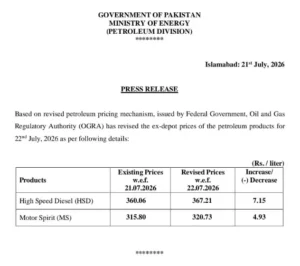

The federal government has increased the prices of petrol and high-speed diesel following renewed volatility in international energy markets. Petrol has become Rs4.93 more expensive and will now cost Rs320.73 per litre. The price of high-speed diesel has risen by Rs7.15 to Rs367.21 per litre. According to the Petroleum Division, the revised rates will take effect from Wednesday, July 22, 2026.
Fuel prices have remained unstable since the conflict between the United States and Iran began on February 28. High-speed diesel rose from around Rs281 per litre to a peak of Rs520.35 on April 3. Petrol also increased from nearly Rs266 per litre in early March to a record Rs458.41 on April 3. Although prices later declined, renewed hostilities in the Persian Gulf have again placed global oil supplies and shipping routes under pressure.
Petroleum Minister Ali Pervaiz Malik earlier announced that fuel prices would now be revised daily because of rapid changes in international markets. The government had been announcing weekly revisions since early March. The cabinet and prime minister have now authorised the Oil and Gas Regulatory Authority to calculate daily rates using international market trends and other pricing factors.
Petrol pump owners have rejected the daily pricing policy. The All Pakistan Dealers Association said frequent changes could create confusion, inventory losses and operational problems. The association is expected to consider a protest strategy over the new mechanism.
The increase will directly affect private vehicle owners, motorcycle riders and small transport operators. Higher diesel prices may also increase the cost of public transport, agriculture, electricity generation and freight services. Businesses could transfer these additional expenses to consumers through higher prices for food and other essential goods.
Petrol and high-speed diesel remain Pakistan’s largest-selling petroleum products, with combined monthly sales of around 700,000 to 800,000 tonnes. Future prices will depend on global oil markets, regional security conditions and the government’s new daily pricing system.