
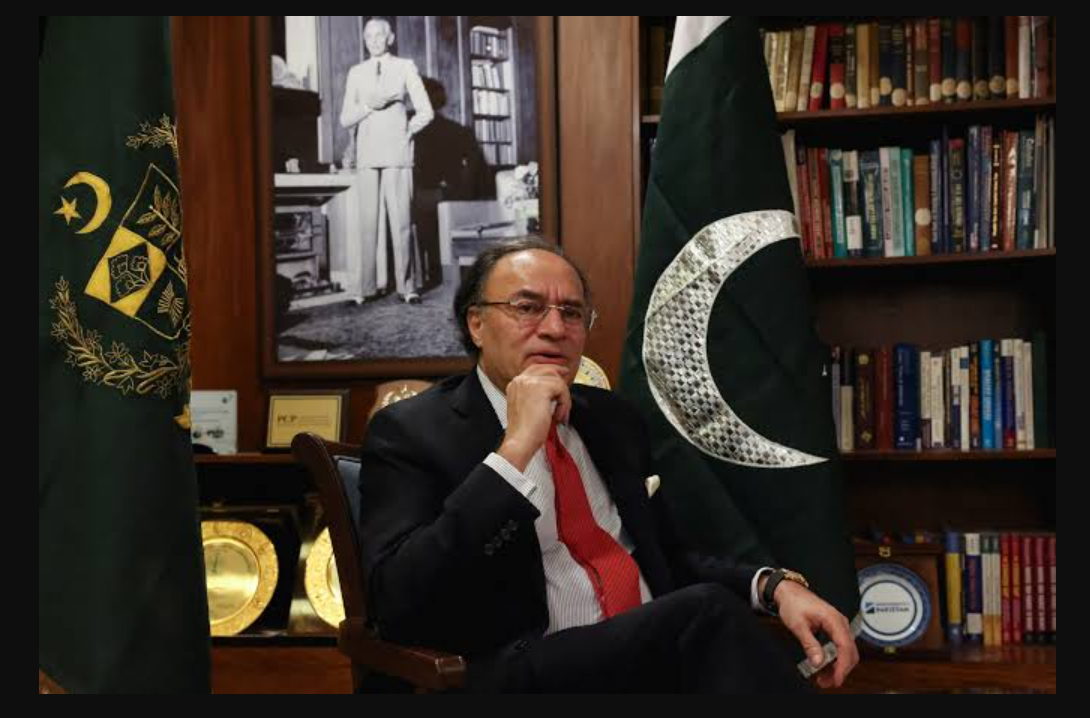

Pakistan plans to seek a larger currency swap arrangement with China when its existing facility expires in 2027. Finance Minister Muhammad Aurangzeb said the entire 30 billion yuan swap line has already been fully drawn.
Meanwhile, Pakistan expects a response from Washington within two months on its proposed $10 billion exchange stabilisation facility.
Pakistan Plans Bigger China Swap Line
Aurangzeb said Pakistan has not yet decided how much additional financing it will seek from China.
However, he said the government plans to formally request an expansion when the current facility comes up for renewal.
“They were open to it, but there is a process which has to be followed,” said Aurangzeb.
“We do plan to make a formal request at the time of the renewal.”
Pakistan continues to rely on external financing to support its foreign exchange reserves and meet debt repayment requirements.
Therefore, financing from China, Gulf states and multilateral lenders remains important for economic stability and investor confidence.
Islamabad Awaits US Response
At the same time, Aurangzeb said Pakistan expects a response within two months regarding its proposed $10 billion US facility.
The government is also holding talks with the US Export-Import Bank and the International Development Finance Corporation.
According to Aurangzeb, EXIM financing could support aircraft purchases from Boeing by Pakistan International Airlines.
The DFC could meanwhile help finance a planned $5 billion programme to upgrade Pakistan’s oil refineries.
Pakistan Seeks Support From Both Powers
Aurangzeb rejected concerns about Pakistan seeking additional financial support from both China and the United States.
He described the approach as an “and-and” discussion rather than a choice between the two countries.
“China has been a long-standing strategic partner for us…and we have very good at the leadership level now understanding and relationship with the Trump administration,” he said.
“We are very fortunate to have this kind of relationship with both important economic and superpowers.”
The US Treasury, DFC and EXIM had not immediately responded to requests for comment at the time of the report.
Higher Oil Prices Add Fresh Pressure
Aurangzeb also discussed the impact of elevated crude oil prices following the latest Middle East conflict.
He said Pakistan had managed the initial price increase after US and Israeli strikes on Iran relatively well.
However, he warned that the outlook had become more uncertain if the conflict continues.
“If this conflict goes into, unfortunately, November or December, you know, this is something which will be an area of concern for us,” he said.
He added that prolonged disruption could put the government’s 4% growth target for the fiscal year at risk.
Pakistan has secured enough oil stocks to meet its requirements through September and remains well positioned for October.
Meanwhile, an institutionalised mechanism is reviewing the situation daily, while planning for November supplies has already begun.
No Additional IMF Financing Planned
Despite these external financing discussions, Aurangzeb said Pakistan does not currently plan to seek additional IMF financing.
He also ruled out emergency support from the Washington-based lender under the present circumstances.
“As of now, our considered view is that it’s manageable.”
An IMF mission is scheduled to arrive next week for the fourth review of Pakistan’s $7 billion programme.
The mission will also conduct the third review of the Resilience and Sustainability Facility.
“From our perspective, we are in good stead with the quantitative benchmarks, and we are largely compliant with the structural benchmarks,” he said.
For the latest updates, visit and follow The Truth International website (www.thetruthinternational.com) and subscribe to the YouTube Channel.

