
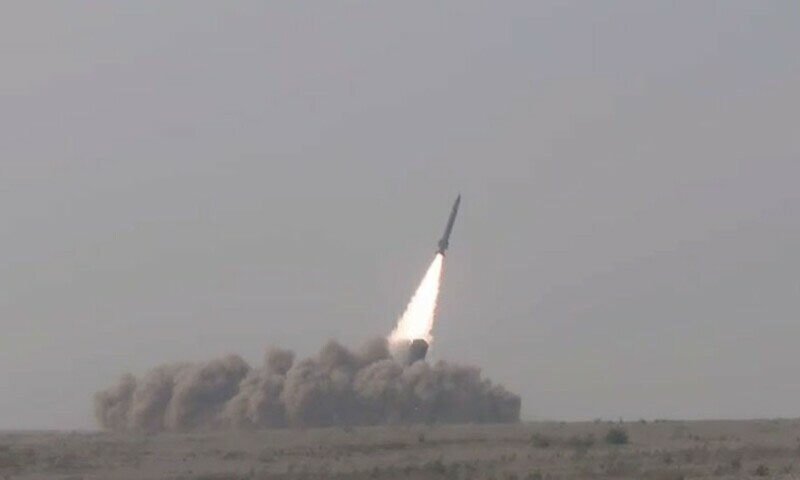

Pakistan has carried out a successful training launch of its locally developed missile system. The test was conducted by the Army Rocket Force Command under the supervision of Inter-Services Public Relations.
The launch marks another step in strengthening the country’s defense capabilities. Officials confirmed that the exercise achieved all planned objectives.
The missile tested was the Fateh-II missile system. It is known for its advanced technology and improved precision.
Training Exercise Focused on Operational Readiness
The primary goal of the launch was to train military personnel. It also aimed to test the operational readiness of the system.
Officials stated that such exercises are essential for maintaining combat preparedness. They help ensure that troops can operate advanced systems effectively.
The training launch allowed forces to practice real-time deployment procedures. It also provided an opportunity to evaluate coordination between different units.
Military experts say regular drills improve response time and efficiency. They also help identify areas that require further improvement.
The exercise was conducted in a controlled environment. All safety protocols were followed during the operation.
Advanced Technology Enhances Accuracy and Performance
According to officials, the Fateh-II missile system is equipped with modern avionics. It also includes advanced navigation systems designed for precision targeting.
These features allow the missile to achieve high levels of accuracy. They also improve its ability to operate in complex conditions.
The system incorporates multiple sub-components. Each part plays a role in ensuring reliable performance.
During the test, various technical parameters were carefully monitored. This included trajectory, speed, and targeting accuracy.
The results confirmed that the system performed as expected. Officials described the outcome as successful and satisfactory.
Experts note that modern missile systems rely heavily on technology. Advanced navigation and guidance systems are key to effectiveness.
Evaluation of Sub-Systems and Future Improvements
The training launch also focused on evaluating internal systems. This includes propulsion, guidance, and control mechanisms.
Officials said the test helped validate improvements made in recent upgrades. These enhancements aim to increase both accuracy and survivability.
Survivability refers to the system’s ability to operate under challenging conditions. It also includes resistance to countermeasures.
The evaluation process provides valuable data. This information is used to refine and upgrade the system further.
Military planners rely on such tests to guide future development. Continuous improvement is essential in modern defense strategies.
Strengthening Indigenous Defense Capabilities
The Fateh-II system is developed locally. This highlights Pakistan’s focus on indigenous defense production.
Developing local technology reduces dependence on external suppliers. It also allows greater control over upgrades and modifications.
Officials emphasized the importance of self-reliance in defense. Indigenous systems can be tailored to specific operational needs.
The successful test reflects progress in local research and development. It also demonstrates the capability of domestic defense industries.
Strategic Importance of Training Launches
Training launches are a routine part of military operations. They ensure that both equipment and personnel remain prepared.
Such exercises also send a signal of readiness. They demonstrate the ability to maintain and operate advanced systems.
Analysts believe that consistent testing improves overall defense posture. It also builds confidence in the reliability of systems.
The recent launch of the Fateh-II missile system reinforces Pakistan’s commitment to strengthening its defense infrastructure.
The exercise highlights the role of technology, training, and continuous evaluation in modern military operations.

