
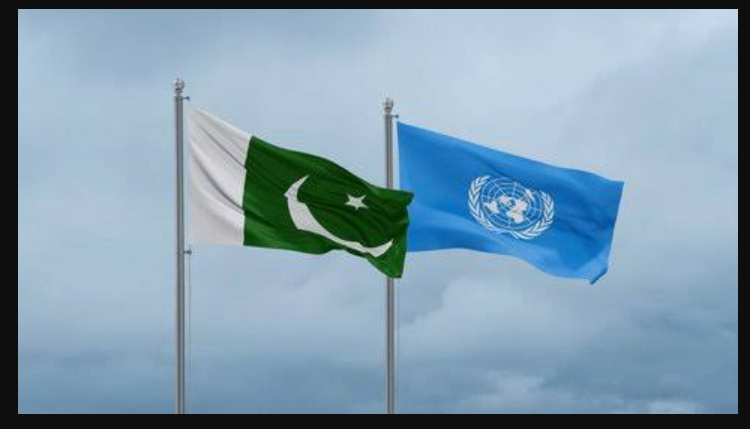

Pakistan has assumed the presidency of the United Nations Conference on Disarmament today, August 17. The diplomatic role gives Pakistan an opportunity to guide discussions on major global security challenges.
Foreign Office Spokesperson and Additional Foreign Secretary for Arms Control and International Security Tahir Andrabi will lead the presidency.
Andrabi has arrived in Geneva and will chair key meetings during Pakistan’s presidency.
Pakistan to Lead Disarmament Discussions
As president, Pakistan will steer the Conference’s proceedings in an organized, balanced and consensus-based manner. Andrabi will also prepare the Conference’s annual report during the presidency.
The report will cover the body’s discussions, negotiations and progress throughout the year. Member states will later consider the report for adoption.
Based on the annual report, Pakistan will facilitate negotiations on a draft resolution. The resolution will then be submitted to the United Nations General Assembly.
It is expected to be considered for adoption in November. Pakistan will also facilitate consultations on the Conference’s agenda for 2027.
Space Security Becomes a Key Challenge
One of the major discussions this week will focus on preventing an arms race in outer space. The issue is known as the Prevention of an Arms Race in Outer Space, or PAROS.
However, major powers hold different positions on how to address the issue. The United States and European countries have differing positions from China and Russia.
Therefore, bridging these differences will present an important diplomatic challenge for Pakistan. Pakistan will need to facilitate discussions while maintaining a balanced approach among member states.
Nuclear Disarmament Also on the Agenda
The Conference will also address several major nuclear security issues. These include nuclear disarmament and the prevention of nuclear war.
Member states will also discuss negative security assurances and the Fissile Material Cut-off Treaty. The agenda further includes emerging technologies and their impact on international security.
Military applications of artificial intelligence will also receive attention. In addition, discussions will cover international and regional peace and strategic stability.
Pakistan Takes Charge Amid Rising Global Tensions
Pakistan assumes the presidency at a time of heightened strategic tensions worldwide. The Russia-Ukraine war continues to affect international security calculations.
Meanwhile, strategic competition between the United States and China remains a major concern. Nuclear weapons modernization has also increased attention toward global arms control.
At the same time, the weaponization of outer space presents emerging security challenges. The growing military use of artificial intelligence has added another complex issue.
Consequently, the Conference faces a wide range of challenges during Pakistan’s presidency. Pakistan’s role could therefore provide an opportunity to contribute to discussions on global security.
Countries Seek Advance Notice for Missile and Space Launches
Recently, 41 countries called for advance notification of certain long-range missile activities. They also sought at least 24 hours’ notice for space launch activities.
The proposal reflects wider concerns surrounding transparency and strategic stability. Such discussions are likely to remain relevant as countries develop increasingly advanced military capabilities.
What Is the UN Conference on Disarmament?
The United Nations Conference on Disarmament is the world’s only permanent multilateral negotiating forum. It focuses specifically on disarmament agreements and arms control. The Conference has 65 member states.
Its work covers issues involving nuclear weapons, conventional security concerns and emerging military technologies.
Therefore, its discussions can play an important role in shaping international arms control efforts.
What Pakistan’s Presidency Means
Pakistan’s presidency places it at the centre of discussions involving some of the world’s most sensitive security issues. The country will have to manage differences between major powers during its tenure.
At the same time, it will oversee discussions on nuclear disarmament, outer-space security and emerging technologies.
The role will require careful diplomacy and consensus-building among the Conference’s 65 member states. Pakistan’s presidency thus comes at a particularly significant moment for international arms control.
Its ability to bridge differences could prove important as global strategic tensions continue to evolve.

