
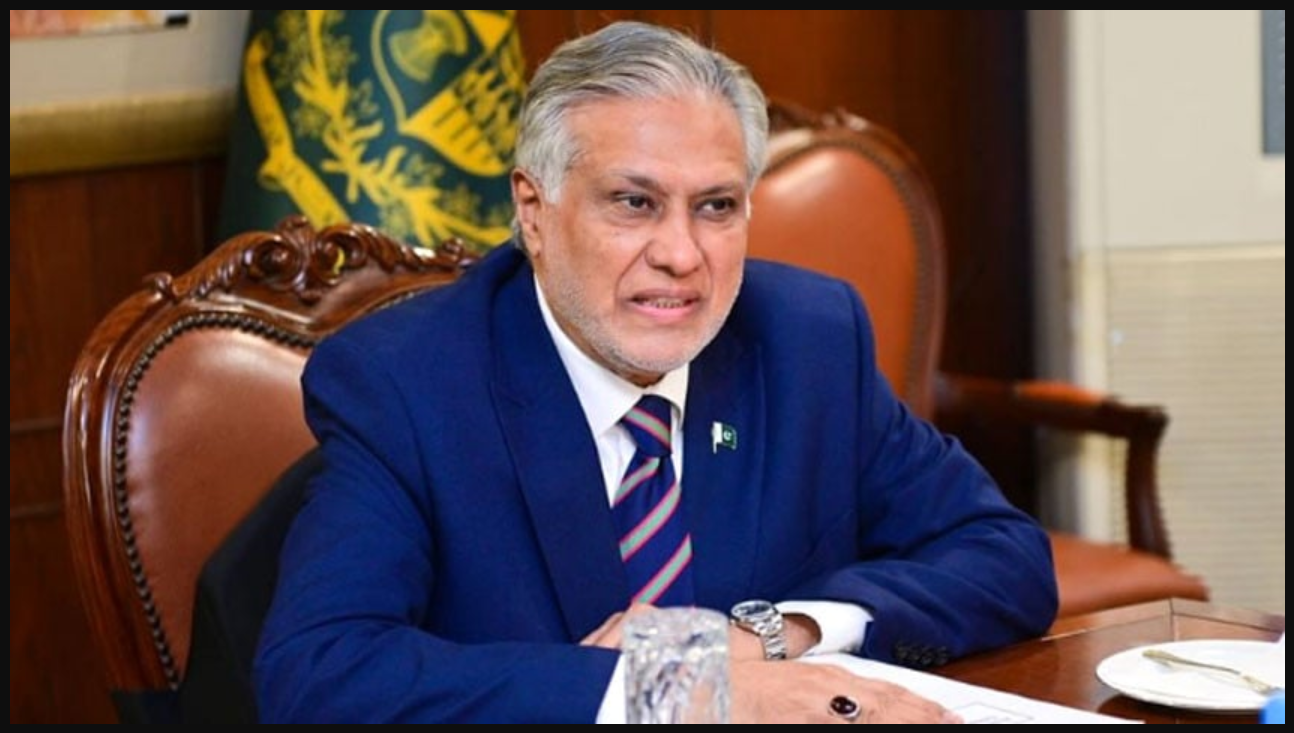

Pakistan has once again reaffirmed its unwavering support for the Palestinian cause, with Deputy Prime Minister and Foreign Minister Ishaq Dar making it clear that the country’s position remains unchanged despite growing speculation about regional diplomatic developments.
Speaking to journalists during his visit to Washington, Dar dismissed rumors suggesting that Pakistan may consider joining the Abraham Accords. He emphasized that Islamabad’s long-standing policy on Palestine remains firmly intact and will not change unless a sovereign Palestinian state is established according to internationally recognized parameters.
His remarks come amid renewed discussions surrounding the future of Middle East diplomacy and growing international attention on normalization agreements involving Israel and several Muslim-majority countries.
Pakistan Links Recognition to Independent Palestinian State
Ishaq Dar stressed that Pakistan’s support for Palestine is based on principle and international law. He stated that the country will continue to advocate for the rights of the Palestinian people and support efforts aimed at achieving a just and lasting solution.
According to Dar, Pakistan’s position is tied to the establishment of an independent Palestinian state based on pre-1967 borders. He also reiterated that Al-Quds Al-Sharif, commonly known as Jerusalem, should serve as the capital of a future Palestinian state.
The foreign minister rejected suggestions that Pakistan is reconsidering its stance due to changing geopolitical dynamics. He stated that reports linking Islamabad to the Abraham Accords were merely speculation and did not reflect official policy.
Pakistan has consistently maintained this position for decades and continues to support international efforts focused on achieving a peaceful resolution to the Palestinian issue.
Analysts note that Dar’s comments were intended to remove uncertainty and reinforce Pakistan’s diplomatic commitment to a two-state solution.
Islamabad Highlights Role in Regional Diplomacy
During his interaction with journalists, Dar also discussed Pakistan’s broader role in promoting dialogue and stability in the region. He said the country remains committed to peaceful diplomacy and constructive engagement with the international community.
The foreign minister claimed that Pakistan played a role in facilitating communication between the United States and Iran during a period of heightened tensions. He emphasized that Islamabad supports diplomatic solutions over confrontation and continues to encourage dialogue among nations.
Dar stated that Pakistan believes lasting peace can only be achieved through negotiations and mutual understanding. He added that the country’s diplomatic efforts are guided by principles of regional stability and international cooperation.
Observers view these remarks as part of Pakistan’s attempt to position itself as a constructive actor in global and regional affairs.
Pakistan Seeks Greater International Engagement
The deputy prime minister also highlighted what he described as Pakistan’s growing international recognition under the leadership of Prime Minister Shehbaz Sharif and Field Marshal Syed Asim Munir.
He argued that efforts by rival countries to isolate Pakistan diplomatically have not succeeded and that Islamabad continues to strengthen its engagement with key international partners.
Dar reiterated Pakistan’s long-standing position on Kashmir, stating that the people of the region should be granted their rights in accordance with relevant United Nations resolutions.
He also provided details of his recent meeting with US Secretary of State Marco Rubio. According to Dar, the discussions were held in a positive and constructive atmosphere. The meeting was attended by Pakistan’s ambassador and senior Foreign Office officials.
His comments come shortly after US President Donald Trump suggested that several Muslim-majority countries, including Pakistan, could eventually become part of the Abraham Accords following a potential agreement involving Iran.
Despite such suggestions, Pakistan’s leadership has made it clear that its position on Palestine remains unchanged and that recognition of Palestinian statehood continues to be the central condition guiding its policy.

