

Pakistan remains hopeful about its diplomatic efforts to ease tensions between Iran and the United States. However, the military has warned that powerful spoilers could undermine progress towards de-escalation.
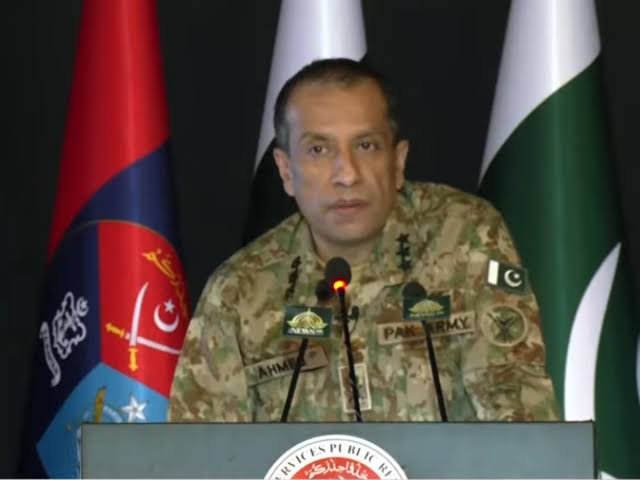
Director-General of Inter-Services Public Relations (ISPR) Lieutenant General Ahmed Sharif Chaudhry shared this assessment during an interview in Rawalpindi on Friday. His remarks followed a high-level Pakistani delegation’s visit to Tehran earlier this week.
Chief of Defence Forces and Chief of Army Staff Field Marshal Asim Munir has visited Tehran twice this month. His latest trip took place on Monday alongside Saudi and Turkish officials.
“Why would the field marshal be going twice if it is not for some positivity? So yes, of course,” Chaudhry said when asked whether the visits signalled progress.
He added, “The word that we would use is always cautiously optimistic.” Nevertheless, he warned that “powerful spoilers and detractors” believed conflict served their interests.
Can Iran Join the Makkah Joint Defence Agreement?
The diplomatic efforts have also raised questions about the future of regional security cooperation. Pakistan, Saudi Arabia and Türkiye signed the Makkah Joint Defence Agreement on August 7.
Under the agreement, an attack on any signatory will be treated as an attack on all. The three countries have presented the pact as a framework for collective deterrence and regional security.
When asked whether Iran could join, Chaudhry said the agreement’s wording does not prevent new members.
“Anyone who has a shared vision of collective deterrence and regional peace, why not? Everyone is most welcome,” he said.
However, he clarified that political leaders from the three founding countries would decide on any expansion.
Iran’s Supreme National Security Council Secretary Mohsen Rezaei also stressed regional ownership of security. Following Monday’s talks, he said regional countries should ensure security without foreign intervention.
Meanwhile, Chaudhry said any additional Pakistani troop deployments to Saudi Arabia would depend on circumstances. He added that both countries’ political leadership would make that decision.
Pakistan remains committed to defending Saudi Arabia and the holy sites of Makkah and Madina. However, Chaudhry drew a distinction between that commitment and the conflict in Yemen.
“We are not part of the Yemeni conflict, which is an intra-Yemen conflict,” he added.
Renewed fighting involving Saudi Arabia and Yemen’s Iran-aligned Houthi group has heightened concerns about wider regional instability.
Pakistan Signals Continued Counter-Terrorism Operations
Chaudhry also addressed Pakistan’s internal security situation, particularly developments in Khyber-Pakhtunkhwa. The federal government suspended the provincial government on October 11 and detained Chief Minister Sohail Afridi.
The government accused the provincial administration of failing to address militancy. However, Pakistan Tehreek-e-Insaf (PTI) rejected the allegations and defended its counter-terrorism efforts.
PTI leaders described the move as an attempt to suppress protests. The party’s political supporters have also accused the military of involvement in Khan’s imprisonment, a claim the army denies.
Asked whether larger military-led campaigns would follow, Chaudhry rejected that interpretation of the army’s counter-terrorism strategy.
“Our counter-terrorism operations are based on what we call IBOs, intelligence-based operations… The tempo of the freedom of action of (those) IBOs will further increase,” he said.
What Lies Ahead for Pakistan’s Diplomatic Efforts?
Pakistan’s mediation initiative comes as the Iran-US confrontation continues to reshape regional security calculations. Munir’s repeated visits to Tehran highlight Islamabad’s ongoing diplomatic engagement.
However, Chaudhry’s warning about potential spoilers underscores the challenges facing these efforts. Progress will depend on continued negotiations, regional cooperation and decisions by the countries involved.
For the latest updates, visit and follow The Truth International website (www.thetruthinternational.com) and subscribe to the YouTube Channel.

