

Islamabad Accuses New Delhi of Misleading UN Forum
Pakistan has strongly rejected India’s claim that Jammu and Kashmir is an integral part of India, saying the disputed territory remains on the agenda of the United Nations Security Council.
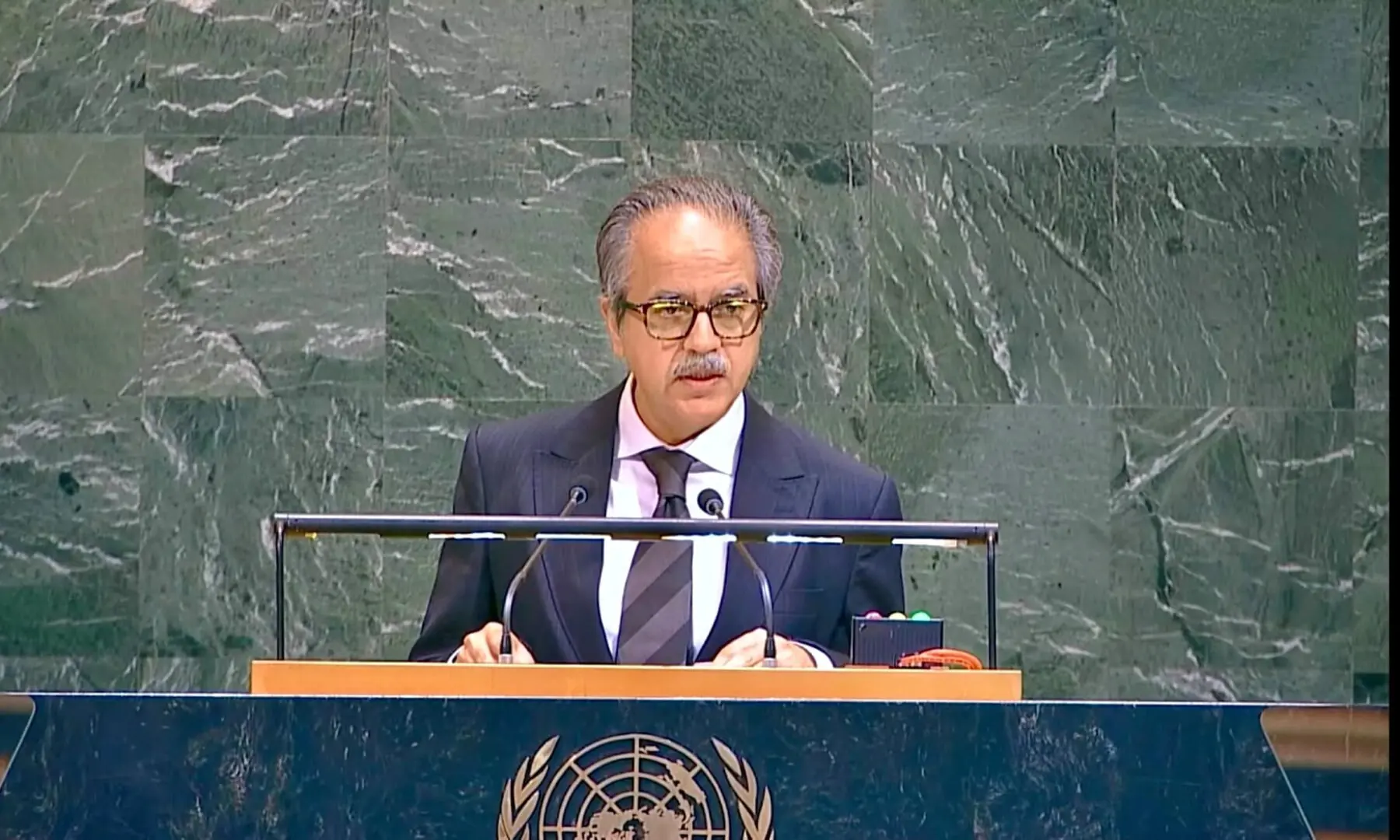
The exchange took place during the presentation of the UNSC’s Annual Report to the General Assembly on Friday. Pakistan’s Permanent Representative to the United Nations, Ambassador Asim Iftikhar Ahmad, called for a just and peaceful resolution of the Kashmir dispute in line with relevant Security Council resolutions.
Pakistan had coordinated and drafted the introduction to the annual report. During the session, India’s UN envoy Harish Parvathaneni accused Pakistan of using UN platforms for political purposes. He also repeated New Delhi’s position that Jammu and Kashmir is an integral and inalienable part of India.
Pakistan responded through its right of reply. Political Coordinator at the Pakistan Mission, Gul Qaiser Sarwani, said Jammu and Kashmir remains an internationally recognised dispute. He said India could not change the legal and historical status of the issue through repeated claims.
Pakistan Calls for Kashmiri Right to Self-Determination
Sarwani said the people of Jammu and Kashmir have been waiting for nearly eight decades to exercise their right to self-determination. He said the United Nations had promised this right through Security Council resolutions calling for a UN-supervised plebiscite.
He also accused India of avoiding its obligations under the UN Charter. He referred to Article 25, which requires UN member states to accept and carry out decisions of the Security Council.
Pakistan also raised concerns over the human rights situation in Indian-administered Kashmir. Sarwani cited arbitrary detentions, restrictions on basic freedoms, demographic changes, and other alleged rights violations.
He said the seriousness of the situation was reflected in a Joint Communication issued by United Nations Special Procedures on October 16, 2025.
The Pakistani official also criticised India’s wider record, accusing New Delhi of destabilising actions in the region. He referred to alleged terrorism sponsorship, violence against minorities, external assassination campaigns, and attempts to hold the Indus Waters Treaty in abeyance.
Kashmir and Palestine Remain Key Global Disputes
Ambassador Asim Iftikhar Ahmad said the UNSC Annual Report for 2025 showed the continued relevance of long-standing disputes, including Jammu and Kashmir and Palestine.
He said lasting peace in South Asia depends on a fair settlement of the Kashmir dispute. He added that the settlement must reflect the aspirations of the Kashmiri people and the relevant resolutions of the Security Council.
Ahmad said more than 20 communications related to the India-Pakistan question were brought before the Security Council during the reporting period. He also noted that the council held closed consultations on the issue in May 2025.
Pakistan said this shows that the Kashmir dispute still engages the attention of the Security Council more than seven decades after it was first placed on its agenda.
The Pakistani envoy also discussed the Palestine issue. He called for the implementation of UNSC Resolution 2083, adopted in November 2025, which endorsed US President Donald Trump’s Gaza peace plan.
Ahmad further highlighted Pakistan-sponsored Resolution 2788, adopted unanimously in July 2025. He said it reflected the international community’s commitment to peaceful dispute settlement and stronger use of the UN Charter’s conflict prevention tools.
The envoy also called for Security Council reforms. He opposed expanding permanent seats and veto powers, saying such steps would deepen privilege instead of improving accountability.
He said Pakistan supports comprehensive reform that benefits the wider UN membership. He summed up Islamabad’s position as “reform for all, privilege for none.”

