
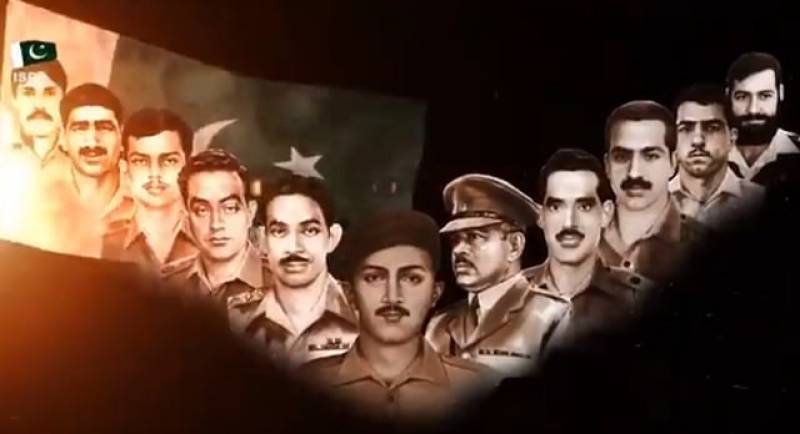

Pakistan on Sunday observed Defence and Martyrs’ Day, with Prime Minister Shehbaz Sharif and President Asif Ali Zardari paying tribute to the country’s martyrs, veterans and their families.
In separate messages issued on September 6, both leaders recalled the sacrifices made during the 1965 war and highlighted the role of national unity in defending Pakistan’s sovereignty and territorial integrity.
They also linked the spirit of September 6 to what they described as the recent success of Operation Bunyanum Marsoos and Marka-e-Haq.
The leaders said Pakistan remains committed to peace but stressed that its commitment should not be interpreted as weakness.
Leaders Honour Martyrs and Veterans
Prime Minister Shehbaz Sharif described Defence and Martyrs’ Day as a significant chapter in Pakistan’s national history.
He said September 6 reminded the nation of the determination, unity and sacrifices demonstrated by the armed forces and people during the 1965 war.
According to the prime minister, Pakistan’s armed forces faced a numerically superior adversary while maintaining their operational readiness and professionalism.
He said the sacrifices of the martyrs and veterans continue to serve as a source of national inspiration.
President Asif Ali Zardari also described September 6 as an important date in Pakistan’s history.
He said the martyrs of 1965 demonstrated courage, determination and devotion while defending the country’s freedom and sovereignty.
Zardari said the unity displayed by the armed forces and citizens during the conflict remained a symbol of Pakistan’s collective strength.
He stressed that a nation united in defence of its homeland could withstand major challenges.
Both leaders paid tribute to the families of fallen soldiers and acknowledged their resilience and sacrifices.
1965 Spirit Linked to Recent Military Operations
Shehbaz Sharif and Asif Ali Zardari connected the legacy of the 1965 war with Marka-e-Haq and Operation Bunyanum Marsoos.
Shehbaz said Pakistan’s armed forces had continued the tradition of defending the country with professionalism and courage.
He praised the leadership of Chief of Army Staff and Chief of Defence Forces Field Marshal Syed Asim Munir, Air Chief Marshal Zaheer Ahmad Babar Sidhu and Naval Chief Admiral Naveed Ashraf.
The prime minister said the military’s response during Marka-e-Haq would remain an important chapter in Pakistan’s military history.
He described the reported success of Operation Bunyanum Marsoos as another demonstration of the spirit associated with September 6.
Zardari similarly said the outcome of Marka-e-Haq reflected the same patriotism and commitment to national defence associated with the 1965 war.
He praised the armed forces for what he described as their professionalism, courage and bravery.
The president also highlighted the longstanding relationship between Pakistan’s armed forces and the public.
Pakistan Reaffirms Defence Readiness
The leaders stressed that Pakistan continues to seek peace, stability and regional cooperation.
However, they said there would be no compromise on the country’s sovereignty, territorial integrity and national security.
Shehbaz said Pakistan faces a range of security challenges, including conventional threats, militancy and attempts to destabilise the country through hybrid warfare.
He called for greater national unity to confront these challenges.
The prime minister said Pakistan’s armed forces remained prepared to defend the country while the government continued working towards economic development and political stability.
Zardari also said Pakistan would continue strengthening its defence capabilities while promoting dialogue and peaceful relations.
He maintained that national strength depended not only on military preparedness but also on economic stability, education, development and political tolerance.
Both leaders urged citizens to remain united and committed to the principles associated with Quaid-e-Azam Muhammad Ali Jinnah.
Shehbaz called for renewed commitment to faith, unity and discipline, while Zardari urged the nation to work towards building a stronger, democratic and prosperous Pakistan.
Leaders Highlight Regional Peace and Kashmir
The two leaders also reiterated Pakistan’s position that lasting peace in South Asia requires a resolution of the Kashmir dispute.
Shehbaz said the international community must support a settlement based on relevant United Nations Security Council resolutions and the aspirations of the people of Kashmir.
He described the unresolved dispute as a major obstacle to lasting regional peace and development.
Zardari also called for regional peace and said Pakistan remained committed to dialogue and mutual respect.
Both leaders highlighted Pakistan’s stated role in promoting regional security and cooperation.
Shehbaz said Pakistan would continue playing what he described as a constructive role in regional and global peace efforts.
He also referred to the Makkah Joint Defence Agreement as an example of Pakistan’s commitment to collective security and cooperation with partner countries.
Zardari similarly said the agreement reflected Pakistan’s growing role in regional security.
Economic Strength Seen as Key to National Security
The prime minister said Pakistan’s strength could not be measured only through its defence capabilities.
He argued that eliminating poverty, improving education and reducing backwardness were also essential for building a stronger country.
Shehbaz said the government would continue pursuing economic development, political stability and public welfare alongside national security.
Zardari also emphasised the importance of economic stability and development.
He said education, political tolerance, national unity and economic progress were essential foundations for Pakistan’s future.
Both leaders called on citizens to contribute to building a peaceful, secure and prosperous country.
Defence Day Ceremony Held at Mazar-e-Quaid
A special change of guards ceremony was also held at Mazar-e-Quaid in Karachi to mark Defence and Martyrs’ Day.
Cadets from the Pakistan Air Force took over guard duties at the mausoleum of Quaid-e-Azam Muhammad Ali Jinnah.
Air Vice Marshal Hassan Faisal, Air Commandant of PAF Academy Asghar Khan, attended the ceremony as the chief guest.
The ceremony formed part of nationwide commemorations honouring Pakistan’s martyrs and veterans.
The day concluded with renewed tributes to those who lost their lives defending the country.
The president and prime minister also prayed for the martyrs and for peace, stability and prosperity in Pakistan.

