
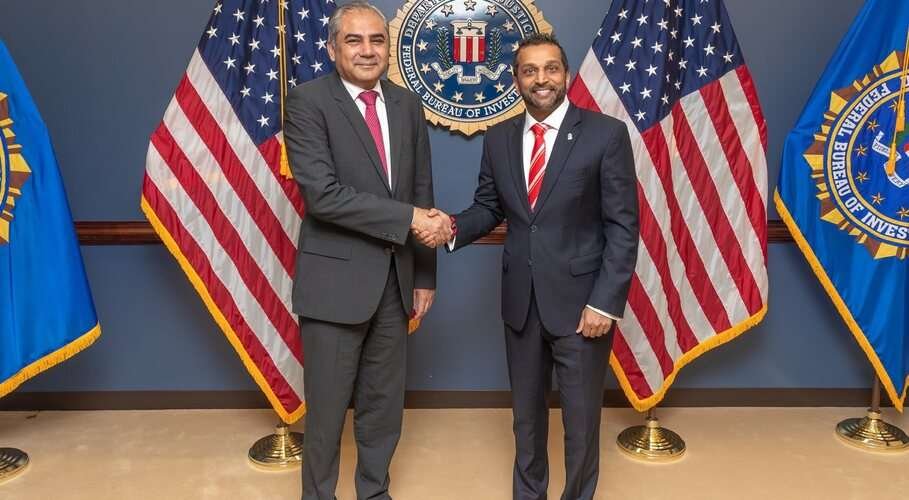

Naqvi, Patel discuss cybercrime, counterterrorism and law enforcement collaboration
WASHINGTON: Pakistan’s Federal Interior Minister Mohsin Naqvi met with Federal Bureau of Investigation (FBI) Director Kash Patel at the agency’s headquarters in Washington to strengthen bilateral security cooperation and expand collaboration on law enforcement, cybercrime, and regional security.
During the meeting, both sides discussed ways to deepen cooperation through modern policing techniques and enhanced institutional coordination. They also explored new initiatives aimed at improving the capabilities of law enforcement agencies in addressing emerging security challenges.
A major focus of the talks was expanding capacity-building programmes to combat evolving cyber threats. The two officials reviewed proposals for specialized training, technical assistance, and advanced investigative resources to strengthen cybercrime investigations and disrupt transnational criminal and terrorism financing networks.
The proposed initiatives are intended to equip investigators in Pakistan with modern investigative tools while promoting closer cooperation between Pakistani and American law enforcement agencies.
Officials reaffirm commitment to regional security
Meanwhile, FBI Director Kash Patel welcomed Minister Naqvi to the bureau’s headquarters and described the visit as an important step in reinforcing the long-standing security partnership between the two countries.
Patel appreciated Pakistan’s continued cooperation in advancing shared security objectives and safeguarding mutual interests across the region. He emphasized that close coordination between the FBI and Pakistani law enforcement agencies remains essential in addressing cross-border crime, cyber threats, and terrorism-related challenges.
Minister Naqvi reaffirmed Pakistan’s commitment to expanding cooperation with the United States in areas of mutual interest, particularly intelligence sharing, law enforcement training, and counterterrorism efforts.
Both sides expressed confidence that stronger institutional collaboration and regular engagement would enhance operational effectiveness and contribute to regional and international security. They also agreed to continue working together on initiatives designed to improve investigative capabilities, strengthen information sharing, and tackle increasingly sophisticated transnational security threats through sustained bilateral cooperation.

