
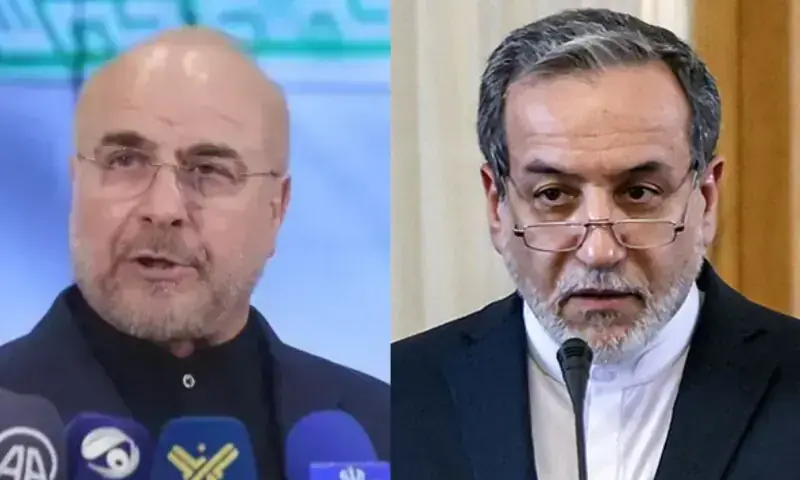

Pakistan has stepped up diplomatic efforts to ease tensions between Iran and the United States by inviting two senior Iranian officials for urgent consultations. National Assembly Speaker Ayaz Sadiq invited Iranian Parliament Speaker Mohammad Bagher Ghalibaf to visit Pakistan. Meanwhile, Foreign Minister Ishaq Dar invited his Iranian counterpart, Seyyed Abbas Araghchi.
The invitations came as Tehran described Islamabad as its primary mediator in discussions with Washington.
The Foreign Office said both sides discussed regional and international developments during a conversation between Dar and Araghchi.
“They exchanged views on regional and international developments, including the deteriorating situation in Occupied East Jerusalem,” the Foreign Office said in a statement.
Pakistan Seeks Urgent Regional Consultations
Pakistan has asked Ghalibaf and Araghchi to visit the country as soon as possible. However, officials have not yet confirmed when the two Iranian leaders will arrive.
Araghchi was in Iraq on Monday to participate in Arbaeen activities, which were scheduled for Tuesday.
The latest diplomatic move comes around 36 hours after US President Donald Trump announced that he had cancelled planned strikes against Iran.
Trump said several regional allies had urged him to delay the military action. He claimed that a potential agreement with Tehran appeared close.
Saudi Crown Prince Mohammed bin Salman also spoke with Trump and reportedly urged him to abandon the planned strikes. Trump further named the UAE and Qatar among countries that had asked him to reconsider the action.
Meanwhile, Iran has continued discussions with Oman about the future of the Strait of Hormuz. Iranian officials have indicated that negotiations are progressing, although they have not confirmed whether the waterway will reopen.
Iran Calls Pakistan Main Mediator
Pakistan has remained involved in diplomatic efforts despite maintaining a relatively low public profile.
Islamabad has continued back-channel engagement with Tehran. It also worked with Qatar on a ceasefire proposal during a nearly 13-day period of heightened tensions.
Iranian officials have now openly acknowledged Pakistan’s central role in discussions with Washington.
Iranian Foreign Ministry spokesman Esmail Baqaei said: “The mediator in the discussions related to Iran and the US is Pakistan, and Qatar also helps in cases where necessary. To say that we have added a new mediator to the existing mediators is not, in the strict sense of the word, the case.”
The statement reinforces Islamabad’s position as a key diplomatic channel between Tehran and Washington.
Trump Warns Iran Over Nuclear Talks
At the same time, tensions between Washington and Tehran remain high.
Trump accused Iran’s leadership of being “unbelievably duplicitous” after Tehran denied that negotiations with the United States were underway.
The US president also renewed his threats against Iran. He warned that Washington could continue military pressure until Tehran agrees to a deal or faces what he described as “total surrender”.
“I think we’re going to maybe get something, but I want to give them every last chance before decapitation,” Trump said.
Trump had previously announced that renewed discussions would begin “tomorrow afternoon”. However, he did not identify the venue or participants involved in those talks.
The US president also claimed that the US Navy maintains complete control over the Strait of Hormuz.
“Nothing gets through to Iran, unless we want it to, and nothing will get through, unless a deal, or total surrender, is accomplished,” he said.
Trump also said Iran and several Gulf countries had asked him to postpone what he described as “the biggest attack since World War II”.
“Would I rather make a deal? I’m not looking to kill people,” Trump said on Sunday.
He described the ongoing diplomatic effort as a “last chance for them to sign a good document”.
With Pakistan now seeking urgent consultations with senior Iranian officials, Islamabad’s diplomatic role could become increasingly important. However, the success of these efforts will depend on whether Tehran and Washington can move from threats toward meaningful negotiations.
For Pakistan, preventing further regional escalation remains particularly important because developments around Iran could affect regional security, trade, energy supplies, and the Strait of Hormuz.

