
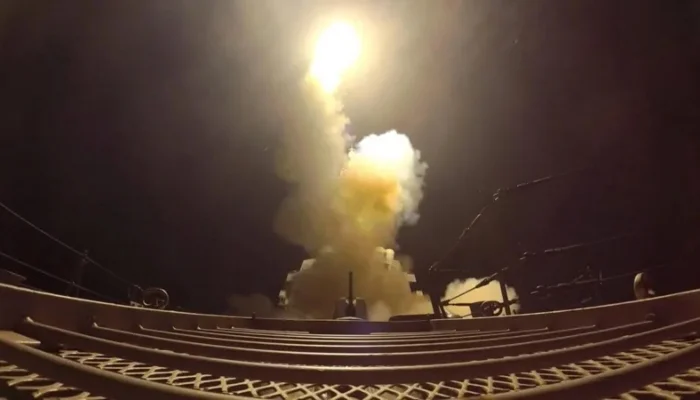

Pakistan is closely monitoring developments after Yemen’s Houthi movement launched missiles toward Saudi Arabia. The incident has increased concerns in Islamabad about regional stability and Pakistan’s strategic commitments.
The missile attack followed Houthi accusations that Saudi Arabia had bombed an airport under their control. Although the exchange marked the end of a four-year truce, the situation has remained limited to a single incident so far.
However, Pakistani officials fear that further escalation could pull the country into a wider regional conflict.
Defence Agreement Raises Strategic Stakes
Pakistan strengthened its security cooperation with Saudi Arabia after signing a mutual defence agreement last year. In addition, thousands of Pakistani soldiers and a squadron of fighter jets remain deployed in the kingdom.
These military deployments have increased concerns about the safety of Pakistani personnel, especially those stationed near the Saudi-Yemen border.
One Pakistani official stressed the country’s position, saying, “Our top civil and military leaders have conveyed to Iran at the highest level that the attacks on Saudi Arabia are attacks on Pakistan. It is our red line.”
Islamabad Concerned About Wider Regional Conflict
Security analysts believe Pakistan’s concerns have intensified because continued Houthi attacks could trigger a broader conflict involving Saudi Arabia.
Muhammad Amir Rana, a Pakistani security analyst, said, “Pakistan wasn’t anticipating that the tensions will rise so suddenly.”
Officials also worry that expanding hostilities could force Pakistan to reassess its regional security responsibilities under its defence agreement with Saudi Arabia.
Furthermore, any escalation near the Saudi-Yemen border could place Pakistani troops at greater risk.
Red Sea Shipping Routes Add Economic Pressure
Apart from security concerns, Pakistan is also watching the impact on international trade.
The Red Sea remains one of the world’s busiest shipping routes. Therefore, any disruption could affect Pakistan’s imports, exports, and energy supplies.
Analysts warn that prolonged instability could increase shipping costs and create additional economic challenges for countries that rely on the route.
Earlier regional tensions around the Strait of Hormuz had already disrupted Pakistan’s fuel supply chain. Consequently, authorities introduced emergency measures, including early business closures, to reduce fuel consumption.
Growing Questions About Iran’s Internal Decision-Making
Pakistani officials are also observing political developments inside Iran.
According to government sources, Islamabad believes differences have emerged between Iran’s civilian leadership and the Islamic Revolutionary Guard Corps (IRGC).
Muhammad Ali, a Pakistani defence analyst, said, “The military seems to be dominating the decision making in Iran,” adding that this is increasingly “being recognised in Islamabad.”
Officials believe these internal dynamics could influence future regional security decisions.
Diplomatic Engagement Continues Despite Challenges
Despite rising tensions, Pakistan continues to support diplomatic efforts aimed at reducing conflict in the region.
An Iranian delegation, led by Interior Minister Eskandar Momeni, reportedly arrived in Islamabad later than originally planned. Discussions were expected to include regional security and the broader U.S.-Iran dialogue.
Meanwhile, Pakistan’s Foreign Ministry has urged all sides to avoid further escalation.
Foreign Ministry spokesman Tahir Andrabi said Pakistan calls “on all parties to exercise maximum restraint” and that “there is no alternative to sustained engagement, dialogue, and diplomacy.”
Pakistan Seeks to Balance Security and Diplomacy
Pakistan has positioned itself as an important regional partner while also pursuing diplomatic engagement.
Analysts say the country hopes to maintain its mediation efforts between the United States and Iran. At the same time, it must honor its security commitments with Saudi Arabia.
One official emphasized Islamabad’s continued commitment to diplomacy, stating, “Yes, there is frustration, but that doesn’t mean that we are abandoning this project. We have invested a lot in it, and we have an interest in keeping it afloat.”
However, officials acknowledge that further escalation could complicate Pakistan’s balancing strategy.
A source familiar with the mediation efforts concluded, “It’s in everyone’s best interest for the war to end. But if Saudi calls us in, we will stand by them and there is no doubt about that.”
Regional Developments Could Shape Pakistan’s Next Steps
Pakistan continues to advocate dialogue while carefully monitoring developments across the Middle East.
Although diplomatic engagement remains the preferred approach, worsening regional tensions could test Islamabad’s ability to balance strategic partnerships, economic interests, and regional stability in the coming weeks.

