
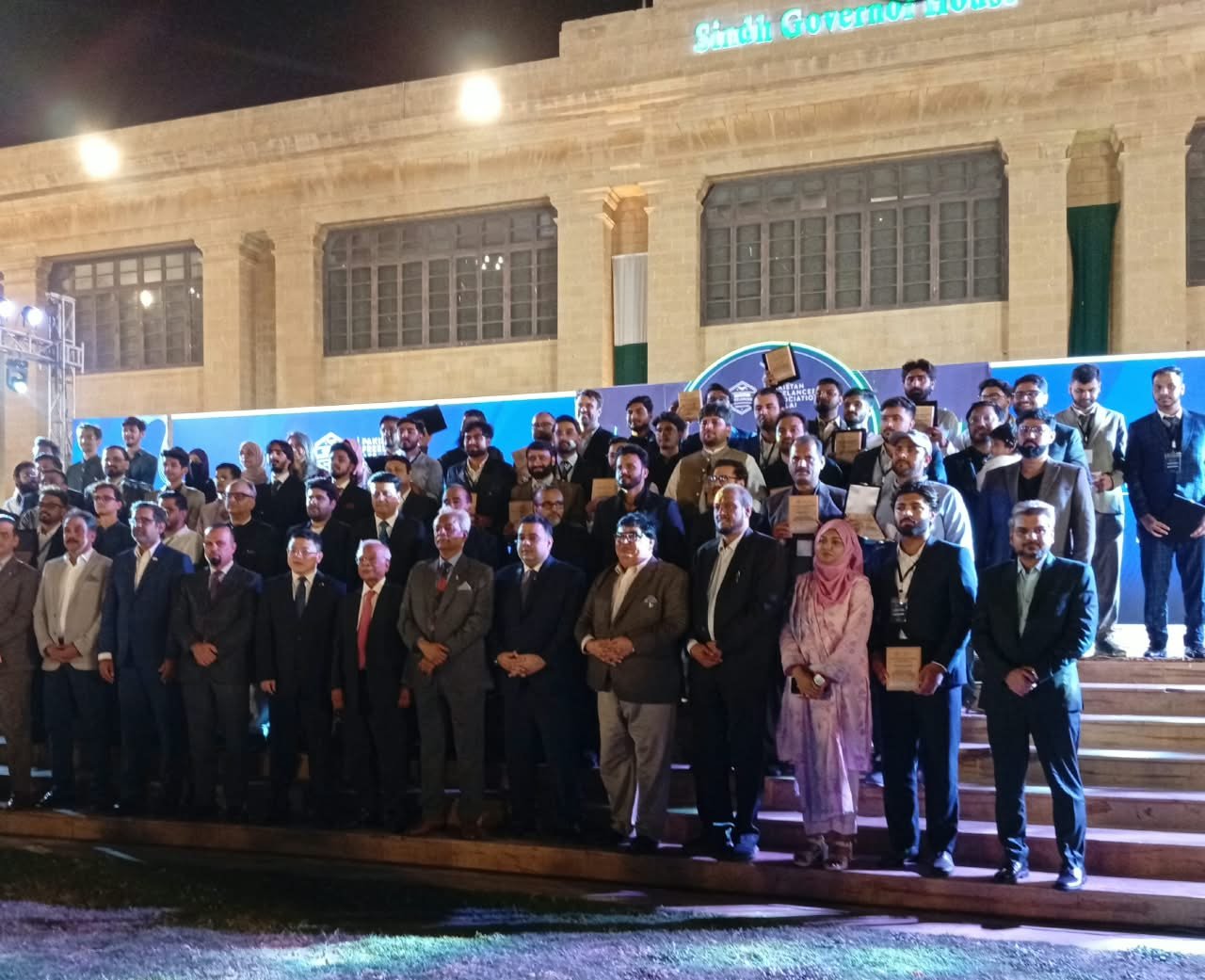

Celebrating Pakistan’s Freelancing Champions
By Humaira Motala
Karachi: While the government debates economic revival, three million Pakistanis have already delivered it — from their laptops.
“If your business is not on the internet, then your business will be out of business.” — Bill Gates
Despite battling payment delays, internet disruptions and limited policy support, Pakistani freelancers generated a record $1.7 billion in foreign exchange in FY 2025-26. The Pakistan Freelancers Association (PAFLA) hosted Pakistan’s first-ever national recognition ceremony, Celebrating Pakistan’s Freelancing Champions, on August 29, 2026, at Governor House, Sindh. Governor Sindh, Syed Muhammad Nehal Hashmi, graced the event as Chief Guest.
Governor Lauds Resilience: ‘Talent That Powers the Digital Economy’
“The contribution of freelancers to Pakistan’s economy has grown significantly over the years. Their dedication, skills and resilience have enabled them to generate substantial foreign exchange for the country despite multiple challenges,” the Governor said.
PAFLA co-founder and chairman Ibrahim Amin delivered the welcome address, highlighting advocacy for freelancer-friendly banking and digital ecosystems. Stressing the role of freelancers Ibrahim Amin said, freelancers had played a significant role in supporting Pakistan’s economy and strengthening its macroeconomic indicators, adding that their contribution deserved recognition at the national level.
The diverse panel of judges featured notable experts including Irfan Malik, Azam Mughal, Muhammad Zohaib Khan, Imran Ali Dina, Javed Yousuf Edhi, Nabhan Karim and Nadia Patel Gangjee.
The PAFLA Awards 2026 focused on broad economic and professional contributions, general performance and professional achievement. It also honored top-tier freelancers demonstrating exceptional skill, high client satisfaction, and strong delivery in the global gig economy. Awards aim to Recognize independent contractors based on their quantifiable contributions to Pakistan’s national IT export volume and inward remittances. A dedicated segment established specifically to highlight and celebrate the rising achievements, resilience, and leadership of women in Pakistan’s digital workforce, while acknowledging key figures and mentors who helped build training pipelines and digital ecosystems for emerging talent across the country.
Prominent figures like Irfan Malik and Dr. Imran Batada received awards of appreciation for mentoring and producing thousands of tech and freelance professionals across Pakistan. Highlighting the importance of the event, he said “The PAFLA Awards are aimed at recognizing these unsung heroes and providing them with a platform where their achievements can be acknowledged and celebrated. Such recognition will also encourage more young people to acquire digital skills and pursue freelancing as a career,” he added.
‘Innovation, Not Tradition’: Why Recognition Matters Now
“Our industry does not respect tradition — it only respects innovation.” — Satya Nadella, CEO Microsoft
Yet in budget documents and policy papers, this workforce remains largely invisible. For years, freelancers have built Pakistan’s global reputation one project at a time — and asked for very little in return.
$5 Gigs to 60-Member Company: Bilal Bhatti’s Journey Embodies New Pakistan
As Steve Jobs said, “Your time is limited, so don’t waste it living someone else’s life.” At the PAFLA Awards in Karachi, that contradiction was on full display. Alongside corporate leaders, the spotlight was on young people who turned skills into dollars.
One of them was Muhammad Bilal Bhatti from Lahore, CEO of Softmind Solutions, who started with $5 gigs on Fiverr and now leads a team of 60 serving clients in the US, Netherlands, MENA region and the UK.
“Innovation distinguishes between a leader and a follower.” — Steve Jobs
Bilal started as a software developer in 2017 and began freelancing in 2019 parallel to his job. His talent landed him a remote role with a US-based company, where he was promoted to Operations Manager in 2021, leading a team of 12. In 2022, he became the first Pakistani in the company to be invited to the US to understand its operations. In 2023, he launched his own software house with just one employee.
‘We Don’t Just Take a Project, We Own It’: The Pakistani Edge
Highlighting the competitive edge of Pakistani talent, Bhatti noted that Pakistani freelancers stand out for their strong work ethics and adaptability. “We don’t just take a project, we own it,” he said. “A Pakistani freelancer focuses on understanding the client’s vision and the why behind the requirement, not just the brief.”
The Real Hurdles: From Bank Accounts to Internet Shutdowns
Bhatti said freelancers face a pile of problems, starting from opening a bank account to getting funds transferred in dollars. They are largely deprived of mainstream banking services, including home and car loans or government-backed schemes.
“On top of that, in case of any political issue or the arrival of a distinguished guest, internet services are either suspended or slowed down, which directly costs us clients and dollars,” he said.
“We bring dollars without demanding dollars from the government. All we ask is for the internet to stay on, PayPal to be allowed, and our work to be counted as work.”
The Way Forward: PayPal, Policy and Putting Pakistan on the Map
While the government has now started recognizing the contribution of youth and freelancers, Bhatti said there are still many fronts to be explored. Currently, only software developers registered with the PSEB are given tax relief, but the ambit needs to be widened.
“PayPal wants to enter Pakistan, but government hurdles and restrictions are discouraging them. Today, every IT firm worldwide wants the organization they hire to have a PayPal account. The government needs to devise more encouraging, freelancer-friendly policies,” he said.
Advice to Aspiring Freelancers: Dream Big, Communicate Better
As a seasoned freelancer and now head of an IT firm, Bhatti advised aspiring freelancers to first gain experience with a local organisation to learn work ethics and office decorum, since even freelancing work needs being well-organised and meeting deadlines.
“Today, IT is an integral part of every sphere of life, so the scope of work is beyond imagination. After AI integration, the dynamics have completely changed,” he said.
“I never relied on middlemen. I approached clients directly and earned their trust — and that made all the difference.”
“AI has not reduced work, it has multiplied it. But only those will survive who can communicate, not just code.” Bhatti emphasized
His story, like many others honored that night, shows the future of Pakistan’s economy is already here. It’s young, it’s digital, and it’s earning. The only question is whether the state will finally catch up.
Meet the author:
The writer is a senior journalist and columnist covering crime, law, social issues, governance, energy, health, literature, and women and children’s rights across Pakistan’s leading English media houses.
Feedback: mediawomen2014@gmail.com
For the latest updates, visit and follow The Truth International website (www.thetruthinternational.com), subscribe to the YouTube channel, and follow the Instagram and Facebook pages.

