

Mass Crossings Overwhelm Spanish Enclave
Most of the migrants who entered Spain’s North African enclave of Ceuta have voluntarily returned to Morocco, Spanish authorities said.
Spain’s Interior Ministry reported that around 50,000 people crossed into Ceuta after the sudden movement began on Thursday morning.
By 6:00 pm on Friday, an estimated 48,300 people had returned to Morocco.
Juan Jesus Vivas, the head of Ceuta’s local government, suggested that the number of arrivals could have reached 60,000.
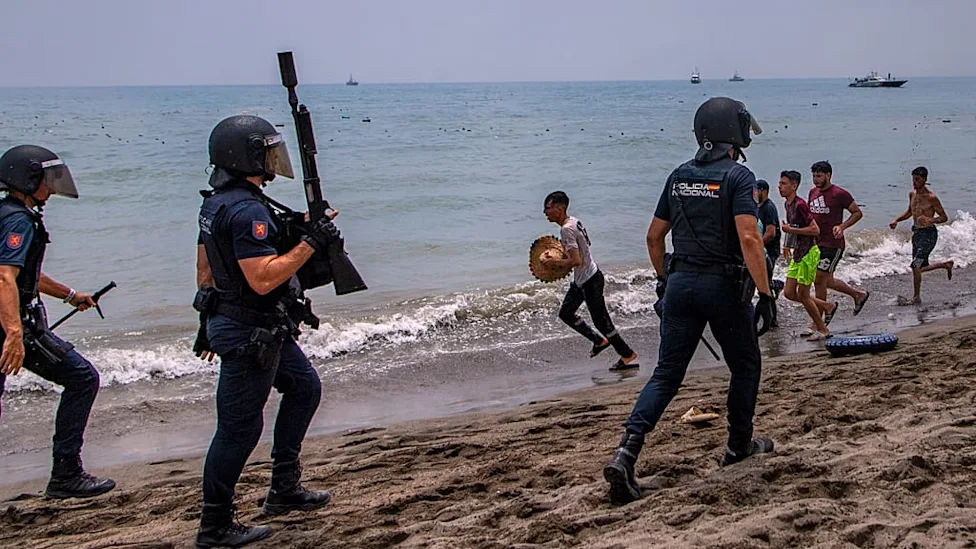
Migrants entered the Spanish territory by swimming through the sea and crossing the land border.
The scale of the movement placed intense pressure on local authorities, security forces and emergency services.
Ceuta is a Spanish autonomous city located on Morocco’s northern coast. It represents one of the European Union’s only land borders with Africa.
Dozens Reported Dead During Dangerous Crossings
Spanish officials said 57 bodies were recovered on their side of the border.
Authorities warned that additional deaths may have occurred on the Moroccan side.
Some migrants reportedly drowned while attempting to swim around the border barriers.
Others were allegedly crushed while trying to climb the breakwater supporting the border fence.
Moroccan security forces used batons and tear gas to stop more people from reaching Ceuta.
Water cannon vehicles were also deployed near the border as clashes intensified.
Burned vehicles, including a bus and several cars, were visible following confrontations between security forces and crowds.
Spanish military vehicles were positioned along parts of the border.
Large groups remained gathered on hills in Morocco but were unable to enter Ceuta.
Migrants Return Amid Food and Shelter Shortages
Hundreds of migrants were seen returning through official border crossings and gaps in the fence.
Several said they were unable to find food, accommodation or basic assistance inside Ceuta.
One young Moroccan man said he regretted crossing after spending hours without food.
Another migrant, a 20-year-old hairdresser from Larache, said he reached Ceuta after swimming for five hours.
He claimed there was no food available and said Spanish forces ordered migrants to leave.
Spanish Prime Minister Pedro Sanchez travelled to Ceuta as the crisis continued.
He described the mass crossing as a violation of Spain’s territorial sovereignty.
Sanchez said authorities were accelerating returns with cooperation from Morocco.
The crisis also created political tension within Europe.
Italy announced the temporary suspension of border-free Schengen arrangements with Spain for air and sea travel.
Madrid rejected the decision and argued that it violated European Union treaties.
Spain later summoned the Italian ambassador after Italian officials criticised Madrid’s migration policies.
Ceuta and Melilla frequently experience attempted migrant crossings. However, officials described the latest movement as unprecedented in scale.

