
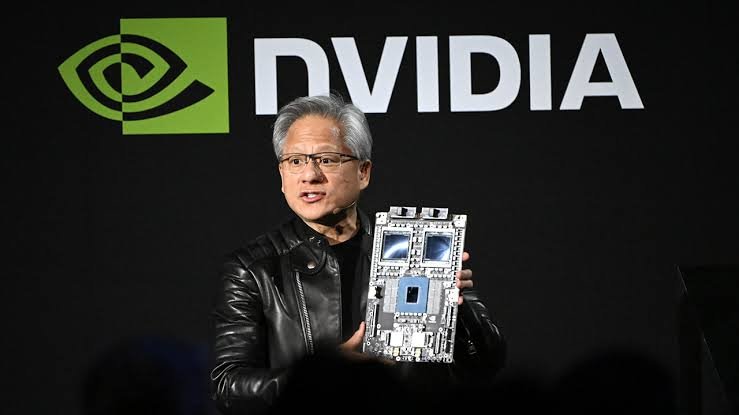

Nvidia CEO Jensen Huang has rejected predictions that artificial intelligence could lead to human extinction.
Huang said the AI industry should continue advancing rapidly while maintaining appropriate safety standards.
Speaking to CBS News, the 63-year-old technology executive pushed back against growing calls to slow the development of increasingly powerful AI systems.
Huang Rejects 2030 Doomsday Predictions
Huang was asked about predictions that AI could cause catastrophic consequences for humanity by 2030.
He gave the possibility a zero-percent estimate.
“2030 is not going to be the end of the world,” Huang said.
He added that there was a “0% chance” that AI would end the world by then.
His comments place him on one side of an increasingly prominent debate in Silicon Valley.
Some AI leaders and researchers have warned that technological progress could be moving faster than safety measures.
Nvidia Chief Calls for Faster AI Development
Huang argued that AI development should continue at a rapid pace.
He said, “We should go as fast as we can irrespective of anybody else.”
However, he clarified that rapid development does not mean releasing unsafe or unfinished products.
Huang said companies should never put products into the hands of users before they are ready.
He also stressed that safety must remain a key requirement during AI development.
Debate Over AI Safety Intensifies
Huang’s comments come as concerns about advanced AI systems continue to grow.
Anthropic CEO Dario Amodei has recently argued that AI companies should slow improvements to their most powerful models.
Amodei has warned that AI capabilities are advancing faster than the safeguards designed to control potential risks.
Former Anthropic researcher Jacob Coxon has also expressed concerns about the long-term risks of advanced AI.
Coxon reportedly left the company after raising concerns about the possibility of AI posing an existential threat to humanity.
Speed Versus Safety
The debate is increasingly focused on how quickly AI development should proceed.
Huang supports rapid technological progress but says companies must maintain safety standards.
His position is that moving quickly and deploying unsafe systems are two different issues.
Nvidia has become one of the most important companies in the AI industry because its processors power many advanced AI systems and data centers.
The discussion over AI safety is expected to continue as companies develop increasingly capable models.

