
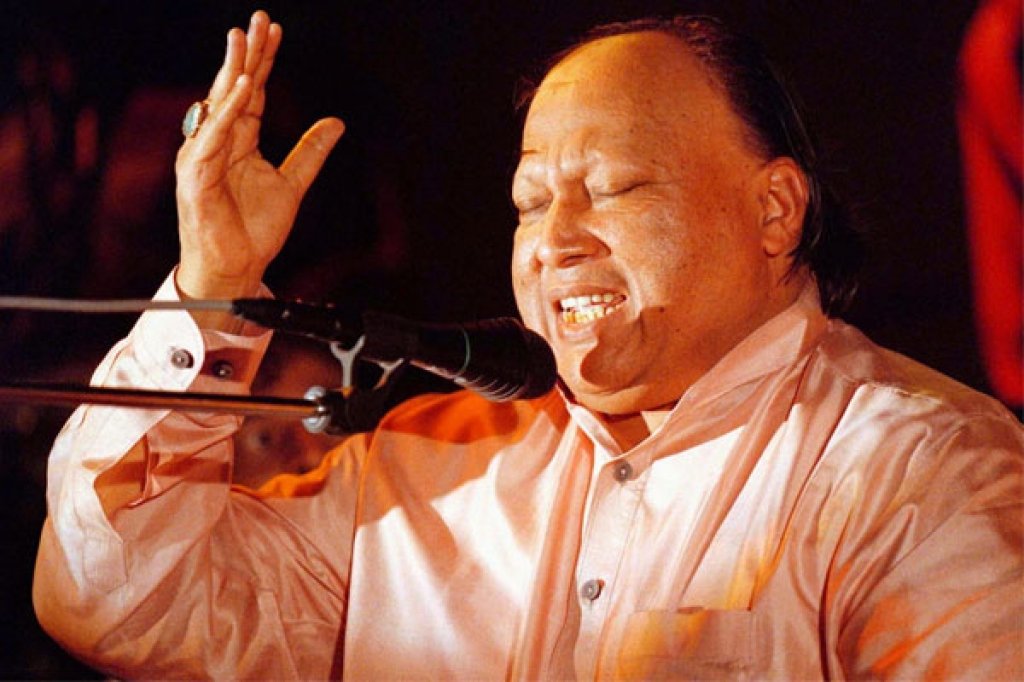

Fans Pay Tribute to the Legendary “King of Qawwali”
The 29th death anniversary of legendary Pakistani singer Ustad Nusrat Fateh Ali Khan is being observed on Sunday, August 16.
Fans, musicians and admirers across the world are remembering the artist who transformed qawwali into a globally recognised musical form.
Widely known as the “King of Qawwali,” Nusrat Fateh Ali Khan became one of Pakistan’s most celebrated musical icons.
His powerful voice, extraordinary vocal range and emotionally intense performances earned him admiration far beyond South Asia.
He played a major role in introducing qawwali to international audiences who had little previous exposure to the traditional musical genre.
His performances combined spiritual expression with powerful emotion.
Songs of love, devotion, longing and pain connected with listeners across different languages, cultures and countries.
Decades after his death, his recordings continue to attract new generations of listeners.
Musicians and vocalists around the world continue to study his technique and draw inspiration from his distinctive singing style.
From Faisalabad to International Concert Halls
Nusrat Fateh Ali Khan was born into a family with a long musical tradition in Faisalabad.
He began receiving musical training at an early age and gradually developed the vocal style that would later make him internationally famous.
Although he became most closely associated with qawwali, his work extended across several musical forms.
He performed hamd and naat alongside traditional and contemporary qawwali.
His ability to combine classical technique with emotional intensity helped him reach audiences beyond traditional religious and cultural settings.
Nusrat also entered the world of film music.
He recorded songs for Pakistani and Indian films and worked on projects that brought his voice to mainstream cinema audiences.
Many of those recordings remain popular years after their release.
His career eventually expanded to major international stages.
Concert halls in Pakistan, India, Europe and the United States regularly attracted large audiences eager to hear him perform.
His global collaborations also helped introduce elements of qawwali to Western musicians and listeners.
Through these performances, he became one of the most internationally recognised Pakistani artists of his era.
Musical Legacy Remains Strong 29 Years After His Death
Nusrat Fateh Ali Khan died in London on August 16, 1997.
His death brought an extraordinary musical career to an early end, but his influence continued to grow.
Today, his recordings remain widely played across television, radio, streaming platforms and live musical performances.
New singers frequently perform his compositions, while established artists continue to acknowledge his influence on their work.
His ability to communicate spiritual and emotional intensity through music remains one of the defining features of his legacy.
For Pakistan, Nusrat Fateh Ali Khan remains a major cultural figure who carried the country’s musical heritage to audiences around the world.
Faisalabad continues to take pride in being the birthplace of one of the most influential voices in qawwali history.
Twenty-nine years after his death, Nusrat Fateh Ali Khan remains more than a celebrated singer.
He remains a symbol of Pakistani music whose voice continues to cross borders, generations and cultures.

