
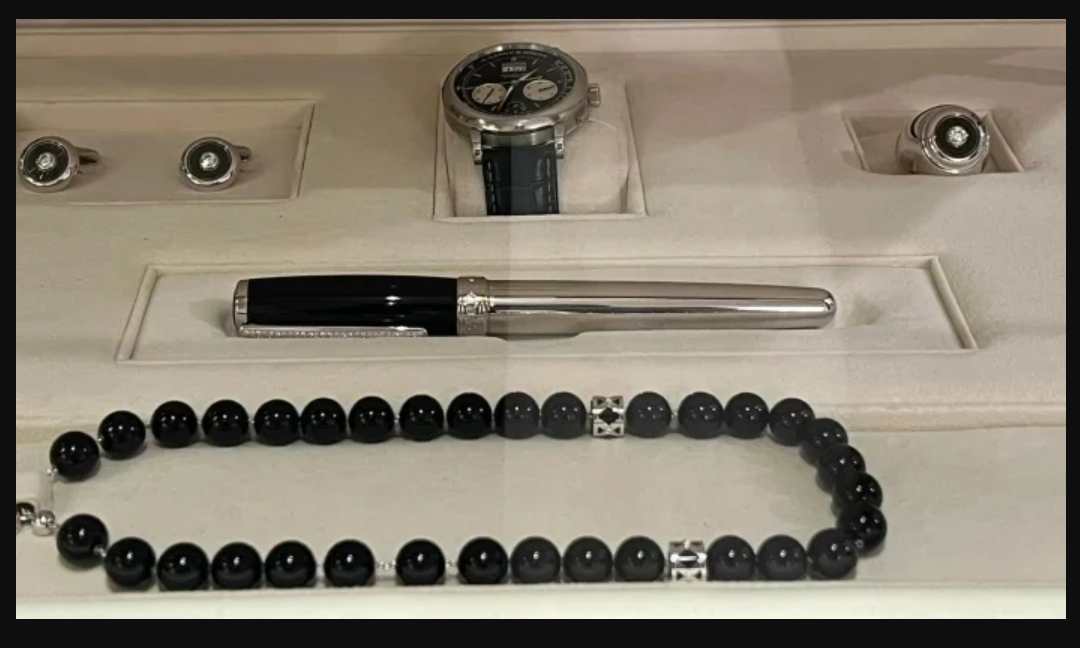

Pakistan has introduced new rules governing gifts received by public officials and private members of official delegations.
The Toshakhana (Management and Regulation) Rules, 2026 discourage most public office holders from accepting gifts from local or foreign dignitaries. However, the restrictions do not apply in the same way to the president and prime minister.
The new framework also sets deadlines for depositing unavoidable gifts and introduces open auctions for eligible items held in Toshakhana.
Officials Discouraged From Accepting Gifts
Under the new rules, public office holders other than the president and prime minister are discouraged from accepting gifts.
Private individuals accompanying official delegations face similar restrictions. They are also discouraged from accepting gifts for themselves or their families.
These restrictions cover gifts received from dignitaries, individuals or companies connected with official business.
However, diplomatic norms or cultural sensitivities may sometimes make refusing a gift difficult.
“Where accepting a gift cannot be avoided because of diplomatic norms or cultural sensitivities, it must be deposited in Toshakhana,” the rules state.
Gifts Must Be Deposited Within Set Deadlines
Officials must declare and deposit unavoidable gifts within 30 days of receiving them. For gifts received during foreign visits, the deadline begins after the recipient returns to Pakistan. Meanwhile, gifts shipped separately to Pakistan can be deposited within 60 days.
The rules also create an exception for lower-grade government employees.
Employees in BS-1 to BS-4 may accept and retain cash awards from visiting dignitaries. This applies where refusing the award could cause offence.
Toshakhana Gifts to Be Auctioned
The new rules provide for open auctions of existing and future gifts held in Toshakhana. The Cabinet Division will conduct the auctions after receiving approval from the committee established under the rules. Moreover, the Ministry of Information and Broadcasting will arrange live media coverage.
The auction should preferably take place every two years. However, it must be held at least once during every financial year.
Public office holders and their families will not be permitted to participate in these auctions.
Some Gifts Will Remain Outside Auctions
Not every gift deposited in Toshakhana will be auctioned. Antiques and items with cultural or historical significance will remain excluded. Similarly, precious gifts and those with diplomatic or international sensitivity will not be auctioned.
This category includes gifts received from foreign heads of state and governments.
Auction Money to Fund Girls’ Education
Money generated through the auctions will go into a separate account.
The funds will be used to promote female primary education in the country’s most backward areas. The relevant federal education ministry will manage the account.
Moreover, the proceeds must be distributed within six months of deposit. Prior approval from the prime minister will be required before disbursement.
AI May Assist With Gift Valuation
The rules also allow approved advanced generative AI assistants to assist with gift valuation.
These AI systems must receive approval from the Ministry of Information Technology and Telecommunication. Their assessments can be used as a reference when determining gift values.
Meanwhile, a Cabinet Division officer of at least BS-20 will oversee Toshakhana records and security.
The rules also require physical locking systems and CCTV coverage for the Toshakhana storeroom. Together, these measures establish new procedures for receiving, storing, valuing and disposing of official gifts.
For the latest updates, visit and follow The Truth International website (www.thetruthinternational.com) and subscribe to the YouTube Channel.

