
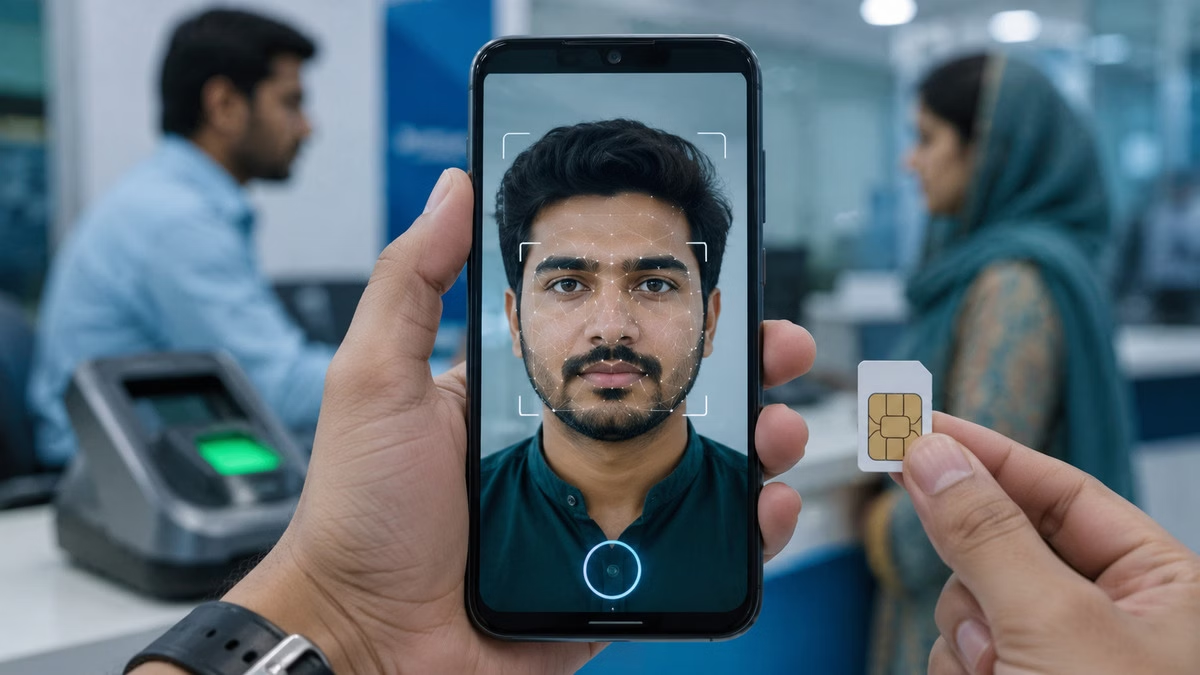

Authorities agree on facial recognition technology but remain divided over platform control, biometric capture and telecom operators’ responsibilities
ISLAMABAD: NADRA and the Pakistan Telecommunication Authority (PTA) have presented differing positions over using the PakID application for facial-recognition-based SIM verification, highlighting regulatory and operational disagreements over the proposed system.
According to a written response submitted by PTA to the Senate Standing Committee on Cabinet Division, NADRA had engaged with the telecom regulator after proposing facial verification through PakID in 2025. Cellular mobile operators also completed a proof of concept.
However, NADRA rejected suggestions that it had withdrawn support for facial recognition, saying its position on the technology remained unchanged.
NADRA Clarifies PakID’s Intended Role
NADRA said it never proposed PakID as the actual platform for issuing SIMs or onboarding telecom customers. Instead, it envisioned PakID as one method through which citizens could obtain facial-verification results using its Multi-Biometric Verification System.
Furthermore, NADRA said telecom operators could perform facial or iris verification through suitable equipment installed at their outlets.
The authority argued that telecom companies control their franchises, staff, applications and customer interactions and should therefore manage biometric-capture equipment.
Under the proposed system, operators would capture biometric information and securely transmit it to NADRA for verification without retaining biometric databases.
NADRA also stressed that facial verification remains an approved alternative when fingerprint authentication is unavailable.
PTA Reviews Technical and Regulatory Framework
Meanwhile, PTA said it was reviewing NADRA’s proposal with the telecom industry under regulations notified on July 28, 2026.
The regulator is also examining other options for nationwide facial verification. One cellular operator is considering integrating facial recognition into its own mobile application, with a proof of concept potentially following technical evaluation.
Moreover, NADRA said safeguards must protect the system against deepfakes, biometric substitution and facial morphing.
NADRA maintains that it will provide backend verification, secure APIs and technical standards, while PTA determines telecom-sector verification requirements and operators deploy infrastructure.
Consequently, further regulatory clarification appears necessary before nationwide facial-recognition-based SIM verification can proceed.

