
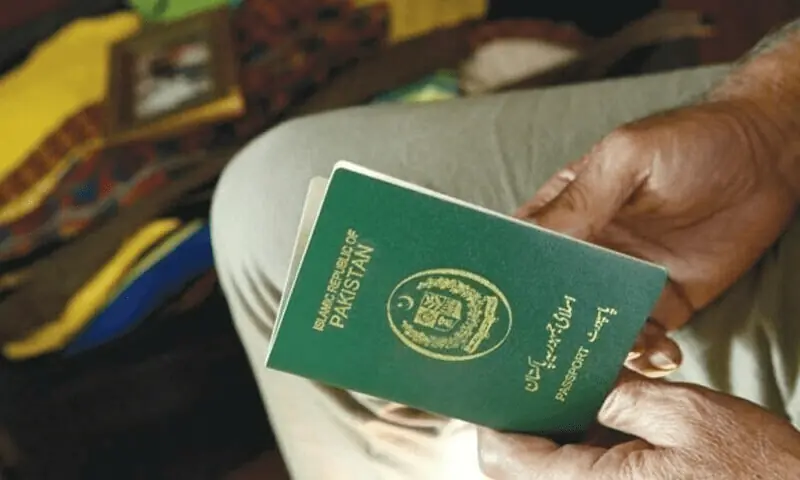

Pakistan’s Ministry of Religious Affairs and Interfaith Harmony has issued new instructions for pilgrims planning visits to Iraq. Under the updated requirements, Pakistani male pilgrims below the age of 50 will not be allowed to enter Iraq if they travel alone.
The ministry shared the instructions through a circular issued on June 22, 2026. Registered Ziarat Group Organizers have been directed to ensure full compliance before pilgrims depart from Pakistan.
The move comes after Iraqi authorities raised concerns regarding the misuse of pilgrimage visas.
Iraq Tightens Visa Rules for Pakistani Pilgrims
According to the new instructions, Iraqi authorities identified cases in which travelers obtained visas through family-group applications but later appeared at immigration checkpoints without their listed relatives.
Officials believe some travelers may have used pilgrimage or visit visas for purposes beyond those declared in their applications.
Authorities expressed concerns that some individuals may attempt to seek employment or engage in unauthorized activities after entering Iraq.
As a result, stricter entry conditions have been introduced.
Family Visa Holders Must Travel Together
Under the revised conditions, travelers receiving visas under the family-group category must travel alongside the same family members named in their applications.
Pilgrims will not be permitted to obtain a family visa and then travel independently.
Additionally, Ziarat Group Organizers must verify that all visa application details remain accurate, complete, and supported by proper documentation.
Authorities also emphasized that travelers must strictly follow the purpose stated in their visa applications.
Pilgrimage and visit visas cannot be used for employment or activities outside approved conditions.
Iraqi Authorities to Retain Passports During Stay
The circular further stated that Iraqi immigration authorities will retain the passports of Pakistani pilgrims after entry.
Officials introduced this measure to discourage overstays and prevent unauthorized employment.
However, diplomatic and official passport holders remain exempt from this requirement.
Every pilgrim must also carry a passport that remains valid for at least six months from the intended travel date.
Moreover, each accompanying family member must possess an individual passport.
This requirement also applies to newborn children.
Separate Visas Required for Ashura and Arbaeen Visits
The updated policy states that Iraqi pilgrimage visas will remain valid for only 30 days.
Pilgrims cannot use one visa for both Ashura and Arbaeen visits.
Those intending to return for Arbaeen after completing an Ashura pilgrimage must apply for a new visa.
Therefore, authorities advised organizers and pilgrims to carefully plan travel schedules and avoid exceeding permitted stay periods.
Overstay Violations May Lead to Serious Consequences
The ministry warned that overstaying for up to 60 days will result in a fine of 500,000 Iraqi dinars.
Meanwhile, travelers remaining beyond 60 days may face the same fine along with detention, deportation, and a lifetime ban on re-entering Iraq.
If penalties remain unpaid, detention may continue until full payment is made. Authorities may also refuse entry to travelers who violate visa conditions. In such cases, visa fees may not be refunded.
The circular additionally noted that immigration decisions will remain final and later requests for admission may not be considered.
Pakistan’s Ministry of Religious Affairs has directed all registered Ziarat Group Organizers to communicate these updated requirements to prospective pilgrims.
Officials advised travelers to follow all conditions carefully to avoid delays, penalties, or denied entry.

