

By Humaira Motala
KARACHI: The name, Civil Hospital Karachi — officially Dr. Ruth K.M. Pfau Civil Hospital, named after the German nun who devoted her life to Pakistan’s leprosy patients — instantly conjures a grim picture. Overcrowded corridors, patients on stretchers in hallways, long pharmacy queues, and a relentless rush in the Emergency.
Yet behind that first impression is a 1200-bed tertiary care institution that still carries the heaviest patient load in Sindh and beyond. It remains the province’s largest public hospital, treating hundreds of thousands each year who cannot afford private care.
From 2023 to 2026: A Personal Witness to Change
In 2023, I saw the harsh reality firsthand. When my child, Bibi Marium, was critically ill and admitted to Surgical Ward 6, I walked through unhygienic corridors and overcrowded beds. Yet amid that gloom, one thing stood out — a dedicated medical team led by Professor Dr. Imrana that provided the best possible care. My child was discharged fully recovered.
Three years later, I returned to a visibly upgraded CHK under the supervision of its Medical Superintendent, Dr. S.M. Khalid Bukhari. He has emerged as a visionary administrator determined to transform CHK into a state-of-the-art facility for patients from Karachi, interior Sindh, and Balochistan. Not everything is perfect yet, but the change from January 2023 to 2026 is impossible to miss.
Rs100 Billion Master Plan: Doubling Capacity and Infrastructure
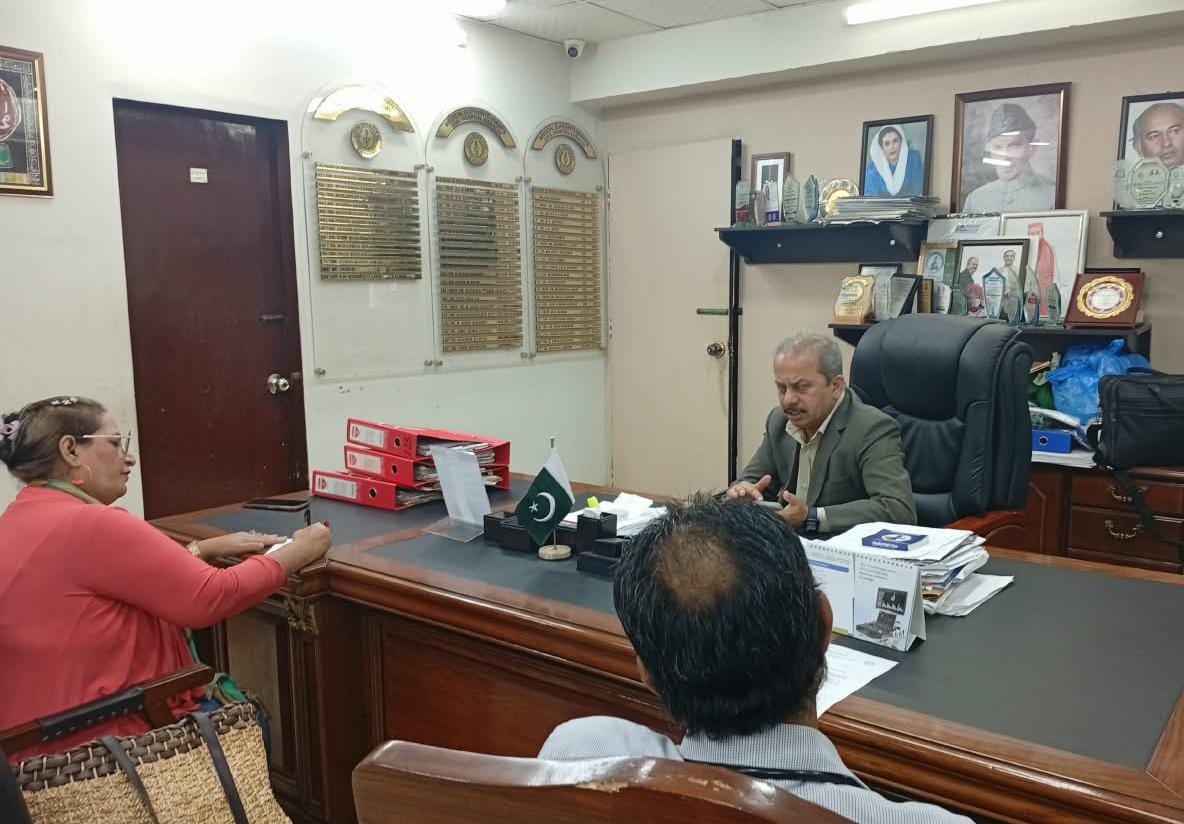
Last week, amid protests and news of the Services Hospital shift, I sat down with Dr. Bukhari for his point of view.
According to him, the Sindh government has approved an initial Rs50 billion master plan, with a long-term vision to invest up to Rs100 billion to transform CHK.
Key components include:
Doubling the hospital’s total area
Adding 500 more beds to the current capacity
Replacing dilapidated structures with modern Medical and Surgical Towers
Immediate construction of the Abdul Sattar Edhi Medical Tower
New OPD block, modernised Burns Ward, dedicated Jail Ward, state-of-the-art mortuary, and new administrative blocks
To manage the expansion, a board of government and private-sector experts has been constituted. Dr. Bukhari stressed: “It will be ensured that the historical heritage and status of Civil Hospital is preserved during the expansion.”
As part of the plan, the current OPD will be shifted to the Services Hospital on M.A. Jinnah Road. The Sindh Health Department has officially decided to relocate Services Hospital to the second floor of Sarfaraz Rafiquee Shaheed Hospital, near Jinnah and NICVD.
That decision has drawn backlash. Dr. Bukhari says the move is tied to a larger purpose: building new multi-storey surgical and medical towers. “For a bigger cause and a better future, sacrifices in comfort and time are inevitable,” he said.
28 Years of Experience Driving Reform
Dr. Bukhari brings 28 years of Health Department experience to CHK. He has served as MS of Services, Korangi, and Saudabad hospitals, and as Program Director for several health programs. He joined CHK almost three years ago.
Soon after taking charge, he introduced strict measures to curb theft and misuse of medicines. The bulk dispensing system was replaced with a satellite pharmacy model that issues medicines strictly on requirement. Pharmacists were inducted to supervise stock category-wise — tablets, injectables, and liquids — bringing accountability to a system that long lacked oversight.
“Pushing reforms was not easy,” he said. “I faced resistance and even a smear campaign.”
Govt Backing and Upgraded Diagnostics
Dr. Bukhari said his projects have the full backing of Sindh Health Minister Dr. Azra Pechuho and the Sindh Government. “Dr. Azra has a broad and revolutionary vision for public healthcare and is firmly committed to pushing through all necessary reforms,” he noted. Under his administration, the hospital’s pathology lab is now ISO-certified, with fees paid regularly to maintain international standards.
“All diagnostic tests here are free, including X-rays, MRI and CT scans,” he said. “While other government hospitals ask patients to purchase the injectable required for these tests, at Civil we provide it at no cost.”
The scale is massive: 12,000 to 14,000 diagnostic tests are carried out daily. Bed capacity has been increased to 1,900. OPDs now cater to 6,000 to 7,000 patients daily.
Emergency Overhaul and Free Advanced Surgery
“The biggest progress has been in the International Emergency Department,” Dr. Bukhari said. “We have expanded capacity from 45 to 85 beds to manage the growing influx of critical patients.”
Dr. Ubaid, Assistant Professor from Dow Medical College in the Medicine Department, added: “Most critical and emergency cases at night from both government and charitable hospitals across the city are referred to CHK. We handle dog and snake bite cases daily, and anti-venom and vaccines are available round the clock. We do not turn any patient away — not even a ‘gone case.’”
Dr. Bukhari endorsed that: “The results speak for themselves.”
CHK is now among the finest public hospitals performing robotic surgeries in Paeds and General Surgery. It has also introduced Vascular Surgery — a minimally invasive technique for complex artery and vein conditions.
“Such robotic procedures cost millions in private hospitals. At CHK, we are providing them free of cost to the people of Sindh, Balochistan, and beyond,” he said.
To meet demand, operation theaters have increased from 3 to 5, enabling more surgeries round the clock.
Summing up, Dr. Bukhari takes pride in the renewed Emergency Department, satellite pharmacy, and IV dilution lab — the first of its kind at CHK.
“It’s easy to build such facilities, but the real challenge is maintenance,” he said. “We are doing everything to ensure updated equipment and proper upkeep. Even the two incinerators are in place to ensure safe disposal and destruction of hospital waste.”
A Guided Tour: Inside the New Emergency
On Dr. Bukhari’s insistence, I was taken on a tour to verify the upgrades myself — a rare step for the head of any institution.
Dr. Shah Muhammad Shaikh, AMS, personally walked me through all departments. We will cover the full hospital tour in the next episode, but the visit to the new Emergency Department with Dr. Sangeeta Kumari, Senior Woman Medical Officer Emergency, was a standout professional experience. The Emergency has been smartly redesigned. The front is now divided to separate severe cases from those needing less urgent care.
There is a dedicated Triage Department where patients are treated first and then transferred to male or female wards. After 24 hours of observation, they are shifted to Gastric, Gynae, Orthopedic, and other departments.
Other additions include a Resuscitation Room for critical and fainting cases, and a separate Dog Bite Washing Area. Dr. Shah also showed a fully equipped Seminar Room used to train staff assigned to Emergency.
Dr. Sangeeta explained the most striking change: “The entire Emergency was designed without traditional beds. Instead, we use a specially designed patient station as a bed, so there’s no need to shift patients back and forth for tests.”
Dr. Shah, a seasoned administrator, guided us through the X-ray and Ultrasound rooms as well.
The Vision Behind the Change
In the end, Dr. Bukhari’s vision is the driving force behind this transformation.
A visionary administrator, he believes a public hospital must match the standards of the finest private institutions — not in cost, but in care, technology, and dignity for patients.
As he put it:
“A hospital is not just bricks and machines. It is a promise — that no matter who you are or where you come from, you deserve the best treatment we can offer.”
Stay tuned — I’ll be back soon with Episode 2: a walkthrough of the other departments and how CHK is being rebuilt from the inside out.
About the Author:
The writer is a senior journalist and columnist covering crime, law, social issues, governance, energy, health, literature, and women and children’s rights across Pakistan’s leading English media houses.
Feedback: mediawomen2014@gmail.com

