
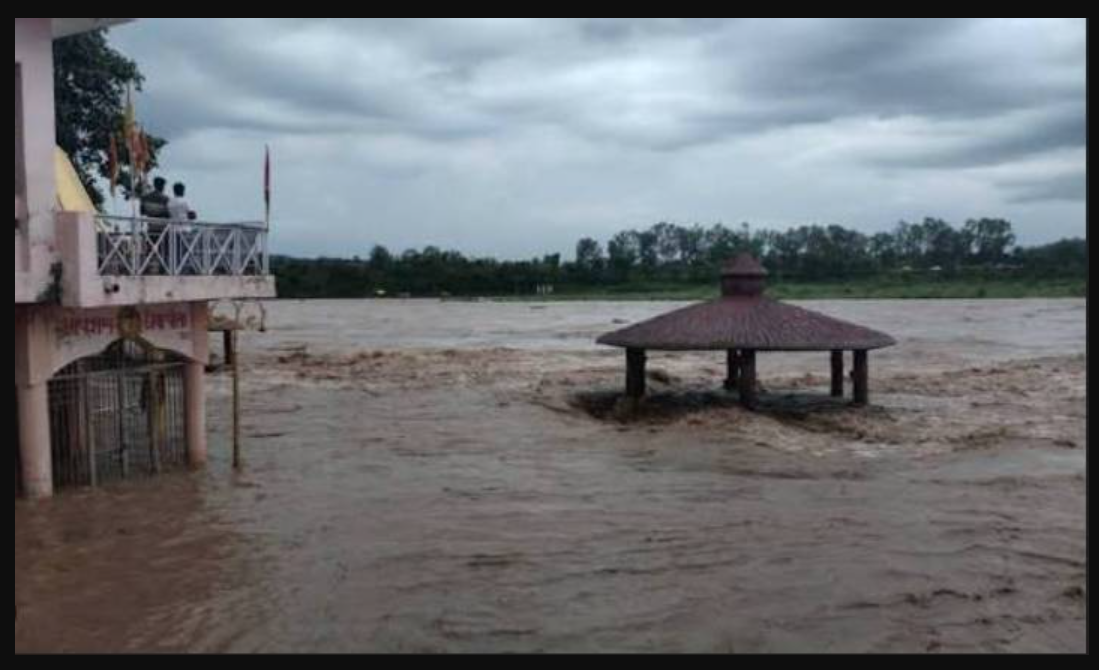

Punjab continues to face the devastating impact of heavy monsoon rains as widespread flooding disrupts daily life across several districts. The second spell of monsoon has claimed 27 lives and injured 185 people, while rising rivers, submerged roads, and collapsing buildings have heightened concerns across the province.
Lahore, Gujranwala, Faisalabad, and several other cities received torrential rainfall, leaving many neighbourhoods under water. Meanwhile, emergency authorities remain on high alert as floodwaters continue moving through vulnerable areas.
Punjab Records 27 Deaths During Second Monsoon Spell
Punjab Disaster Management Authority (PDMA) Director General Umar Abbas Mela said that 27 people have lost their lives during the second spell of monsoon rains. In addition, 185 people have suffered injuries in rain-related incidents.
While briefing the media in Lahore, he said Lahore, Rawalpindi, and Gujranwala received the highest rainfall.
“Torrential rains were also reported from Jhelum, Narowal, Sialkot and other cities of the province,” he said.
He added that water levels at Kalabagh and Mangla dams remain within normal limits.
“The situation in the River Jhelum and River Sutlej is not alarming either,” he said and added that water had receded in the River Ravi at Shahdara.
PDMA Says Third Monsoon Spell Will Be Less Intense
The PDMA chief assured that preparations have improved compared to previous years.
He explained that rainwater remained on roads for several days last year. However, authorities purchased machinery to improve drainage this season.
“The third monsoon spell, which was approaching the country, would not be as strong. Hence, there will be no flood-like situation. However, we need to exercise caution,” he asserted.
He also urged citizens to remain vigilant.
“They should avoid staying in buildings, which are in dilapidated condition, stay away from electric poles and wires, avoid going near rivers, streams and nullahs.”
Chenab River Reaches High Flood Level Near Jhang
The Chenab River remained in a high-flood condition near Jhang after continuous heavy rainfall across Punjab.
According to officials, nearly 200,000 cusecs of water passed through Riwaz Bridge.
Deputy Commissioner Jhang Babar Sahibdin and other senior officials visited nearby low-lying areas and the Rescue 1122 flood relief camp established near the river.
Authorities also inspected protective embankments and reviewed emergency arrangements to ensure public safety.
Roof Collapse Incidents Claim Five Lives
Heavy rainfall triggered multiple roof collapse incidents in Lahore and Chunian, killing five people.
In Lahore’s Garhi Shahu area, the roof of an old house collapsed in Railway Colony.
The incident claimed the lives of a husband, wife, and their daughter. Another daughter survived the tragedy after rescue teams recovered her from the debris.
In a separate incident on Bedian Road, three people sustained injuries after another roof collapsed.
Meanwhile, in Chunian, two more people died when a house roof collapsed near Adda Dhang Shah on Depalpur Road.
The victims were identified as 65-year-old Muhammad Nazeer and 10-year-old Shoaib Ali.
Floodwaters Cut Off Villages Across Punjab
Heavy rains continued affecting several districts throughout the province.
In Shakargarh, overflowing drains severed road links connecting 25 villages.
Floodwater flowing from the Koh-e-Suleman Range washed away barrages in affected areas.
Furthermore, rainwater entered homes in Kot Qaiserani and Taunsa Sharif, forcing many families to deal with flooding inside residential areas.
Several houses were also swept away by strong flood currents.
Lahore Struggles with Urban Flooding
Lahore witnessed widespread water accumulation after intense rainfall.
The Water and Sanitation Agency (WASA) remained on high alert as roads and low-lying areas flooded across the city.
Among the highest rainfall totals, Saggian recorded 60 millimetres, followed by Upper Mall with 52.2 millimetres and Lakshmi Chowk with 44.6 millimetres.
Several other areas also received significant rainfall, causing traffic disruptions and waterlogging.
Rain Continues Across Other Cities
Heavy rainfall also affected Sargodha, Faisalabad, Pindi Bhattian, Kharian, Sarai Mughal, Muridke, Shahkot, Manawala, Phoolnagar, Narowal, Phalia, Sahiwal, and Gujranwala.
In Pindi Bhattian, multiple electricity feeders tripped, while roads and residential areas remained submerged.
Moreover, rainwater entered several homes, increasing hardship for residents.
Although Kharian experienced pleasant weather after rainfall, nearby roads also faced flooding.
Karachi and Sindh Also Receive Heavy Rain
Several parts of Karachi received thunderstorms during the past 24 hours.
Rainfall was reported from North Karachi, Rasheedabad, Power House Chowrangi, UP Morr, Gulshan-e-Iqbal, Gulshan-e-Maimar, New Karachi, and Surjani Town.
Meanwhile, heavy rainfall in Sindh continued raising water levels in the Indus River.
Officials warned that the river could cross the 200,000-cusec mark, while low-lying areas and agricultural fields remained flooded.
Fresh Rain Alert Issued
The Provincial Disaster Management Authority in Khyber Pakhtunkhwa has also issued a fresh alert for additional monsoon rains over the next three days.
Authorities warned of possible landslides, cloudbursts, and flooding in streams and nullahs across Mansehra district.
Consequently, the district administration cancelled four festivals scheduled in Kaghan Valley until July 29.
Meanwhile, the Pakistan Meteorological Department forecast more thunderstorms during the next 24 hours in Sindh, southern Khyber Pakhtunkhwa, Punjab, Kashmir, and northeastern Balochistan.
The department also warned that isolated heavy rainfall is expected in Sindh and southern Punjab, urging citizens to remain cautious as the monsoon system continues affecting different parts of the country.

