
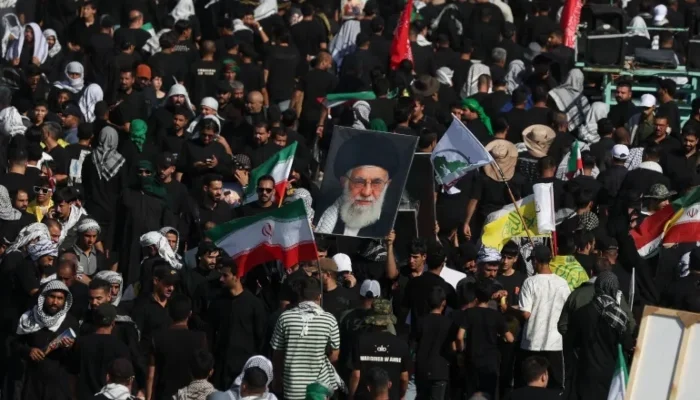

Millions expected at final funeral ceremony while Middle East security concerns intensify
MASHHAD: Iran on Thursday prepared for the burial of former Supreme Leader Ali Khamenei in the northeastern holy city of Mashhad, concluding a week-long funeral attended by millions of mourners across Iran and Iraq as renewed US military strikes heightened tensions in the Middle East.
According to Iranian officials, the burial at the Imam Reza Shrine marks the final stage of nationwide funeral ceremonies that began in Tehran before continuing through Qom, Najaf and Karbala. Mashhad Governor Hassan Hosseini said authorities expected nearly 15 million people to attend the final rites.
Organizers delayed the ceremony until the afternoon after funeral events in Iraq extended beyond schedule. Iranian state media reported that Khamenei would be laid to rest at the Imam Reza Shrine, one of Shia Islam’s holiest sites and a place of deep personal significance, as he was born and began his religious education in Mashhad.
Regional tensions overshadow funeral
The funeral concluded as the United States launched new strikes targeting Iranian positions following attacks on shipping in the Strait of Hormuz. US President Donald Trump warned that additional action could follow if attacks on maritime traffic continued.
The latest military developments have increased concerns over the durability of the fragile ceasefire reached after weeks of conflict. Meanwhile, Iranian authorities earlier reported strikes targeting US military facilities in Bahrain and Kuwait, further underscoring the volatile regional security environment.
Leadership transition draws attention
Observers continued watching for any public appearance by Iran’s new Supreme Leader, Mojtaba Khamenei, who has not appeared publicly since succeeding his father. Media reports have suggested he was injured during the February 28 strike that killed Ali Khamenei, although Iranian authorities have not officially commented.
Officials said Ali Khamenei will be buried alongside several family members killed in the same attack. Analysts say the funeral has served not only as a religious ceremony but also as a major national event intended to demonstrate continuity, unity and resilience during a period of significant political and regional uncertainty.

