
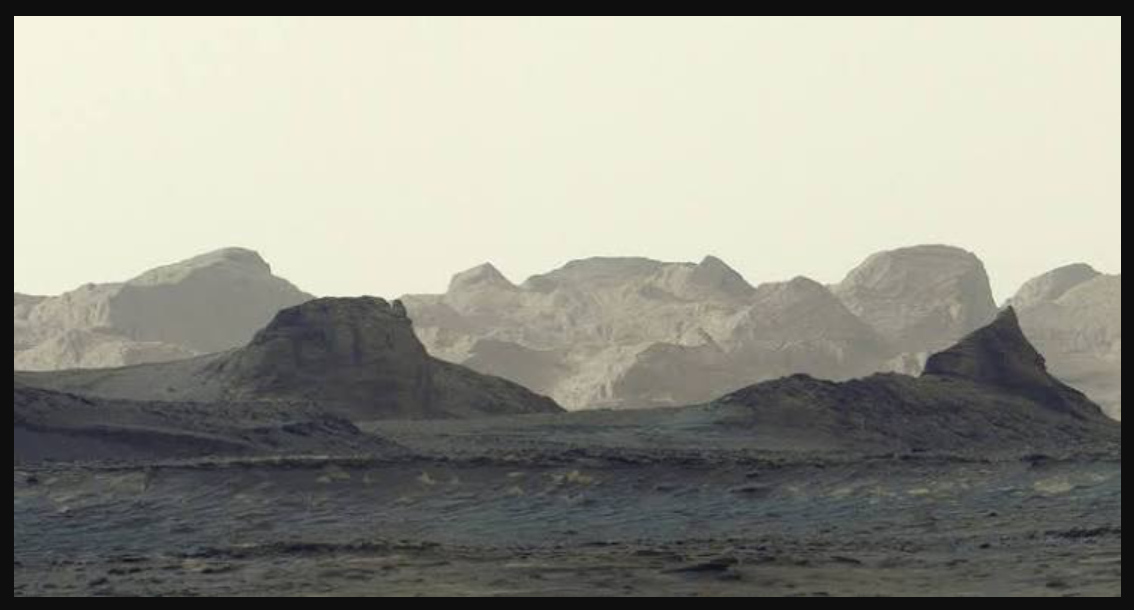

NASA’s Curiosity rover has captured a striking view of sunrise over Mars, revealing jagged rock formations shaped by billions of years of wind.
The image shows sunlight spreading across the Martian surface as Curiosity continues its climb through Gale Crater. The rover captured the scene on August 11, 2026, using its Mastcam camera.
NASA released the photograph on October 6. It provides a closer view of wind-carved crags known as yardangs on Mount Sharp.
Curiosity Captures Mars Shortly After Sunrise
The six-wheeled Curiosity rover took the image about an hour after the Sun appeared above the Martian horizon.
The distant landscape features cliffs and ridges shaped by wind over an extremely long period. Scientists believe the rock formations formed around three billion years ago.
Curiosity landed in Gale Crater in 2012 near Mars’ equator. Since 2014, the rover has been gradually climbing Mount Sharp.
The mountain rises about three miles above the crater floor. During its ascent, Curiosity has gained more than 0.6 miles in elevation.
NASA says this is the greatest elevation climbed by any rover on Mars.
Ancient Yardangs Hold Clues About Mars
The prominent formations in the new image belong to a rock layer that differs from the layers Curiosity has encountered during its journey.
Planetary scientist Ashwin Vasavada of NASA’s Jet Propulsion Laboratory described the unusual formations and their possible origins.
“The bright craggy peaks in the distance are a rock layer that is quite different in appearance from all the layers the rover has driven through so far. We think it once was wind-blown sediment, maybe sand or maybe even ash that blew into the crater from nearby volcanic activity.
After the sediment hardened into rock, eons of wind carved up the rock layer into ridges called yardangs,” said planetary scientist Ashwin Vasavada of Nasa’s Jet Propulsion Laboratory in California, the Curiosity project scientist.
According to Vasavada, the yardang layer most likely formed about three billion years ago. It stretches across roughly 10 miles of Mount Sharp’s northwestern reaches.
However, scientists believe the layer does not form part of Mount Sharp’s continuous sequence of geological layers.
A Missing Chapter in Mount Sharp’s Geological Record
Vasavada explained that the yardang layer appears to have formed later than the layers beneath it.
“However, the yardang layer doesn’t appear to be part of the continuous stack of layers that make up the layer-cake of Mount Sharp. It was added on a little later. It’s above what geologists call an unconformity: a gap in time where previous layers eroded down before new layers were deposited on top,” Vasavada said.
An unconformity represents a period when earlier geological layers eroded before newer material accumulated. Therefore, the formation could help scientists understand another stage of Mars’ geological history.
Curiosity’s continued ascent allows scientists to study different layers exposed across Mount Sharp. Each layer can preserve evidence from a particular period in the planet’s past.
Mars Was Once Wetter and Warmer
Mount Sharp’s layered structure has helped scientists investigate the ancient environment of Mars.
By studying these geological layers, researchers have found evidence related to bodies of water, lakes and streams that once existed in the region.
Mars was wetter and warmer during that distant period than the cold and desolate world seen today.
Curiosity has therefore continued examining the planet’s geology and climate. It is also investigating whether Mars once had conditions capable of supporting microbial life.
Curiosity Could Reach Yardang Layer Soon
NASA expects Curiosity to reach the yardang layer in 2027 or 2028.
Once the rover reaches the formation, scientists plan to use its instruments to examine the geology more closely.
That future investigation could provide additional information about how the unusual rock layer formed. It may also help researchers better understand the geological changes recorded on Mount Sharp.
Curiosity remains one of two NASA rovers currently operating on Mars. Meanwhile, the Perseverance rover is exploring the margins of Jezero Crater in the planet’s northern hemisphere.
Mars Dawn Looks Familiar Yet Strange
The latest image offers a particularly striking view of Mars because the landscape carries both familiar and unfamiliar features.
Vasavada compared the scene with a famous landscape on Earth while highlighting the differences visible in the Martian sky.
“This scene has a wildness that reminds me of a road trip through Monument Valley, Arizona. You can almost feel the silence and the endless open space under the sky. But as familiar as that sounds, the sky is orange and the sunrise has shades of blue. It’s like Earth, but it’s definitely Mars,” Vasavada said.
The image therefore captures more than a Martian sunrise. It also reveals an ancient landscape shaped by wind and geological change.
As Curiosity continues climbing Mount Sharp, the rover is moving toward rocks that could provide another glimpse into Mars’ distant environmental history.
For the latest updates, visit and follow The Truth International website (www.thetruthinternational.com) and subscribe to the YouTube Channel.

