
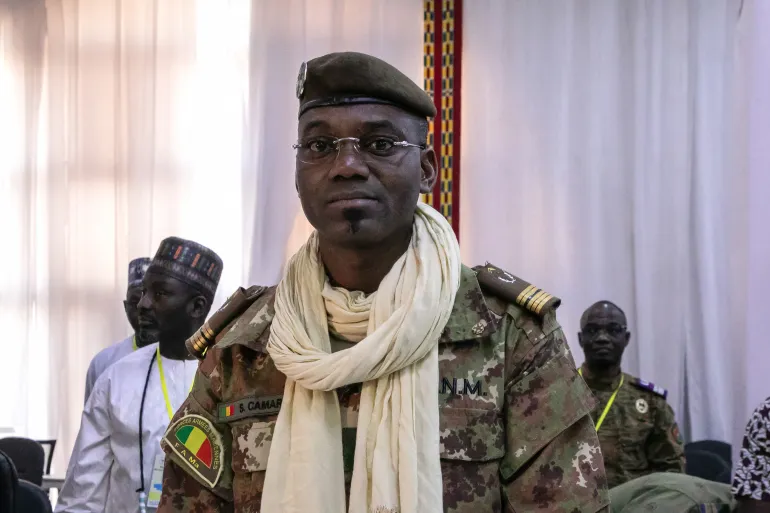

Mali is facing a major security crisis after the killing of its defence minister. Sadio Camara died during coordinated attacks on military targets across the country. The development marks a significant escalation in ongoing conflict.
The government confirmed his death on Sunday. Spokesperson Issa Ousmane Coulibaly said attackers targeted Camara’s residence. The assault took place in the heavily guarded town of Kati.
Kati is located near the capital Bamako. It is considered one of the most secure military zones in the country. The successful attack has raised serious concerns about national security.
Coordinated Attacks Expose Security Gaps
The assault on Camara’s residence was part of a broader operation. Armed groups launched simultaneous attacks across multiple regions. These included Bamako, Gao, Kidal, and Sevare.
Reports indicate the use of a suicide car bomb in Kati. The explosion caused heavy damage and casualties. Camara’s family was also affected. His second wife and two grandchildren were killed in the blast.
The attacks were carried out by allied armed groups. These include Jama’at Nusrat al-Islam wal-Muslimin and the Azawad Liberation Front.
Security analysts say this alliance is significant. These groups previously operated separately. Their cooperation signals a shift in strategy.
Gunfire and explosions continued in several regions even after the initial attacks. Residents in northern areas reported ongoing clashes. This suggests the operation was large and well-coordinated.
Political Impact and Leadership Concerns
Camara was a key figure in Mali’s military government. He played a central role after the coups of 2020 and 2021. Many viewed him as a powerful leader within the ruling structure.
His death is seen as a major blow to the government. Analysts believe it could weaken military coordination. It may also affect morale within the armed forces.
Interim President Assimi Goita remains in control. Officials confirmed that he was moved to a secure location during the attacks. He continues to oversee military operations.
Experts warn that instability may increase. The loss of a senior leader could create a power gap. It may also encourage further attacks by armed groups.
Rising Threat of Unified Armed Groups
The attacks highlight a growing threat. Armed factions in Mali are becoming more coordinated. Analysts note that rival groups have formed alliances.
Security expert Bulama Bukarti said the cooperation between these groups is strategic. They share a common objective of challenging the state.
He warned that more battles are likely. Key territories and strategic locations could become targets. The conflict may intensify in the coming days.
International organizations have condemned the attacks. These include the African Union, the Organisation of Islamic Cooperation, the United States Bureau of African Affairs, and the European Union.
They have called for stability and an end to violence. However, the situation remains volatile. Mali continues to face one of its most serious security challenges in recent years.
The coordinated nature of these attacks signals a new phase in the conflict. The coming days will be critical for the country’s future stability.

