
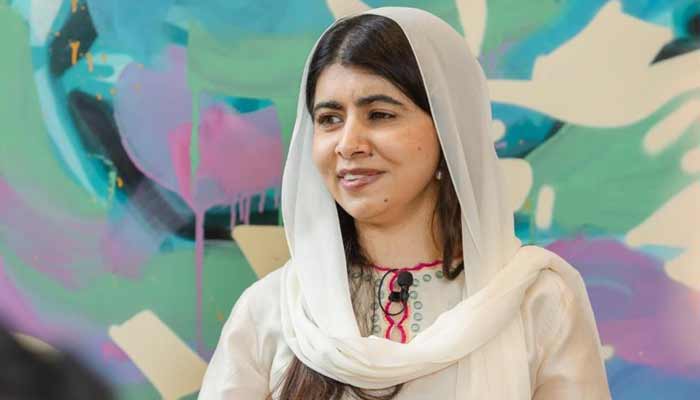

Nobel laureate says any engagement with Taliban must prioritise rights of Afghan women and girls
ISLAMABAD: Nobel Peace Prize winner Malala Yousafzai has sharply criticised the European Union’s decision to invite Taliban officials to Brussels for migration talks, warning that such engagement risks legitimising a regime accused of systematically stripping Afghan women and girls of their rights.
In a video message shared on Instagram, Malala said she was “shaken and deeply disturbed” by the EU’s move to host Taliban representatives for discussions linked to migration policy. She urged European leaders not to ignore what she described as one of the world’s gravest human rights crises.
“The EU has invited Taliban officials to Brussels to discuss a migration deal and today I am shaken and deeply disturbed by this,” Malala said in the video.
She accused the Taliban of enforcing policies that have devastated the lives of Afghan women and girls, pointing to bans on secondary education for girls, forced marriages and recent arrests of women in Herat over their dress.
Malala says Afghan women continue to face intimidation and exclusion
Malala said women who speak out against Taliban rule continue to face threats, detention and violence, while millions of women and girls have effectively been excluded from public life.
She described the situation in Afghanistan as a form of “gender apartheid,” arguing that the Taliban have institutionalised discrimination by removing women from schools, workplaces and public spaces.
Her remarks also referenced the wider atmosphere of fear under Taliban rule, with activists and ordinary women facing severe consequences for resisting restrictions or publicly challenging the authorities.
Calls grow for rights-focused approach in any Taliban engagement
Malala urged European governments to ensure that any dialogue with the Taliban places the rights and freedoms of Afghan women and girls at the centre of the conversation rather than treating migration alone as the priority.
“Europe must not legitimise a regime responsible for one of the worst human rights crises in the world,” she said.
Her comments quickly drew attention online, with supporters praising her for continuing to use her platform to advocate for Afghan women and girls.
The EU’s outreach to Taliban officials has already triggered criticism from rights groups and campaigners, who argue that direct engagement without strong human rights conditions risks normalising the Taliban’s rule while offering little protection to those most affected by its policies.

