
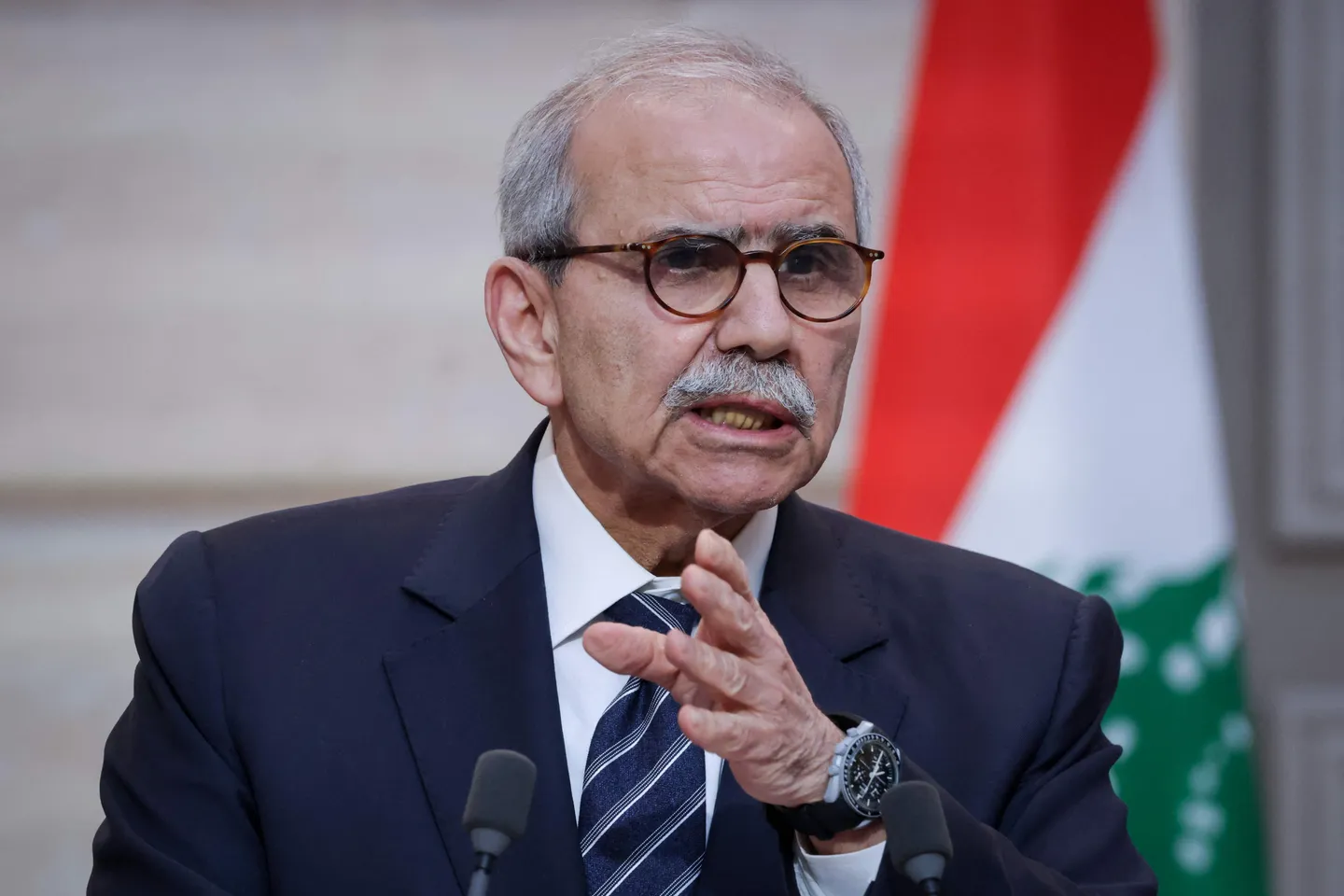

Prime minister clarifies purpose of framework amid post-war recovery efforts
Lebanese Prime Minister Nawaf Salam said on Wednesday that the US-sponsored framework signed with Israel is intended to guide future negotiations rather than serve as a binding agreement or peace treaty.
Speaking in an interview with Lebanon’s private broadcaster LBCI, Salam said the term “framework agreement” had created misunderstanding. He explained that the document establishes the path for negotiations aimed at eventually reaching a formal agreement but does not itself constitute one.
Salam acknowledged that Lebanon did not seek negotiations with Israel but said the country had reached this stage after two devastating wars that caused heavy human and economic losses. According to him, direct damage exceeded $7 billion, while broader economic losses are estimated at approximately $13 billion.
Withdrawal and return of displaced families remain priorities
The prime minister said successful implementation of the framework should result in Israel’s withdrawal from Lebanese territory and enable displaced residents to return safely and with dignity to their homes in southern Lebanon.
“Our goal is the return of southerners to their homes and stopping the bleeding,” Salam said, adding that the government remains committed to restoring stability across the country.
He also stressed that Lebanon does not seek confrontation with Hezbollah but intends to ensure that all weapons remain under the exclusive authority of the state. At the same time, he rejected what he described as threats or attempts to pressure the government through the prospect of civil conflict.
Framework outlines future negotiations
The US-backed framework, signed by Beirut and Tel Aviv last week, aims to facilitate a phased Israeli withdrawal from Lebanese territory while reducing hostilities along the border. The document also links future withdrawals to the deployment of the Lebanese Army in vacated areas and the disarmament of armed groups operating outside state control.
However, the framework does not establish a specific timetable for Israel’s withdrawal from disputed areas.
According to Lebanon’s Health Ministry, Israeli military operations since March 2, 2026, have killed more than 4,000 people, injured over 12,000 and displaced more than one million residents, underscoring the urgency of achieving a lasting reduction in hostilities.

