
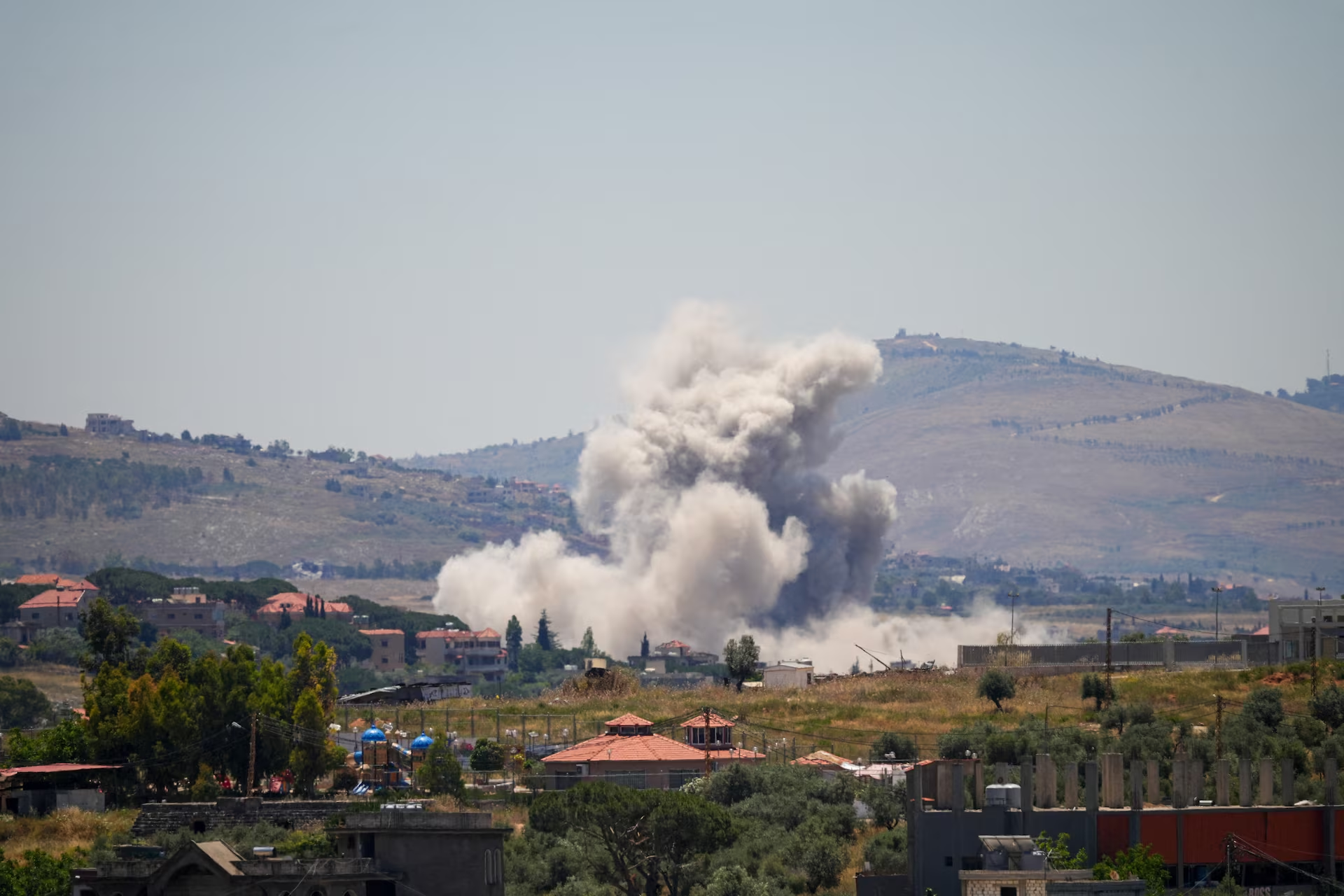

Constitutional protections complicate property searches as officials debate military authority
BEIRUT: The Lebanese Armed Forces are facing legal and constitutional obstacles in conducting searches of private property in designated pilot zones in southern Lebanon, according to Lebanese media reports.
The issue has emerged just over a week after the Israeli military withdrew from the areas under a US-mediated arrangement intended to keep the zones free of Hezbollah’s armed presence.
According to L’Orient-Le Jour, the Lebanese Army currently lacks the legal authority to search private residences without judicial approval, raising questions about how it can verify compliance with the security arrangements.
Article 14 of Lebanon’s Constitution guarantees the inviolability of the home, allowing entry only under specific legal circumstances, including judicial warrants, emergencies or matters of public safety.
Officials outline legal requirements
Prosecutor Ahmad al-Hajj told L’Orient-Le Jour that he has not authorised searches of private homes and said any request would require credible intelligence indicating the likely presence of weapons.
He added that prosecutors would grant permission only if supported by substantial evidence, rather than through routine or widespread inspections.
Constitutional law expert and former minister Adnan Sayyed Hussein also said property owners and local officials would generally need to be present during authorised searches, a requirement that could prove difficult because many residents remain displaced.
Justice Minister Adel Nassar said Lebanese law protects the sanctity of private homes but also prohibits the possession of military equipment inside residential properties.
Security concerns continue
The report comes amid continuing debate over the Lebanese Army’s ability to enforce security arrangements in southern Lebanon.
The Jerusalem Post has previously reported that Hezbollah-affiliated civilian organisations remain active in some areas following the Israeli withdrawal. Israeli officials have also previously alleged that Hezbollah stored weapons inside civilian buildings during the conflict. Hezbollah has denied allegations that it uses civilian infrastructure for military purposes.
Security analysts quoted by the publication said the continued presence of organisations linked to Hezbollah could present operational and intelligence challenges, although the current agreement does not explicitly prohibit all civilian institutions associated with the group.
The Lebanese authorities have not announced any changes to the legal framework governing property searches, and discussions over balancing constitutional protections with security requirements remain ongoing.

