
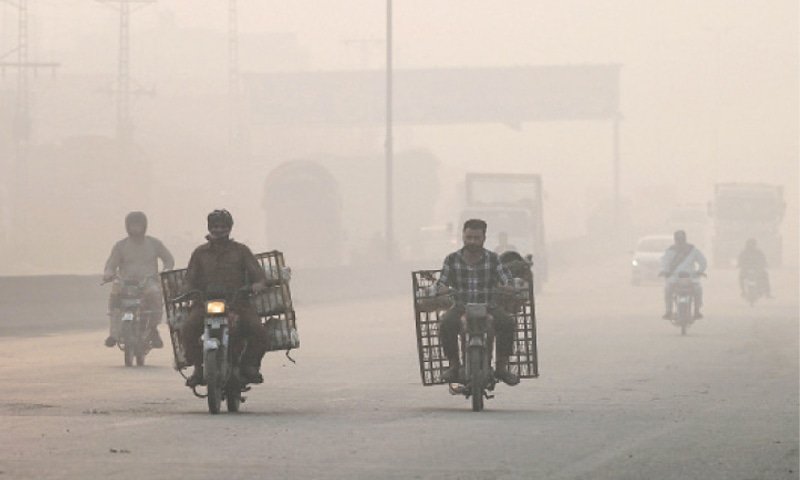

Lahore is facing another serious air pollution crisis as its Air Quality Index (AQI) climbed to around 451 on Wednesday, November 11.
The city remained among the world’s most polluted urban centres as thick smog covered residential areas and major roads.
According to reported monitoring figures, several locations recorded even higher pollution levels. Multan Road, Safari Park and GT Road reportedly reached an AQI of 500.
Kahna recorded 490, while Gulberg reached 475. Other affected areas included Egerton Road, Shahdara and DHA Phase VI.
The figures highlight the uneven distribution of pollution across Lahore, with some neighbourhoods facing particularly dangerous conditions.
Other Punjab Cities Also Face Dangerous Air
The worsening air quality is not limited to the provincial capital. Multan, Faisalabad and Gujranwala have also reported extremely high pollution readings. Multan’s AQI reportedly approached 1,000, while Faisalabad recorded readings above 580.
The situation has raised concerns about respiratory illnesses and other health problems.
Hospitals are reportedly receiving more patients experiencing breathing difficulties, throat infections and eye irritation.
Doctors have advised residents to avoid unnecessary outdoor activities and wear protective masks when going outside.
What Is Driving Lahore’s Smog Crisis?
Several factors contribute to Lahore’s recurring winter smog. Vehicle emissions, industrial pollution, construction dust and agricultural residue burning release harmful particles into the atmosphere.
Authorities have also pointed to possible cross-border pollution following Diwali fireworks in neighbouring Indian Punjab.
Light winds and stagnant weather can trap pollutants close to the ground, making air quality worse. However, experts say pollution comes from multiple sources, and the contribution of each requires proper measurement.
Residents Urged to Take Precautions
The continuing crisis has renewed concerns about long-term air quality management in Punjab. Residents should limit outdoor exposure, particularly during periods of peak pollution. Children, older people and those with respiratory conditions need extra precautions.
Using well-fitted protective masks and keeping windows closed during severe smog can also help reduce exposure.
Lahore’s latest readings underline the need for stronger pollution controls and sustained action against major emission sources.
For the latest updates, visit and follow The Truth International website (www.thetruthinternational.com) and subscribe to the YouTube Channel.

