
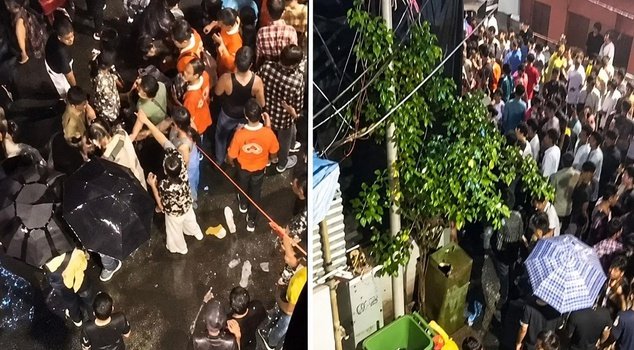

KOLKATA, India: A deadly stampede during a major religious festival in Kolkata killed at least 17 people and injured 25 others on Saturday. Heavy rainfall and overcrowding reportedly contributed to the tragedy.
The incident occurred around 7:40 pm near the exit gate of the Sarada Park festival venue in Kolkata’s Girish Park area. Thousands of visitors had gathered for the annual Durga Puja celebrations.
According to Kolkata Police, large crowds struggled to move through the venue as heavy rain disrupted movement. Panic spread as people rushed toward the exits, creating dangerous conditions.
Emergency teams immediately launched rescue operations. Police officers, firefighters, disaster management personnel, and ambulances reached the scene. Injured visitors were transported to Calcutta Medical College and Hospital.
West Bengal Chief Minister Suvendu Adhikari confirmed the initial death toll of 17 and reported 25 injuries. He also visited the hospital to assess the situation.
Authorities subsequently closed the festival venue to prevent further incidents.
Indian Prime Minister Narendra Modi expressed grief over the tragedy and offered condolences to the victims’ families.
The government announced financial assistance of 200,000 rupees for each deceased victim’s family. Injured individuals will receive 50,000 rupees each.
Durga Puja attracts millions of visitors across West Bengal every year. Elaborate decorations, religious ceremonies, and crowded public gatherings remain central to the celebrations.
Meanwhile, conflicting accounts have emerged regarding the exact cause of the stampede. Officials have yet to establish what triggered the sudden crowd surge.
The tragedy has renewed concerns about crowd management, emergency preparedness, and public safety during large religious events.

Hina Kashif
As a student of journalism and content creator, I combine strategic insight with impactful storytelling to explore culture, lifestyle, and pressing social issues. Dedicated to truth, integrity, and justice, my work aims to amplify marginalised voices, foster empathy, and inspire meaningful, positive change.
