
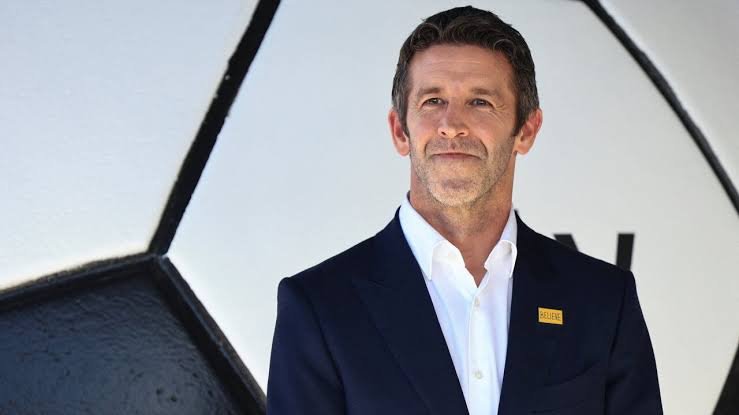

John Ternus has officially taken over as Apple’s chief executive, beginning a new chapter for the technology giant as it faces growing pressure to catch up in artificial intelligence (AI).
The leadership change ends Tim Cook’s 15-year tenure as CEO. Cook now becomes executive chairman of Apple’s board.
Ternus, 51, takes charge of a company that remains one of the world’s most powerful technology brands and dominates the premium smartphone market. However, Apple has faced criticism for moving more slowly than rivals in developing and deploying AI products.
His appointment places hardware expertise at the centre of Apple’s next phase, while the company prepares for major product launches and increasing competition in AI.
From Hardware Engineer to Apple CEO
Ternus joined Apple in 2001 as part of its product design team. Over the years, he rose through the company to become senior vice president of hardware engineering.
In that role, he was responsible for engineering teams working across Apple’s major product lines, including the iPhone, which remains the company’s largest source of revenue.
Before joining Apple, Ternus worked as an engineer at Virtual Research Systems. He holds a bachelor’s degree in mechanical engineering from the University of Pennsylvania.
Within Apple, Ternus has been associated with efforts to improve the durability, reliability and resilience of its products. His work has also included initiatives aimed at reducing the environmental impact of Apple’s hardware.
His promotion suggests that Apple sees continued hardware innovation as a key part of its future strategy.
AI Becomes Ternus’ Biggest Challenge
One of Ternus’ biggest challenges will be leading Apple through the rapidly developing AI industry.
Apple has invested heavily in artificial intelligence but has struggled to match the pace and visibility of competitors in the field.
Analysts have therefore questioned whether software chief Craig Federighi would have been a more natural choice to lead the company during an AI-focused era.
However, some analysts believe Ternus’ hardware background could prove valuable because consumers continue to experience AI primarily through physical devices such as smartphones and computers.
Ternus will now have to determine how Apple can combine its established hardware ecosystem with more powerful AI capabilities.
The challenge will be to introduce meaningful AI features without weakening the hardware business that has made Apple one of the world’s most valuable companies.
China and Trump Create Another Major Challenge
Ternus will also inherit one of Cook’s most complicated responsibilities: managing Apple’s global manufacturing network and its relationship with China.
Apple has spent decades building an enormous supply chain involving hundreds of suppliers and manufacturing facilities.
China remains central to that system and is also one of Apple’s major consumer markets.
Cook gradually began diversifying production away from China, with more iPhone assembly moving to India and other manufacturing shifting toward countries such as Vietnam.
However, the transition remains gradual.
The situation has become more complicated because US President Donald Trump has repeatedly pressured Apple to manufacture more iPhones in the United States and has threatened tariffs on products made overseas.
Cook developed a direct relationship with Trump and worked to protect Apple from some of the harshest consequences of US trade policies while maintaining the company’s relationship with Beijing.
For Ternus, managing these geopolitical pressures will be a completely different challenge from running Apple’s hardware engineering operations.
First Major Test Comes With New iPhone
Ternus will have little time to settle into his new position.
Apple is scheduled to hold its annual iPhone event on September 9, just days after the leadership transition.
The company is expected to unveil its latest iPhone lineup, with particular attention on a potential foldable iPhone.
If launched, the foldable model could represent one of Apple’s most significant hardware redesigns in years.
The event will also provide Ternus with his first major opportunity to present Apple’s product vision publicly as CEO.
While Cook leaves behind a company considered to be in strong financial and operational shape, Ternus now faces the task of defining what comes next.
His immediate priorities will include maintaining Apple’s hardware momentum, accelerating its AI strategy and navigating increasingly complicated global political and supply-chain pressures.
The transition marks more than a change in leadership. It could determine how Apple approaches the next era of technology.

