
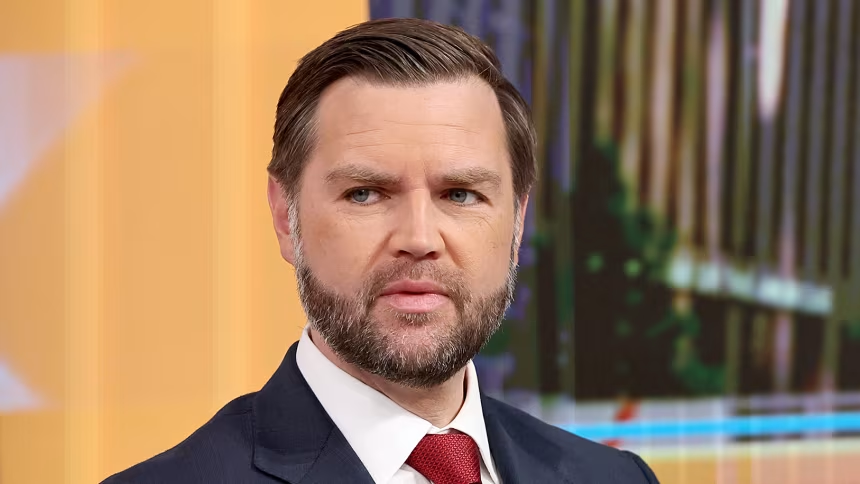

United States Vice President JD Vance said Israel must respect the ongoing peace process concerning Iran while reaffirming Washington’s commitment to diplomatic efforts. He made the remarks during a White House press briefing on Thursday.
Vance said around 1.25 million barrels of oil passed through the Strait of Hormuz overnight. He added that Iran did not stop or interfere with any vessel during that period. Therefore, he said the situation remained stable despite regional tensions.
He stated that the United States wants improved relations with Iran. However, he warned that Washington has other options if Tehran fails to change its behaviour. He also announced that a 60-day timeline begins immediately for further diplomatic engagement.
According to Vance, the outcome after the two-month period will depend on the final negotiations. Meanwhile, he stressed that both sides should manage any tensions through diplomacy rather than confrontation.
Vance also said the US administration could ease or remove sanctions without congressional approval. However, he explained that any sanctions relief would depend on how Iran manages its financial transactions. He added that such measures should not be viewed as a major concession.
Addressing Israel, Vance said attacks on civilians in Beirut are unacceptable. Furthermore, he urged Israel to respect the peace process and expressed hope that all parties would honour agreements concerning Lebanon. He also said the Lebanese government is expected to assume greater policing responsibilities in southern Lebanon.
The vice president maintained that the United States will continue its strict economic blockade on Iran until Tehran changes its conduct. He added that Iran’s economy remains under significant pressure and must adjust its policies to rejoin the global system.
Vance further claimed that Iran’s nuclear programme has been completely destroyed. He said restarting it would require substantial funding. Moreover, he stressed that Iran’s missile programme must not threaten regional countries. He concluded that Iran would receive no direct US funding, although reconstruction support could come through other channels if its conduct improves.

