
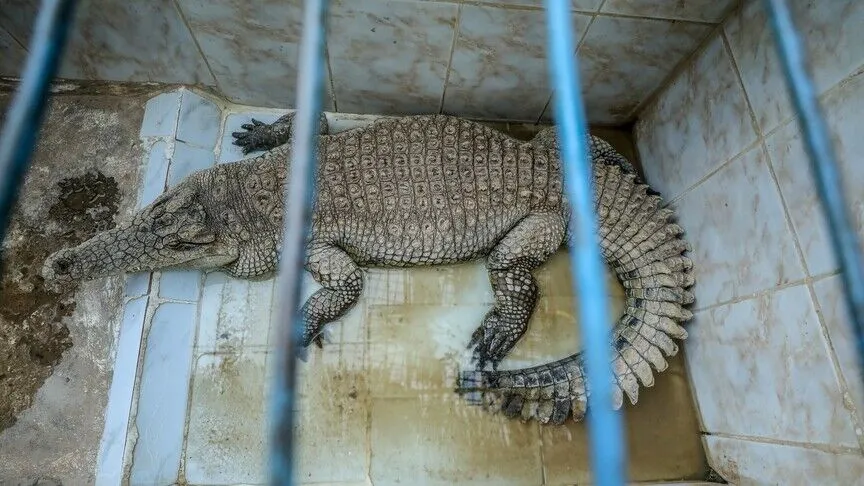

Israeli authorities have begun digging trenches around a high-security wing at Ketziot prison, reportedly considering crocodiles as an additional security measure.
The trenches will surround a special prison wing holding members of the Palestinian resistance group Hamas, Israeli media reported Wednesday.
According to Yedioth Ahronoth, workers are digging the channels around the prison in southern Israel, with the planned trenches extending approximately 170 metres.
A local official from the Ramat Negev Regional Council confirmed that workers are constructing the trenches inside the prison grounds.
The official said the channels surround one special wing and remain invisible from outside the facility.
“No one knows if there will actually be crocodiles there, but preparations are being made,” the official reportedly said.
Meanwhile, Israel’s National Security Ministry confirmed that work had started on channels designated for crocodiles, according to the newspaper.
The unusual project followed Environmental Protection Minister Idit Silman’s decision last week to classify Nile crocodiles as “domesticated wild animals.”
However, professional officials within her ministry reportedly opposed the decision, which enabled authorities to advance the controversial prison project.
The office of far-right National Security Minister Itamar Ben-Gvir said Silman’s decision cleared the way for the initiative.
It also announced that the pilot phase of the “crocodile prison” had officially started in one Ketziot wing.
“Anyone who thought this was just a stunt was wrong,” Ben-Gvir’s office said.
Furthermore, the Israeli Prison Service has reportedly developed plans to house, supervise and care for the crocodiles.
Prison officers have also received training to handle the animals safely, according to Yedioth Ahronoth.
The newspaper reported that authorities allocated $6.3 million to the project, although officials have not confirmed whether crocodiles will ultimately enter the prison.
The reported initiative has attracted attention because of its unusual approach to securing a high-security prison facility.

