
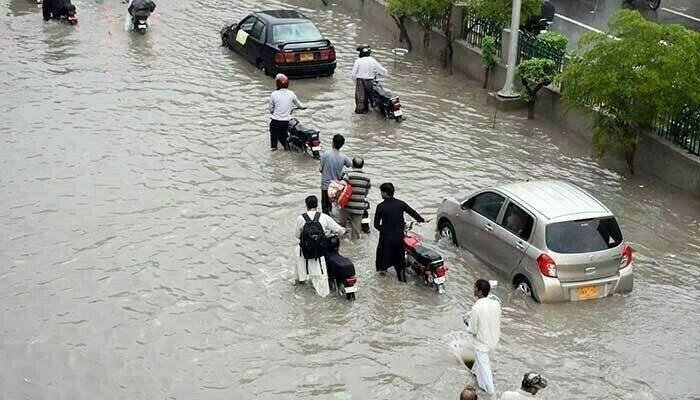

ISLAMABAD: Flooding in parts of Islamabad has renewed concerns over alleged violations of construction regulations and the Capital Development Authority’s handling of natural waterways, with attention focusing on a drain originating from Sector D-12.
The flooding has prompted questions over whether unchecked construction and narrowing of natural drainage channels have increased the capital’s vulnerability during heavy rainfall.
Critics argue that the situation cannot be attributed entirely to natural causes, maintaining that years of encroachment and weak enforcement of building regulations have reduced the capacity of drainage channels to carry rainwater safely through the city.
Natural Drain From D-12 Reportedly Reduced to Few Feet
A natural drain flowing from Sector D-12 has reportedly narrowed to only a few feet at certain locations as construction expanded around the waterway.
Consequently, concerns have emerged that restricting the natural passage of water could contribute to flooding when Islamabad receives intense rainfall.
Construction around waterways can obstruct drainage routes, while reduced channel capacity can create pressure when large volumes of water move downstream.
Moreover, the latest flooding has brought renewed scrutiny to development practices around Islamabad’s natural drainage network.
Previous Investigation Failed to Produce Effective Action
The issue is not new. According to the claims, the government ordered an investigation into construction and encroachment around the drain several years ago.
However, no meaningful action reportedly followed the inquiry, allowing concerns surrounding the drainage channel to persist.
The latest situation has consequently revived demands for authorities to examine construction along natural waterways and determine whether existing developments comply with approved regulations.
Furthermore, critics are calling on the CDA to restore natural drainage routes, remove illegal obstructions where established through due process and strengthen enforcement of construction laws.
The flooding has also highlighted the need for long-term urban planning that protects Islamabad’s natural waterways instead of allowing development to reduce their capacity.
Without effective enforcement and restoration of drainage channels, critics warn that heavy rainfall could continue exposing vulnerable parts of the capital to repeated flooding.
کیا آپ نے کبھی اسلام آباد میں سیلابی صورتحال دیکھی یہ قدرتی آفت نہیں شہر کی تعمیراتی قوانین کی خلاف ورزیوں سی ڈی اے کی نا اھلی کا شاخسانہ ھے.
سیکٹر ڈی بارہ سے آنے والے قدرتی نالہ سکڑتے سکڑتے چند فٹ کا رہ گیا نالے کے اردگرد تعمیرات کی گئیں ۔چند سال قبل حکومت نے تحقیقات کا آرڈر کیا… pic.twitter.com/ALyLFG2EEe— Tahir Naeem Malik (@TahirNaeemMalik) September 1, 2026

