
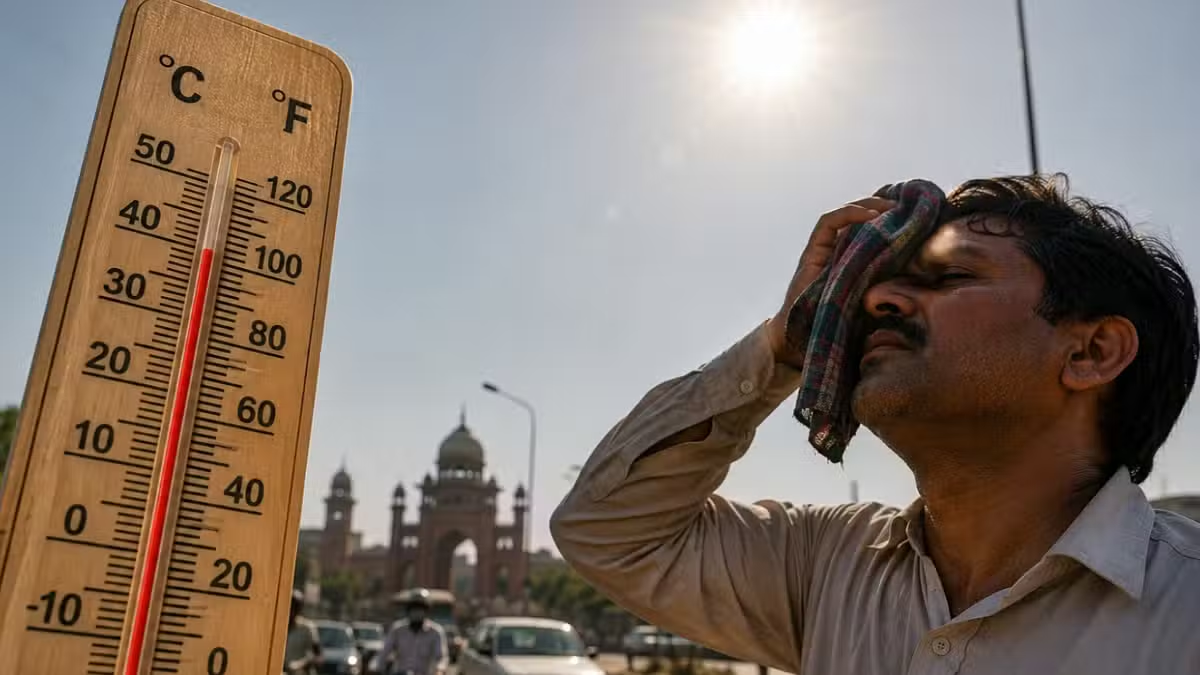

The latest global temperature rankings from the AQI live weather tracker placed Rawalpindi and Islamabad among the top 15 hottest cities in the world. The report specifically positioned Rawalpindi at number 13 and Islamabad at number 15, as both twin cities endure extreme heat conditions. Consequently, this international data highlights a blistering 41 degrees Celsius across the region, where intense summer conditions continue to test public endurance.
Meanwhile, this severe heat stress reflects a broader environmental crisis rooted in poor urban planning and long-term ecological neglect within the federal capital. The Capital Development Authority frequently faces intense public criticism for systematically cutting down mature trees to clear land for massive infrastructure projects. Furthermore, conservation groups like WWF-Pakistan link this massive deforestation directly to the construction of new underpasses, flyovers, and expanding concrete highway networks.
Therefore, environmental experts warn that this rapid urban expansion steadily dismantles Islamabad’s natural cooling system and eliminates critical green canopies. This continued removal of old tree cover intensifies the dangerous urban heat island effect, effectively transforming lush sectors into volatile concrete heat traps. Consequently, authorities repeatedly advise the local public to avoid direct sun exposure during peak daytime hours to prevent severe heat-related illnesses.
Ultimately, the current climate emergency demands an immediate shift toward eco-friendly urban development strategies that prioritize environmental preservation over unchecked construction. Conservationists argue that the city cannot protect its citizens from rising global temperatures without aggressively restoring its lost forest cover. Until municipal planners integrate climate awareness into future infrastructure blueprints, the federal capital will continue to face increasingly harsh and unsustainable summer heatwaves.

