
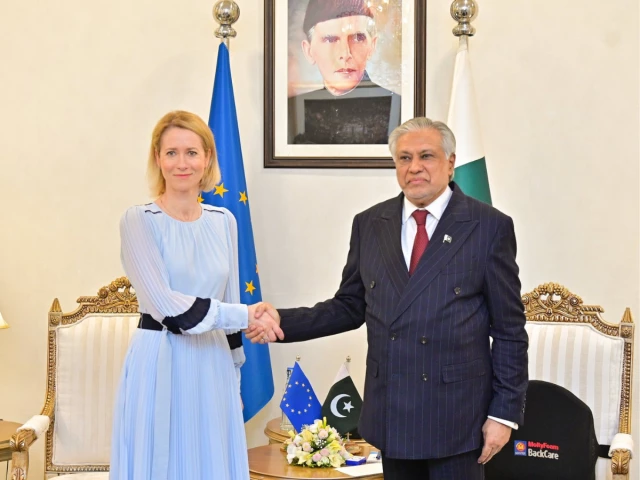

ISLAMABAD: Deputy Prime Minister and Foreign Minister Ishaq Dar held a telephone conversation with European Union High Representative and Vice President Kaja Kallas on Friday, during which both leaders welcomed recent progress in US-Iran negotiations and expressed hope for a durable agreement.
According to a statement issued by the Ministry of Foreign Affairs, the discussion focused on the latest developments in diplomatic engagement between Washington and Tehran. Both sides acknowledged the progress achieved through sustained dialogue and emphasized the importance of peaceful negotiations.
Diplomacy Remains Key to Regional Stability
During the conversation, Dar and Kallas reaffirmed their belief that diplomacy and dialogue remain the only viable tools for resolving conflicts and promoting lasting peace.
The Foreign Office stated that both leaders expressed optimism that ongoing efforts would soon lead to a durable understanding and a peaceful resolution of outstanding issues. Furthermore, they exchanged views on broader regional developments and stressed the need for continued diplomatic engagement.
The discussion reflected a shared commitment by Pakistan and the European Union to support peaceful solutions to international disputes and reduce regional tensions through constructive dialogue.
US-Iran Deal Prospects Gain Attention
The call came a day after US President Donald Trump suggested that a deal with Iran could be signed as early as this weekend. Trump told reporters that negotiations had reached an advanced stage and indicated that an agreement could soon pave the way for reopening key regional shipping routes.
However, Iranian officials maintained that no final decision had been made. Foreign Ministry spokesperson Esmaeil Baghaei said significant portions of the agreement had been finalized, but several issues remained under review by relevant authorities.
The potential agreement is being closely watched worldwide due to its implications for regional security, global energy markets, and international trade. Analysts believe a breakthrough could help ease tensions, stabilize oil prices, and support broader diplomatic efforts across the Middle East.

