
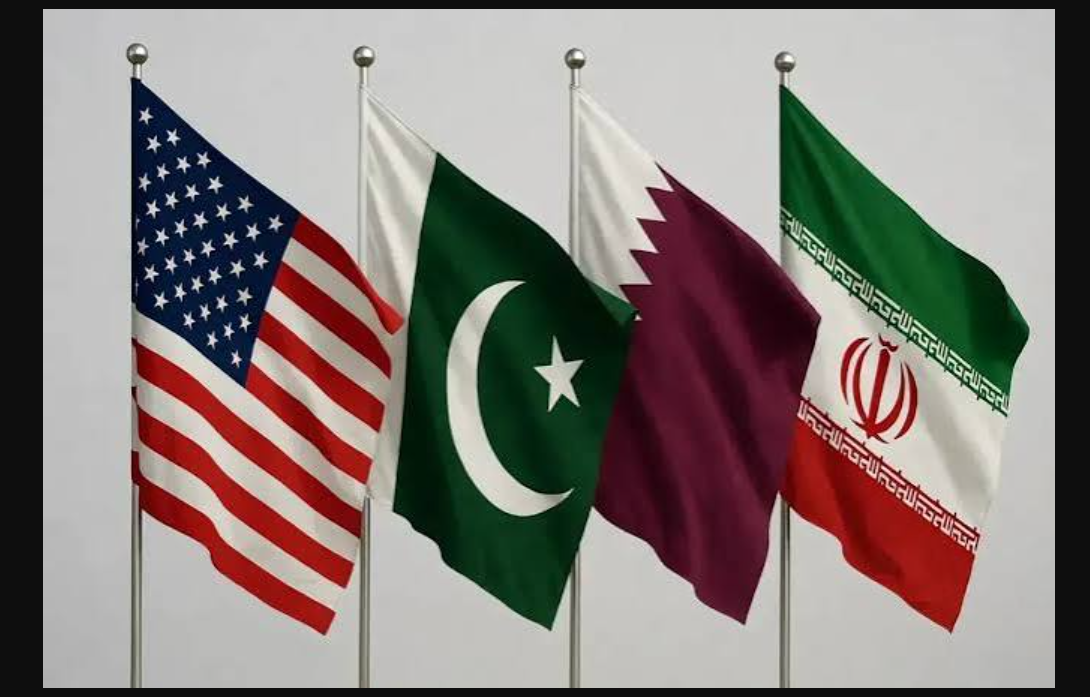

A Qatari delegation arrived in Iran on Friday as fresh diplomatic efforts gathered pace to reduce tensions between Tehran and Washington. The visit came after hostilities intensified again this week following attacks on commercial tankers in the Strait of Hormuz.
According to Iranian media, the delegation’s primary objective is to strengthen Qatar’s role as a mediator following Tuesday’s developments. Earlier, Doha accused Iran of attacking an LNG carrier, while two other tankers also came under attack in the strategic waterway.
Meanwhile, US President Donald Trump confirmed that Washington has agreed to continue negotiations with Iran. However, he insisted the ceasefire between the two countries has officially ended.
Trump Says Talks Will Continue Despite Ceasefire Ending
President Trump announced that Iran had requested another round of negotiations, and the United States accepted the proposal. Nevertheless, he maintained that the previous ceasefire framework no longer exists.
In a post on Truth Social, Trump wrote, “Iran has asked us to continue ‘talks.’ We have agreed to do so, but the United States has stated to them, in no uncertain terms, that the Cease Fire is OVER!”
Earlier this week in Ankara, Trump also declared that the April 8 ceasefire had effectively collapsed after repeated military incidents.
He further described Iranian officials as “scum” and “sick people.”
The US president added that he planned to consult businessman-turned-negotiator Steve Witkoff and his son-in-law Jared Kushner, who have remained engaged with Iranian representatives. However, he emphasized that Tehran must decide whether it wishes to return to negotiations.
Military Escalation Continues Across the Region
Despite renewed diplomatic efforts, military exchanges continued throughout the week.
Iran targeted commercial vessels in the Strait of Hormuz, while the United States responded with airstrikes. Iran later launched drones and missiles against American assets across several Middle Eastern countries.
The renewed exchanges have raised concerns that the fragile peace process could unravel completely if tensions continue to escalate.
Pakistan and Qatar Continue Mediation Efforts
At the same time, Pakistan, Qatar, and other regional mediators are actively working to reduce tensions and revive negotiations over Iran’s nuclear programme.
Diplomatic sources indicated that recent military developments have complicated the process. Nevertheless, mediators remain hopeful because previous negotiations had already produced meaningful progress.
One regional source involved in the mediation efforts said, “There are extensive diplomatic efforts to first agree with both sides on de-escalation and then set a date for another round of negotiations between the technical teams.”
The focus now remains on lowering military tensions before restarting formal technical discussions.
Pakistan’s Earlier Mediation Still Shapes Diplomacy
Pakistan previously played an important role by facilitating direct discussions between senior US and Iranian officials in Islamabad.
Although those talks did not produce an immediate breakthrough, they eventually paved the way for continued diplomatic engagement. Those efforts later resulted in last month’s interim peace agreement known as the Islamabad Memorandum of Understanding (MoU).
Meanwhile, Iranian Foreign Minister Seyed Abbas Araghchi held a telephone conversation with Pakistan’s Army Chief Field Marshal Asim Munir on Thursday.
According to Iranian state media, Araghchi argued that Washington was no longer respecting the Pakistan-brokered framework.
He said, “Statements by US officials indicating they are not adhering to the Islamabad Memorandum of Understanding are a clear sign of a breach of the agreement and the continuation of Washington’s war-mongering policies.”
Pakistan has not publicly commented on the reported conversation. Likewise, the military has not issued an official statement regarding the call.
Airstrikes and Missile Attacks Raise Regional Concerns
Military operations also intensified across the region on Thursday.
Iranian officials said American airstrikes targeted areas near the country’s only nuclear power plant, while additional explosions were reported elsewhere.
Iran’s Health Ministry stated that two days of US airstrikes killed at least 14 people and injured another 78. Officials said most of the casualties were members of the armed forces.
Elsewhere, Kuwait reported that falling debris injured one person after its military intercepted three ballistic missiles, one cruise missile, and ten drones.
Bahrain also confirmed intercepting incoming projectiles, although officials provided no further details. Qatar, meanwhile, reported no immediate damage.
Earlier, the US Central Command announced that American forces struck 90 targets across Iran. Officials said the operation aimed to “further degrade” Iran’s ability “to threaten freedom of navigation” through the Strait of Hormuz.
Hormuz Traffic Slowly Recovers Despite Fresh Tensions
Although the security situation remains uncertain, maritime traffic through the Strait of Hormuz has gradually improved since the interim agreement reopened the crucial shipping route.
Preliminary maritime data showed that at least 576 ships transited the strait during June, compared with 233 vessels in May.
Even so, the renewed military exchanges have once again raised concerns about global energy supplies. The Strait of Hormuz remains one of the world’s most critical energy corridors, carrying a significant share of internationally traded oil and natural gas.
Diplomatic efforts now continue alongside military developments, as regional mediators seek to prevent another major escalation while encouraging both Washington and Tehran to return to the negotiating table.

