

Drought, Overuse and Conflict Intensify Water Shortages
For millions of Iranians, the growing water crisis has become an increasingly urgent concern, surpassing even fears linked to regional conflict. Years of drought, declining rainfall, excessive groundwater extraction, and unsustainable water management have pushed the country into severe water stress, placing immense pressure on reservoirs, rivers, and aquifers.
Recent reports suggest that damage to desalination facilities, pipelines, and other civilian water infrastructure during the US-Israel conflict has further aggravated the situation. Consequently, concerns are mounting over the long-term availability of clean water across large parts of the country.
According to international assessments, Iran ranks among the countries experiencing extremely high water stress, consuming more than 80 percent of its renewable freshwater resources each year. Experts warn that annual water consumption now significantly exceeds the volume replenished through rainfall and natural water cycles.
Agriculture remains the largest consumer, accounting for the overwhelming majority of national water use, while inefficient irrigation systems continue to contribute to substantial losses.
Drying Lakes, Shrinking Reservoirs and Rural Migration
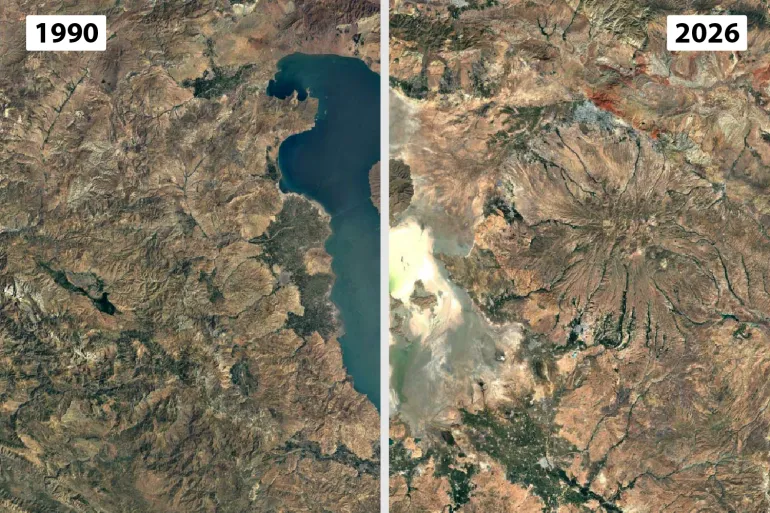
One of the clearest signs of the crisis is the dramatic decline of Lake Urmia, once the Middle East’s largest saltwater lake. Decades of drought, river diversion projects, dam construction, and groundwater depletion have reduced the lake to a fraction of its former size, leaving vast stretches of exposed salt flats.
Meanwhile, water levels in key reservoirs supplying Tehran have fallen sharply as demand continues to rise. Similar challenges have emerged across central Iran, where rivers that historically sustained major cities now frequently run dry.
The consequences extend beyond environmental damage. Iranian officials report that thousands of villages face water shortages, forcing many families to abandon rural communities and relocate to urban centres in search of more stable living conditions.
Although desalination has helped support some coastal areas, it currently supplies only a small portion of Iran’s water needs. As a result, most inland regions remain heavily dependent on increasingly strained freshwater sources.
Analysts warn that without major reforms and sustainable resource management, Iran’s water crisis could become one of the country’s most significant long-term challenges.

