
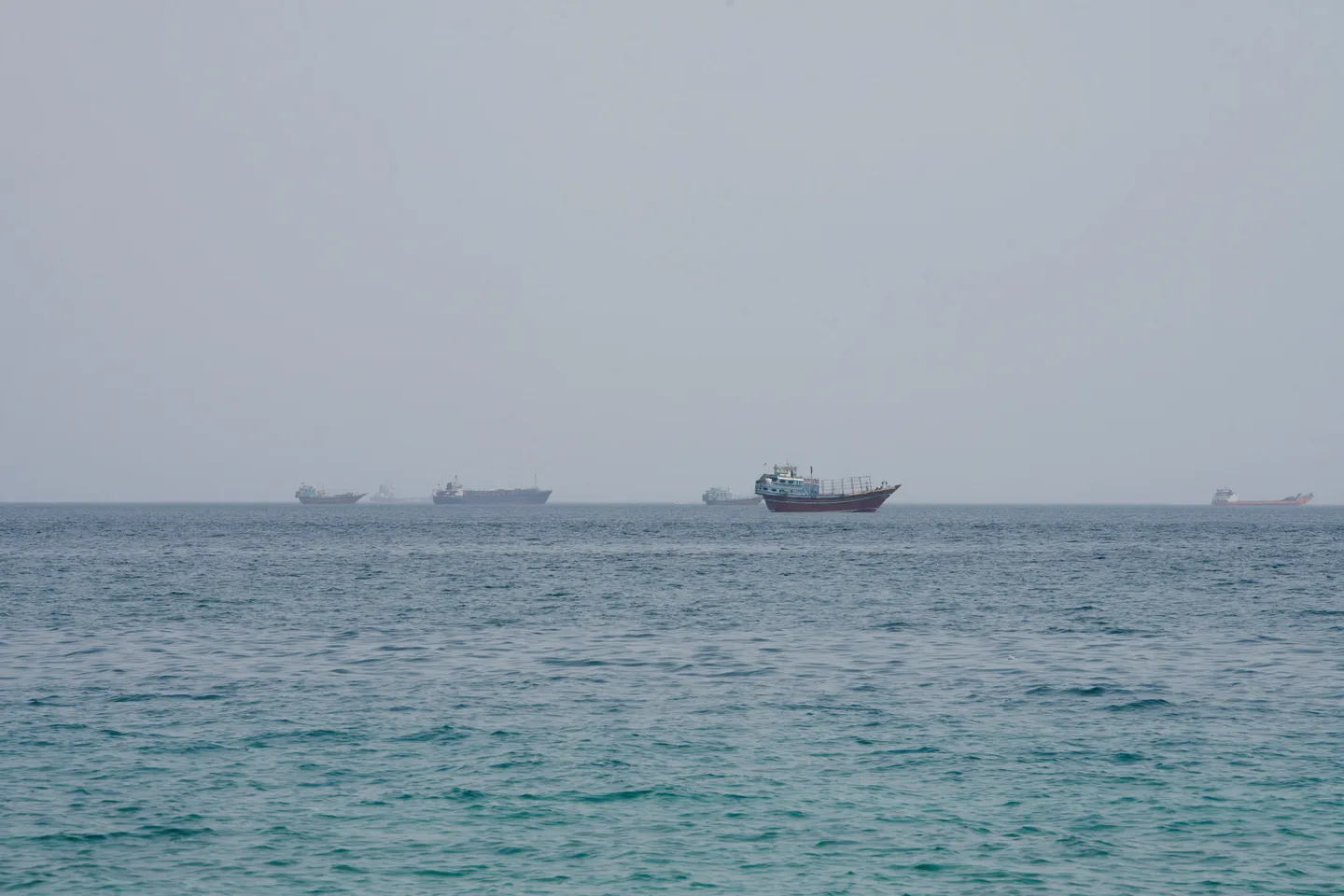

Iranian military says vessels require its permission for safe passage as Tehran and Washington trade competing claims over strategic waterway
TEHRAN: Iran’s military rejected US President Donald Trump’s claim that Washington controls the Strait of Hormuz, insisting on Thursday that Tehran continues to exercise full control over the strategically important waterway.
Ebrahim Zolfaghari, spokesperson for Iran’s Khatam-al Anbiya central military command, described US statements that vessels were passing normally through Hormuz as “lies and fabrications.”
He said commercial vessels and tankers could not safely transit the strait without permission and supervision from Iranian armed forces.
Iran has maintained restrictions over Hormuz since regional hostilities erupted on February 28, requiring vessels to secure permission before passage.
Washington and Tehran Trade Rival Control Claims
Meanwhile, Trump claimed on Truth Social on Wednesday that the United States had “total control” over Hormuz and suggested Washington intended to maintain that position.
Trump also described the US naval blockade as a “wall of steel” that Iran could not overcome.
However, Hossein Taeb, head of Iran’s Basij forces, reiterated that Tehran continued managing and controlling the strait.
Foreign Minister Abbas Araghchi similarly accused Washington of making another strategic miscalculation regarding Hormuz.
Iran Maintains Restrictions on US, Israeli Vessels
Furthermore, Iranian parliamentarian Behnam Saeedi said Tehran would prevent Israeli vessels from crossing Hormuz under any circumstances. He added that US military vessels would also remain barred from the waterway.
The competing statements underline the strategic importance of Hormuz, through which substantial volumes of global energy supplies traditionally move.
Meanwhile, Iran and Oman continue negotiations over establishing a new maritime route through the strait.
However, Tehran maintains that reaching an agreement on an alternative route would not automatically restore unrestricted navigation.
Iranian officials have linked any broader reopening to Washington meeting Tehran’s political and security demands.
Consequently, control of Hormuz remains a central point of leverage and dispute as both countries attempt to strengthen their negotiating positions amid continuing regional tensions.

