

Tehran Acknowledges Islamabad’s Diplomatic Role
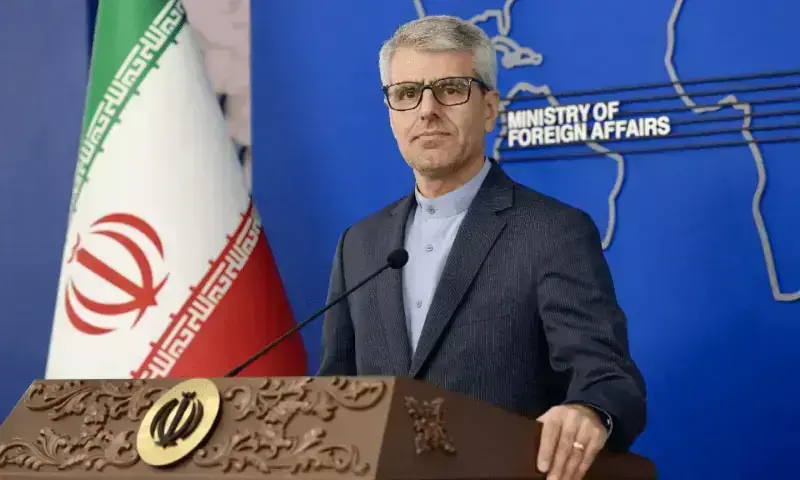
Iran has formally appreciated Pakistan for its continued diplomatic efforts to ease tensions with the United States. The statement came from Iranian Foreign Ministry spokesperson Esmaeil Baqaei during a media briefing on Wednesday.
Baqaei praised Pakistan’s role in facilitating dialogue and attempting to reduce conflict in the Middle East. He highlighted that these efforts aim to restore stability in a region facing prolonged tensions. However, he avoided directly commenting on the latest ceasefire extension announced by Washington.
Iran Stresses Sovereignty and Security Priorities
While acknowledging mediation efforts, Baqaei made it clear that Iran remains focused on protecting its national interests. He stated that Tehran is taking all necessary steps to ensure its security and sovereignty.
He emphasized that Iranian armed forces remain fully prepared. According to him, they are ready to respond decisively to any external threat. This strong stance reflects Iran’s continued caution despite ongoing diplomatic engagement.
Baqaei also reiterated that Iran did not initiate the conflict. He described Tehran’s actions as legitimate self-defense in response to military aggression involving the United States and Israel.
Ceasefire Extension Adds New Layer of Complexity
The situation has become more complicated following a ceasefire extension announced by Donald Trump. The extension came just as the earlier deadline approached.
Trump stated that the decision followed requests linked to diplomatic efforts involving Pakistan’s leadership. He added that military readiness would continue alongside the extension, including maintaining a maritime blockade.
This move has created mixed reactions. While it provides more time for talks, it also raises concerns about underlying tensions that remain unresolved.
Diplomatic Talks Still Uncertain
The possibility of a second round of talks between Washington and Tehran remains unclear. Baqaei stated that diplomacy remains an important tool for Iran. However, he stressed that negotiations would only proceed when conditions are suitable.
He explained that Iran would engage in dialogue when it believes discussions can genuinely protect national interests. This cautious approach indicates that Tehran is not ready to rush into negotiations without clear guarantees.
Earlier talks held in Islamabad ended without a formal agreement. However, they did not collapse either. This left room for continued engagement, supported by Pakistan’s mediation efforts.
Key Issues Blocking Progress
Several major issues continue to block progress in negotiations. One of the most significant concerns is the US maritime blockade on Iranian ports. Tehran views this as a violation of the ceasefire spirit.
Another critical issue involves navigation through the Strait of Hormuz. Iran has linked the reopening of this route to the removal of restrictions and broader compliance with agreements.
Additionally, disagreements over Iran’s nuclear programme remain unresolved. The United States has demanded long-term commitments and stricter controls. Iran, however, sees these demands as excessive pressure.
Iran Demands Accountability and Justice
Baqaei also emphasized that Iran seeks accountability for actions taken during the conflict. He stated that Tehran would use all available channels to pursue justice and compensation.
Iranian officials have repeatedly highlighted what they describe as violations of international law. They argue that any meaningful agreement must address these concerns.
Statements from senior leaders reinforce this position. They insist that lifting blockades and ending pressure tactics are essential for genuine negotiations.
Pakistan’s Growing Diplomatic Influence
Pakistan’s role in the process has gained international recognition. Initially seen as a facilitator, Islamabad is now being acknowledged as a key mediator by both sides.
Diplomatic efforts by Pakistan’s leadership have focused on bringing both parties back to the table. These efforts aim to prevent further escalation and promote long-term peace.
Despite these efforts, the situation remains fragile. Both sides continue to hold firm positions, making progress slow and uncertain.
Iran’s appreciation of Pakistan’s mediation highlights the importance of diplomacy in resolving complex conflicts. However, major challenges still stand in the way of a lasting agreement.
The extended ceasefire provides a window for dialogue. Yet, unresolved disputes over security, trade routes, and nuclear policy continue to shape the outcome.
The coming days will be critical. The world is watching closely as efforts continue to turn fragile peace into a stable resolution.

