

First Joint Committee Meeting Held in Muscat
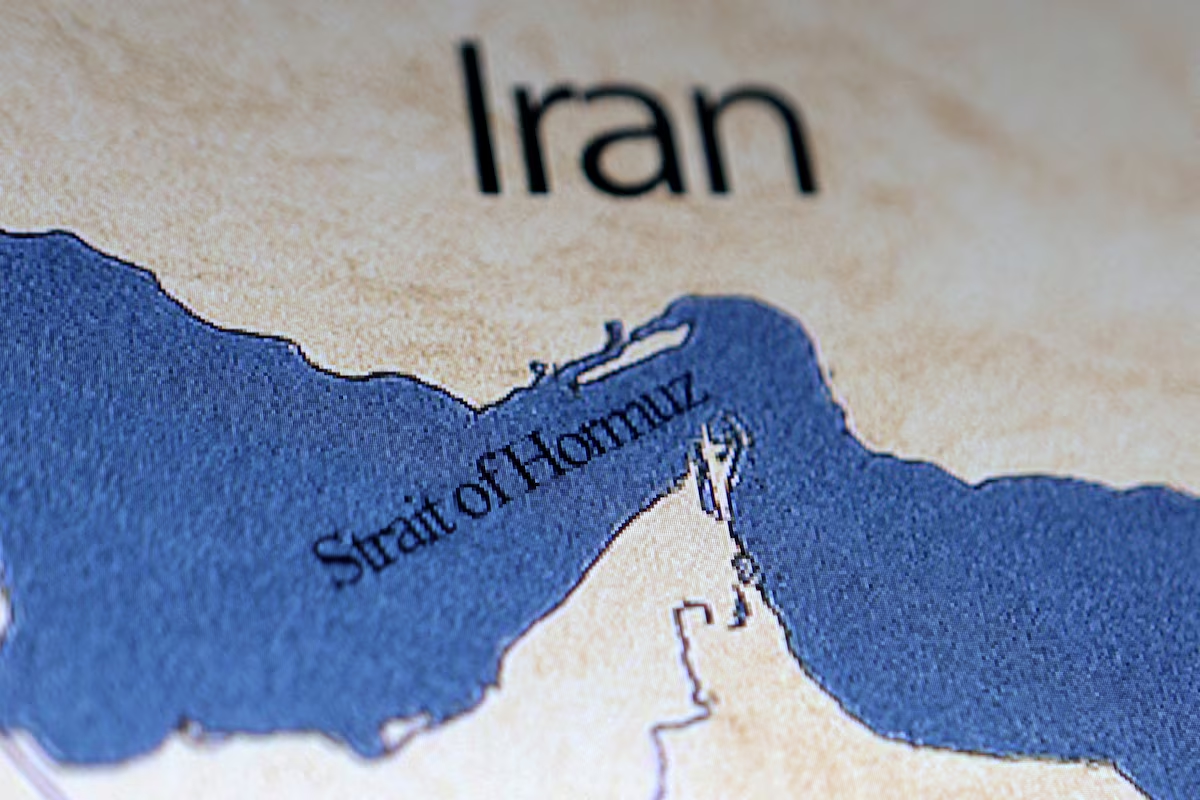
Iran and Oman have held the first meeting of their joint committee on the Strait of Hormuz in Muscat. The meeting comes at a critical time for Gulf security and global energy shipping.
Iranian Deputy Foreign Minister Kazem Gharibabadi announced the development on X on Monday. He said he met Oman’s Minister of State for Foreign Affairs Abdulaziz Al-Hinai to discuss the future management of the strategic waterway.
Gharibabadi said both sides exchanged views on the sovereign rights of Gulf coastal states. He added that the talks were held within the framework of the Islamabad Memorandum of Understanding.
The agreement was signed earlier this month between Tehran and Washington. It was designed to reopen the Strait of Hormuz and reduce military tensions in the region.
The Strait of Hormuz is one of the world’s most important energy routes. Any disruption in the waterway can affect oil supplies, shipping costs, insurance rates, and global markets.
Vessel Attacks Slow Traffic Through Hormuz
Commercial traffic through the Strait of Hormuz remained reduced over the weekend after two recent vessel attacks raised fresh security concerns.
A Singapore-registered container ship, Ever Lovely, was damaged on June 25. The Maritime and Port Authority of Singapore said the vessel suffered minor damage to its bridge area from an unknown projectile. All 21 crew members were reported safe.
On June 27, the Panama-flagged tanker M/T Kiku was also hit near the strait. The US Central Command said Iranian forces struck the tanker with a one-way attack drone while it was carrying more than two million barrels of crude oil.
CENTCOM said it carried out additional strikes against Iranian targets in response.
Despite the attacks, several ships still crossed the waterway. Empty very large crude carriers entered the Persian Gulf, while loaded tankers continued to leave the region.
Windward tracking data showed that 40 vessels crossed the Strait of Hormuz on June 27. These included 24 inbound vessels and 16 outbound vessels.
The Joint Maritime Information Center later raised the maritime security threat level in the Strait of Hormuz to “substantial.” It warned ships about possible mines and naval activity linked to mine-clearing operations.
US and Iran Agree to Halt Attacks
A US official said Iran and the United States have agreed to halt recent attacks and resume talks over the Strait of Hormuz dispute.
The official said both sides would “stand down for now” and allow vessels to move freely. Technical talks are expected to continue on all areas of the 14-point memorandum of understanding.
The reported pause followed several days of strikes and counterstrikes. Iran and the US had accused each other of violating the interim ceasefire agreed on June 17.
Iran had launched missiles and drones at US military sites in Kuwait and Bahrain. The Islamic Revolutionary Guard Corps said the attacks were in response to US strikes and alleged ceasefire violations.
Kuwait said its air defenses intercepted two ballistic missiles without casualties or damage. Bahrain said an Iranian attack damaged a residential building in Muharraq province, but no casualties were reported.
Meanwhile, French President Emmanuel Macron and Saudi Crown Prince Mohammed bin Salman discussed the escalation during a phone call. They stressed the need for freedom of navigation and diplomatic efforts to restore regional stability.
US envoy Mike Waltz said Iran’s leverage over the Strait of Hormuz was weakening. He said Gulf states were building alternatives, including oil pipeline routes through the UAE and Saudi Arabia.
The latest diplomacy has raised hopes for calmer shipping conditions. However, shipowners, insurers, and energy companies remain cautious. The success of the ceasefire will depend on whether both sides avoid further military escalation and continue negotiations.

