
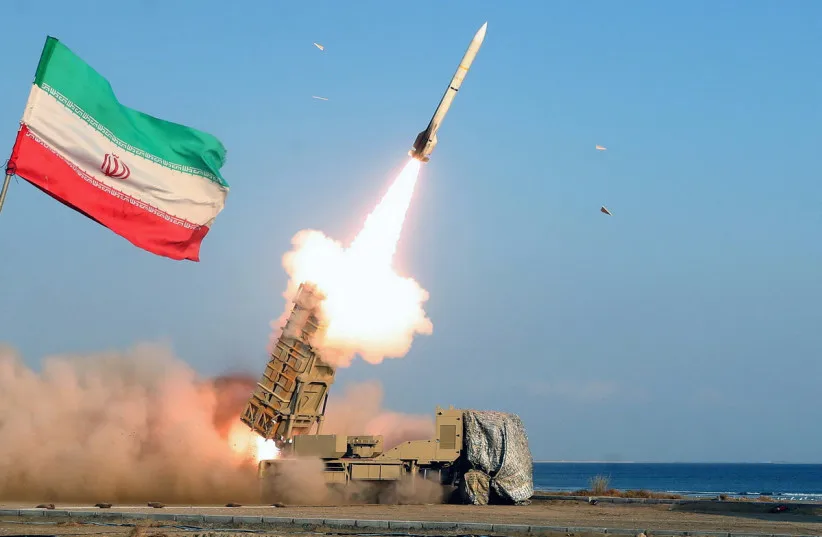

Iran’s Islamic Revolutionary Guard Corps (IRGC) said on Wednesday that it had launched missile and drone strikes against dozens of US military facilities in Bahrain and Kuwait in retaliation for recent American attacks on Iranian targets.
According to a statement carried by Iranian state broadcaster IRIB, the IRGC said its Navy and Aerospace Force conducted a joint operation targeting 85 key US military facilities. The statement also claimed Iranian forces shot down an American MQ-9 surveillance drone.
The announcement followed a fresh wave of US strikes on Iran after Washington revoked a temporary sanctions waiver that had allowed Tehran to export oil. The United States also accused Iran of threatening international shipping following attacks on commercial vessels in the Strait of Hormuz.
Meanwhile, the United States Central Command (CENTCOM) said it struck more than 80 Iranian military targets, including air defence systems, coastal surveillance sites, anti-ship missile batteries, drone launch facilities and more than 60 IRGC naval boats to reduce Iran’s ability to threaten maritime traffic.
Oil Facilities Hit as Ceasefire Faces Growing Pressure
Iranian media reported explosions on Kharg Island, Qeshm Island and in the southern port cities of Sirik and Bandar Abbas following the US strikes. While no civilian deaths were reported, officials said several people were injured by shrapnel after a projectile struck a commercial pier in Sirik. Fishing boats were also reported damaged in Sirik and Bandar Abbas.
CENTCOM did not confirm strikes on Kharg Island, which handles the majority of Iran’s crude oil exports.
Iran’s Khatam al-Anbiya Central Headquarters warned that its armed forces would deliver a “crushing response” to what it described as US aggression and reiterated that Tehran would not allow foreign interference in managing the Strait of Hormuz.
The latest military exchanges have placed the fragile US-Iran ceasefire under severe strain. The US Treasury has revoked Iran’s temporary oil export licence, requiring all related transactions to end by July 17, while Iran condemned the move as a violation of the framework agreement.
Oil prices rose more than three percent following Washington’s decision, reflecting growing concerns over energy supplies and regional stability.
Separately, Qatar accused Iran of attacking a Qatari liquefied natural gas tanker and summoned Iran’s deputy ambassador to lodge a formal protest. Tehran rejected the allegations, insisting it remains committed to its obligations while warning that vessels using routes not coordinated with Iran could face security risks.
Despite ongoing diplomatic efforts, indirect negotiations between the United States and Iran have made little progress, raising concerns that the temporary ceasefire could unravel amid escalating military confrontations.

