
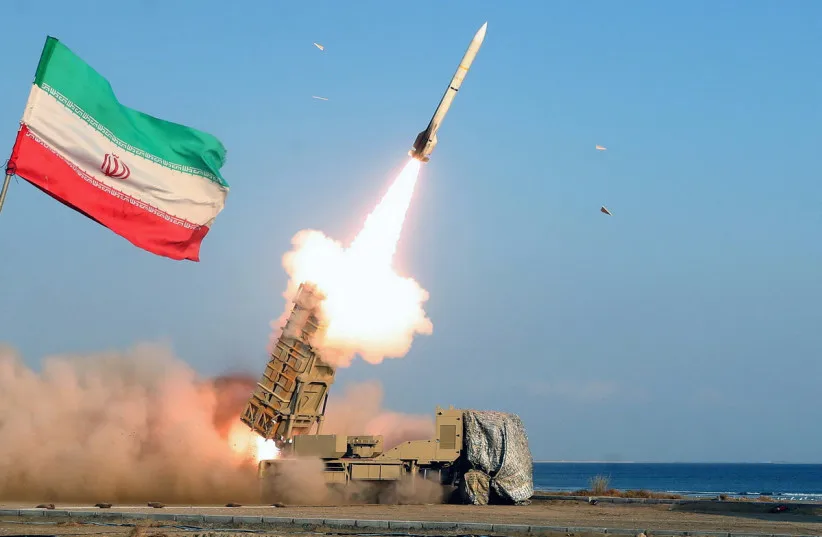

Iran’s Revolutionary Guards said they launched ballistic missile attacks against US military targets in Jordan. IRGC targeted the US bases in Jordan in retaliation to the US attack on Larak Island in southern Iran.
The Islamic Revolutionary Guard Corps said its forces targeted two US-operated airbases in the country.
According to the Guards, the attacks targeted King Hussein and Al-Azraq airbases, where US military assets are stationed.
The IRGC said its missiles struck technical infrastructure, maintenance facilities and positions used by US fighter aircraft.
Iranian state television reported that the strikes caused “heavy damage” to the targeted facilities. However, independent confirmation of the reported damage was not immediately available.
The attacks followed a US strike on Iran’s Larak Island in the Strait of Hormuz on Sunday.
US forces targeted two Iranian launchers after the Revolutionary Guards were reportedly observed preparing to deploy rockets carrying sea mines into the strategic waterway.
The US military described its operation as a limited response to what it considered an imminent threat to international shipping.
Iran Retaliates After Larak Island Strike
The IRGC described its attack on the Jordanian bases as retaliation for the US operation against Iranian positions.
Iranian authorities previously said the Larak Island strike killed and injured several IRGC members and civilians.
The Guards vowed to punish the United States for the attack and warned that Washington would face consequences.
The latest exchange marks a significant escalation after more than a month without direct US-Iran military strikes.
Jordanian authorities said their air defences intercepted eight missiles following the Iranian attack, according to reports.
The renewed confrontation has also raised concerns about the wider regional impact of the conflict.
The Strait of Hormuz remains a critical route for global energy supplies, while military activity around the waterway has already disrupted shipping.
Oil prices also moved higher after the latest US-Iran exchange, reflecting renewed concerns about supply disruptions and regional instability.

