
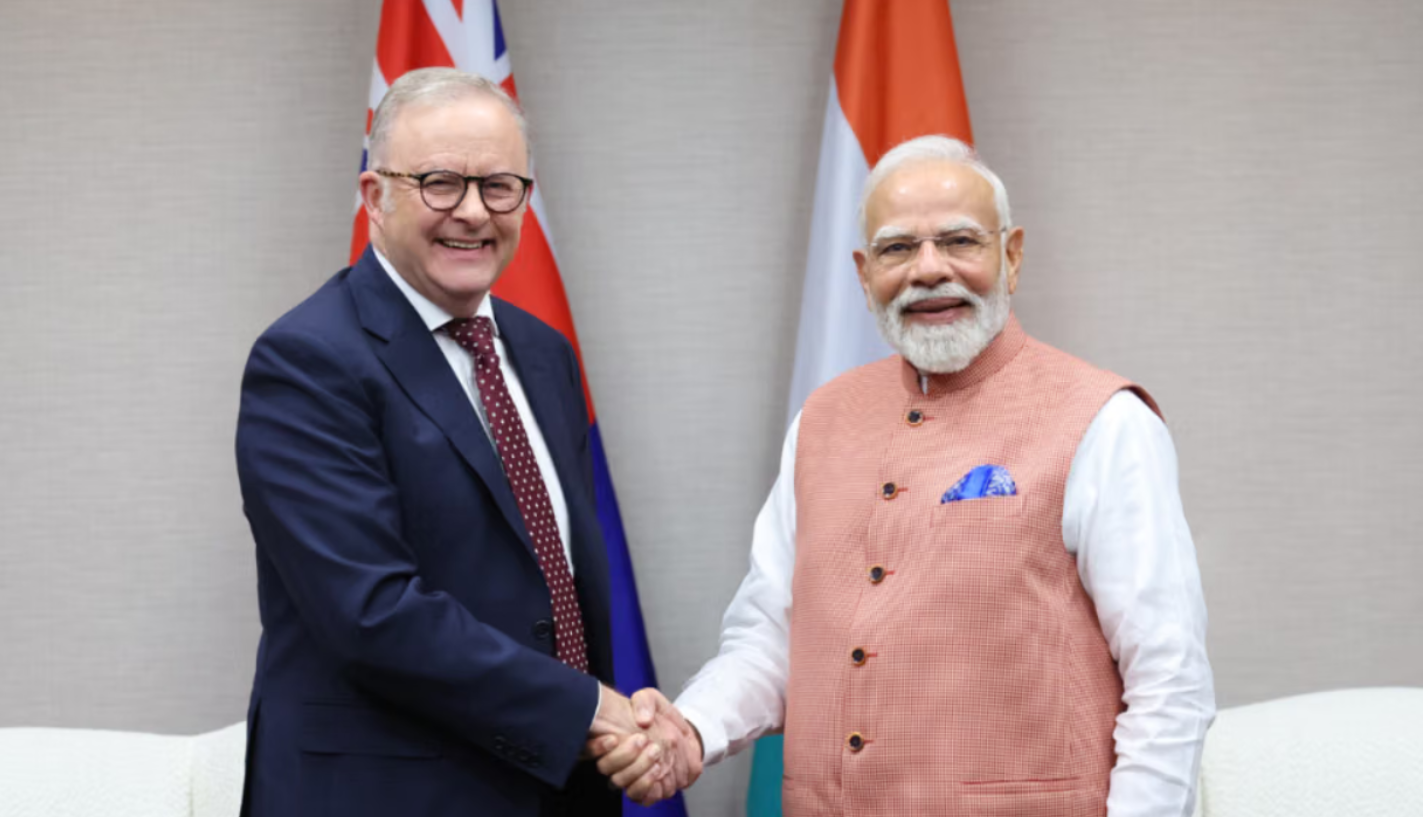

India has secured a significant uranium supply agreement with Australia, marking an important step in its long-term clean energy strategy. The deal is expected to support India’s growing nuclear energy programme while strengthening bilateral cooperation between the two countries.
Prime Minister Narendra Modi announced the agreement after holding talks with Australian Prime Minister Anthony Albanese during his visit to Australia. The arrangement will allow Australia to supply uranium to India for peaceful civilian nuclear purposes under international safeguards.
Uranium Deal to Support India’s Nuclear Energy Plans
India continues to face a rapidly growing demand for electricity as its economy expands. Therefore, the government plans to increase nuclear power generation to reduce dependence on fossil fuels and promote cleaner energy sources.
Speaking after the meeting, Modi highlighted the importance of the agreement.
“We have signed an important agreement today on nuclear energy.”
He added, “This will pave the way for uranium supplies from Australia to India and give our clean energy objectives fresh momentum.”
The agreement allows long-term uranium exports from Australia exclusively for peaceful purposes. Moreover, all exports will remain subject to safeguards established by the International Atomic Energy Agency (IAEA).
Australian Prime Minister Anthony Albanese also welcomed the agreement.
“The arrangement facilitates Australian uranium exports to India, to help increase the share of non-fossil fuel power capacity,” he said.
Australia Holds One of the World’s Largest Uranium Reserves
Australia possesses nearly 28 percent of the world’s known uranium resources. However, exports to India remained limited for years because of legal restrictions and political concerns.
Although both countries signed a civil nuclear cooperation agreement in 2015, commercial uranium trade has remained minimal until now. The latest agreement is expected to remove the remaining barriers and encourage long-term cooperation in the nuclear energy sector.
Leaders Highlight Growing Bilateral Partnership
The visit also reflected the strengthening relationship between Canberra and New Delhi. During the meetings, Modi and Albanese discussed economic cooperation and future collaboration across several sectors.
Earlier in the day, the two leaders briefly paused to take a selfie before attending official events together.
Albanese praised Modi’s role in expanding relations between the two countries.
“Prime Minister Modi, your leadership and your personal engagement with Australia has been absolutely central to this change,” he said.
Indian Community Continues to Grow in Australia
India’s growing diaspora has become an important factor in strengthening ties between the two nations.
Recent official figures showed that, for the first time, people born in India now represent the largest overseas-born community in Australia. The development reflects significant demographic changes over the past decade.
“In 2014, the Indian diaspora community in Australia was relatively small,” said Teesta Prakash from the Australia India Institute.
“But in 2026, it is now the largest diaspora community within Australia. It has outstripped the British, which is a huge demographic change,” she added.
Modi’s Visit Also Draws Planned Protests
While thousands of supporters were expected to attend Modi’s community event in Melbourne, the visit also attracted planned demonstrations.
One protest was organised by Australia’s Alliance Against Islamophobia, which said it wanted to highlight concerns regarding the treatment of minority groups in India.
Another demonstration was planned by groups opposing immigration from India.
Following his Australia visit, Modi is scheduled to continue his regional tour with a visit to New Zealand.

