
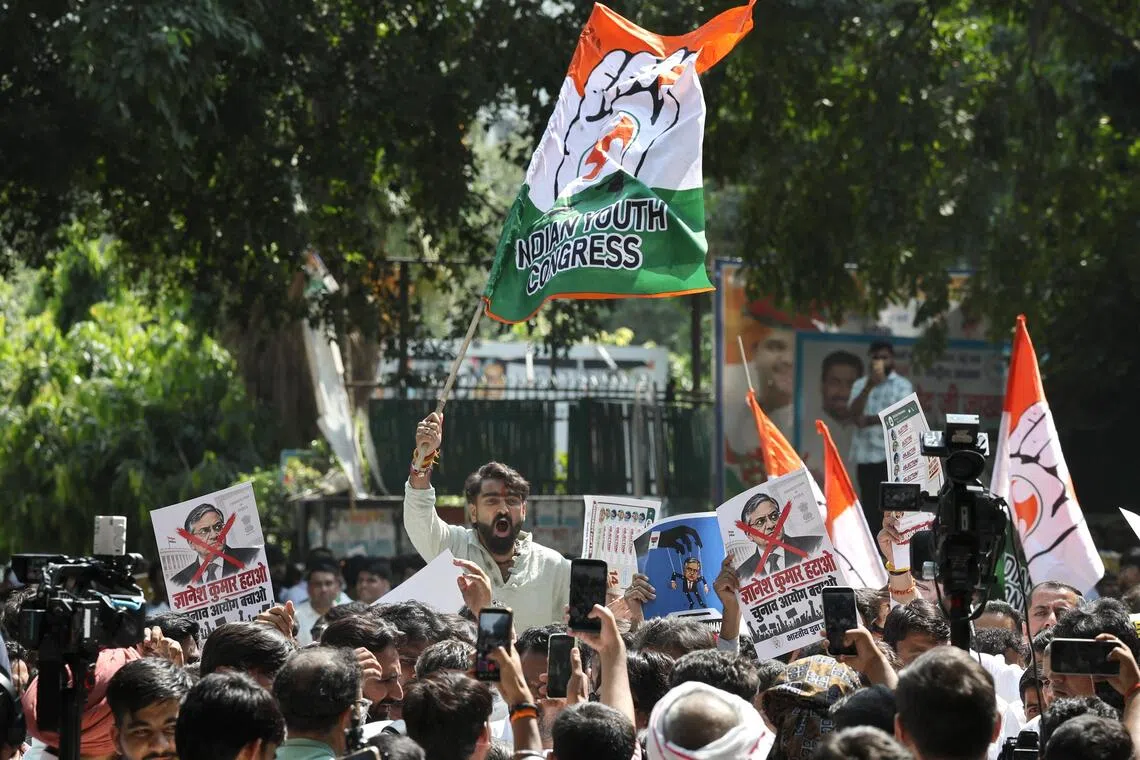

Indian police used tear gas and water cannons on Friday to disperse opposition protesters demanding the resignation of Chief Election Commissioner Gyanesh Kumar.
The protests were held in several parts of India. Demonstrators accused the Election Commission of manipulating voter rolls. The commission and the ruling Bharatiya Janata Party (BJP) have rejected the allegations.
Tear Gas Used as Protests Spread
Congress party supporters gathered in at least a dozen states. Protesters raised slogans against Kumar and demanded his removal.
In Chandigarh, police used water cannons after protesters climbed buses and barricades. Similar clashes were reported in other locations.
In New Delhi, hundreds of protesters gathered behind barricades. Some carried posters calling for action against Kumar.
The demonstrations are backed by other opposition groups. They have accused the Election Commission of working with the BJP to influence voter lists.
Opposition Questions Voter Roll Changes
The latest protests followed a report by The Indian Express about disagreements within the Election Commission.
The report claimed that senior election officials had questioned Kumar over changes to voter lists. Opposition parties say the changes could benefit the BJP.
Congress leader Rahul Gandhi also criticised Kumar. He called for the election chief to resign over what he described as voter manipulation.
The Election Commission rejected the allegations. It said disagreements among officials can occur within any institution and maintained that its actions were lawful.
The BJP also dismissed the accusations. It described the opposition’s claims as a political campaign against the ruling party.
Protests Could Intensify
A youth movement known as the “cockroach” movement has also called for demonstrations. The group says it has millions of supporters.
It has warned of nationwide protests on October 2 if Kumar does not resign by Saturday.
The political dispute comes ahead of important state elections next year. Uttar Pradesh and Gujarat are among the states scheduled to hold elections.
Both states are currently governed by the BJP. The results could become an important political test ahead of India’s next parliamentary election in 2029.

