
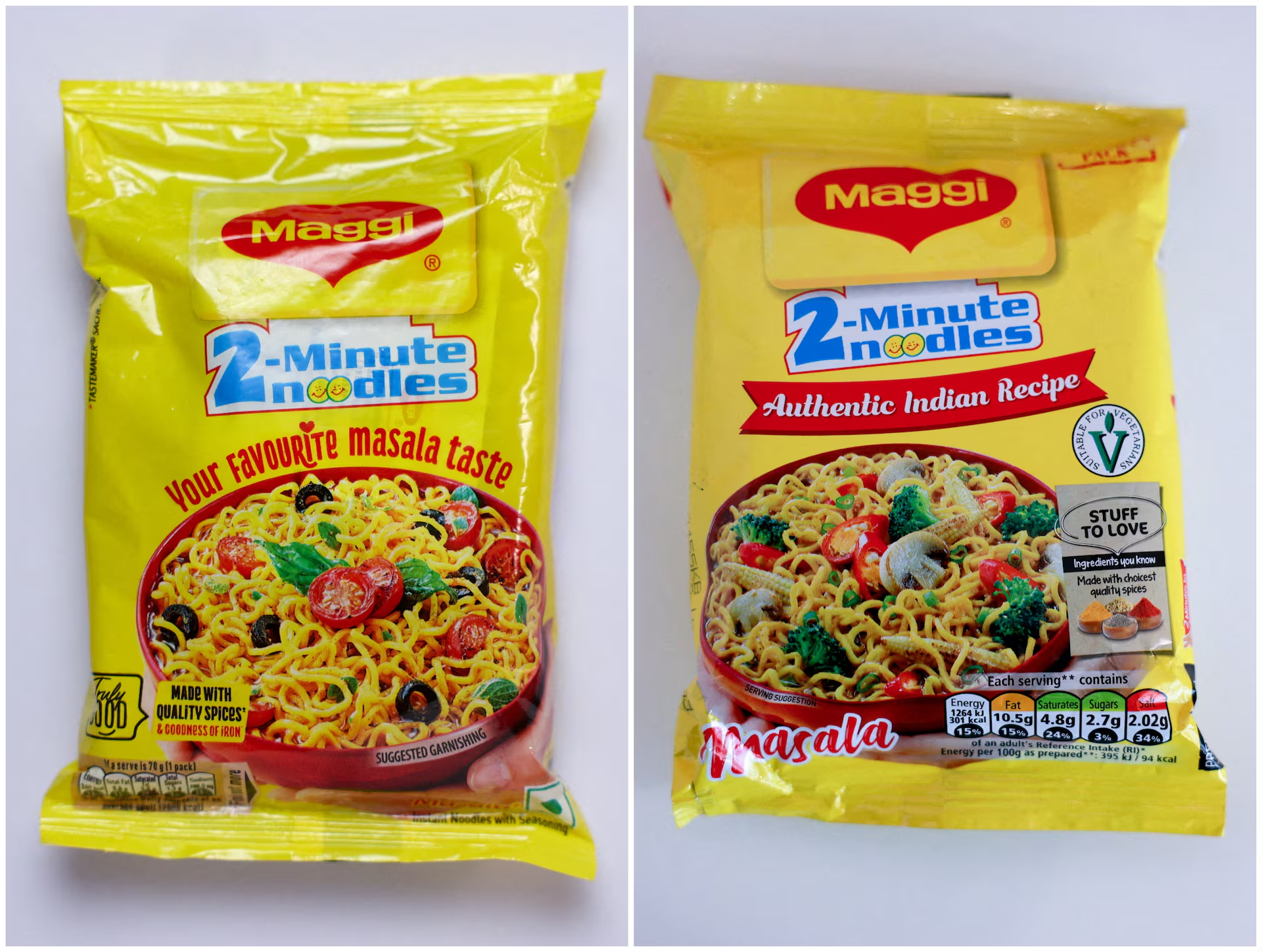

Food regulator reverses earlier stance after public pressure and Supreme Court scrutiny over health risks linked to processed foods
NEW DELHI: India’s food regulator has proposed mandatory front-of-pack warning labels for packaged foods and drinks, reversing its earlier position after growing public pressure over high levels of sugar, salt and saturated fat in processed products.
According to a Supreme Court filing seen by Reuters, the Food Safety and Standards Authority of India has proposed a red hexagonal warning symbol for products that exceed limits in any two or more specified nutrients.
The labels could carry warnings such as “HIGH FAT”, “HIGH SUGAR”, “HIGH SALT” or “HIGHLY SWEETENED BEVERAGE”.
Regulator Shifts Position After Court Pressure
The move marks a significant policy shift after years of debate between health advocates and major food companies.
Coca-Cola and industry groups representing companies including Nestle and PepsiCo have previously opposed strict warning labels, arguing that such symbols could confuse consumers.
However, health campaigners and India’s Supreme Court have repeatedly pressed the government to introduce clearer labelling amid rising obesity concerns.
Currently, manufacturers only need to provide ingredients and nutritional information on the back of packaging.
Moreover, the Supreme Court recently urged authorities to act quickly and highlighted India’s growing obesity problem.
Industry to Receive Phased Implementation Period
FSSAI said the proposed system would help consumers, particularly children and other vulnerable groups, make more informed food choices.
Nevertheless, India’s proposal differs from stricter systems used elsewhere. The regulator plans to apply the red warning when at least two relevant nutrients exceed prescribed limits, rather than when only one does.
The regulator also plans to implement the policy gradually, giving companies time to comply.
Additionally, single-ingredient food products would remain exempt.
The debate carries major commercial implications for India’s packaged food and beverage market, valued at more than $100 billion.
A recent Lancet study estimated that around 450 million Indians could be overweight or obese by 2050, intensifying pressure for stronger public-health measures.

