
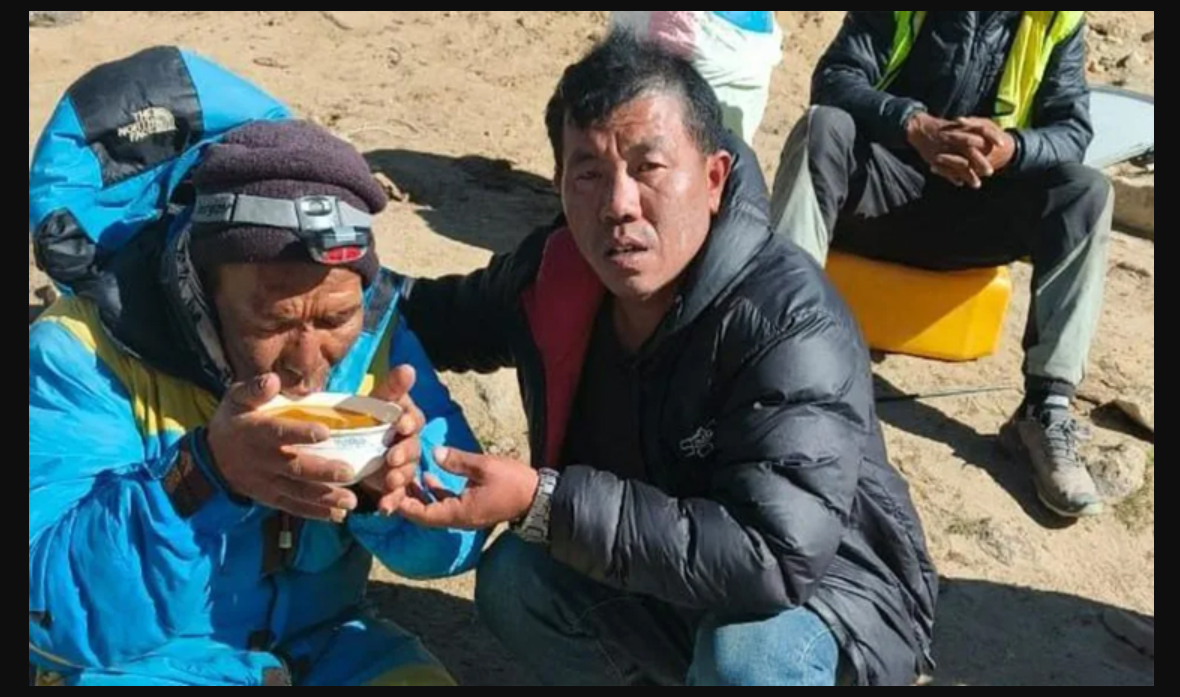

A Nepali mountaineer has shared a shocking survival story after spending nearly a week stranded in the extreme conditions of Mount Everest. The climber, Dawa Sherpa, survived freezing temperatures, oxygen depletion, and severe exhaustion before being rescued in a dramatic operation that has drawn global attention.
His experience has sparked both celebration and concern within the mountaineering community.
Lost in Everest’s Deadly Conditions
Dawa Sherpa, aged 57, went missing on May 30 during the final phase of the spring climbing season. He became stranded in the upper reaches of Mount Everest, an area known as the “death zone,” where oxygen levels are dangerously low.
As conditions worsened, most climbers had already descended, leaving him isolated in extreme weather. His family eventually assumed he had died and began mourning rituals.
However, against all odds, he survived.
“I Thought I Would Perish”
Recalling his ordeal from a hospital bed in Kathmandu, Dawa Sherpa described the moment his condition deteriorated.
“I didn’t think I would be alive,” he said. “I thought I would perish this way. I didn’t get lost. As the oxygen ran out, I fell behind. After the oxygen finished, I couldn’t walk.”
His oxygen supply had completely depleted, leaving him unable to continue his descent.
Survival Without Food or Water
Stranded in freezing temperatures, he endured nearly two days without food or water. Eventually, survival instincts forced him to adapt to extreme conditions.
“I didn’t eat anything for the first two days. Then I began chewing ice. It hurt my teeth. I chewed the ice hard,” he said.
He also survived on small items found in his pockets. He managed to consume a few chocolates and snacks by soaking them in water.
“I soaked them in water and had them,” he added.
Struggle Through the Death Zone
Dawa Sherpa, also known as “Hillary” in reference to mountaineering legend Edmund Hillary, later described falling into a crevasse before managing to escape.
Despite his injuries and exhaustion, he continued moving through the harsh terrain.
“Stepping on the snow, I stood up and looked above… It felt I could get out from there,” he said. “I then looked for ropes and found one. Then I held on to it and walked… eventually I came down.”
He continued moving toward base camp for days until he finally encountered rescue personnel.
Rescue After Days of Isolation
He was eventually discovered crawling toward base camp on June 4 by members of the Sagarmatha Pollution Control Committee, a team responsible for managing routes and cleaning Everest.
“Boys from SPCC were going up to collect the waste. I met them. They carried me down,” he said.
He was airlifted to Kathmandu, where doctors treated him for frostbite, dehydration, and a fractured thigh bone.
His daughter confirmed his condition, saying, “He is doing well. We had a chat.”
Relief, Celebration, and Criticism
His survival has been widely celebrated among climbers worldwide. However, it has also triggered criticism regarding safety measures on Everest.
Experts and family members questioned why he was not located sooner, raising concerns about rescue coordination during the busy climbing season.
A senior mountaineering official said the incident highlights serious safety gaps and called for accountability.
“It is irresponsible and inhumane to leave a person behind,” he said, adding that an investigation committee should be formed.
Everest Season Marked by Tragedy
The 2026 climbing season has been one of the busiest on record, with more than 1,000 climbers reaching the summit.
However, it has also been deadly. At least five climbers, including both Indian and Nepali nationals, lost their lives during the season.
Experienced guides noted that while Dawa Sherpa was highly skilled, Everest continues to pose extreme and unpredictable risks even for seasoned climbers.
Conclusion
Dawa Sherpa’s survival story stands as a rare example of endurance in one of the world’s harshest environments. His experience highlights both the resilience of human survival and the ongoing safety challenges on Mount Everest.

