
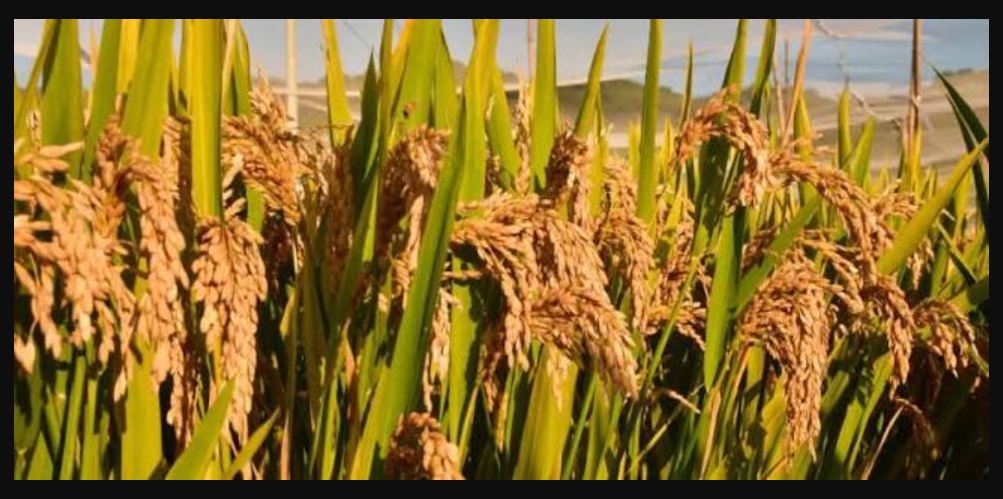

Chinese researchers have achieved a major breakthrough in rice breeding by developing a technology that allows hybrid rice to reproduce through cloning. The innovation could transform traditional seed production while improving agricultural efficiency and strengthening global food security.
The research was led by Wang Kejian and his team at the China National Rice Research Institute. Scientists discovered a naturally occurring rice gene called HUAXU. This gene enables egg cells in hybrid rice to trigger parthenogenesis, a natural reproductive process in which seeds develop without fertilisation.
The findings have been published in the scientific journal Vita. Researchers believe the discovery could solve one of the biggest challenges in modern crop breeding.
How the Rice Cloning Technology Works
The research team combined the HUAXU gene with a cloned gamete technique. As a result, they successfully developed several apomictic rice lines capable of producing seeds that remain almost genetically identical to the original parent plant.
According to the researchers, the cloning success rate reached nearly 100 percent. Moreover, field trials produced consistently strong results under different growing conditions and across several rice varieties.
The experiments also maintained efficiencies above 99 percent over multiple generations. Importantly, crop yields remained stable throughout the testing process, demonstrating that the technology does not reduce productivity.
A Major Step Towards One-Line Hybrid Rice
The breakthrough represents significant progress towards developing a “one-line hybrid rice” system. This approach aims to preserve the advantages of hybrid rice generation after generation.
Current two-line and three-line hybrid breeding systems face a major limitation. Their hybrid vigour gradually declines in later generations because of genetic segregation. Consequently, farmers must purchase fresh hybrid seeds every year to maintain crop performance.
However, the newly developed one-line system seeks to eliminate that problem. By enabling hybrid rice plants to produce clonal seeds through apomixis, the technology allows the original hybrid characteristics to remain intact over successive generations.
In theory, a single hybridisation event could provide seeds for continuous cultivation without requiring annual hybrid seed production.
Potential Benefits for Farmers and Food Security
Researchers believe this innovation could reduce seed production costs while making farming more efficient. Farmers may also benefit from consistent crop performance without repeatedly buying new hybrid seeds.
Furthermore, preserving hybrid vigour across generations could improve agricultural sustainability and support stable food production as global demand continues to rise.
According to Wang Kejian, the breakthrough addresses one of crop breeding’s longest-standing scientific challenges. He explained that the technology makes it possible to permanently preserve hybrid vigour through seeds.
Researchers believe this advancement could pave the way for lower production costs, greater agricultural efficiency and stronger long-term food security.
A Milestone for Future Agriculture
The successful development of rice cloning technology marks an important milestone in agricultural research. By maintaining the desirable traits of hybrid rice across generations, scientists have demonstrated a practical solution to a problem that has challenged plant breeders for decades.
Although further development and wider adoption will take time, the research offers promising opportunities for the future of global agriculture. If implemented successfully, the technology could help farmers improve productivity while supporting more reliable food supplies for a growing world population.

