
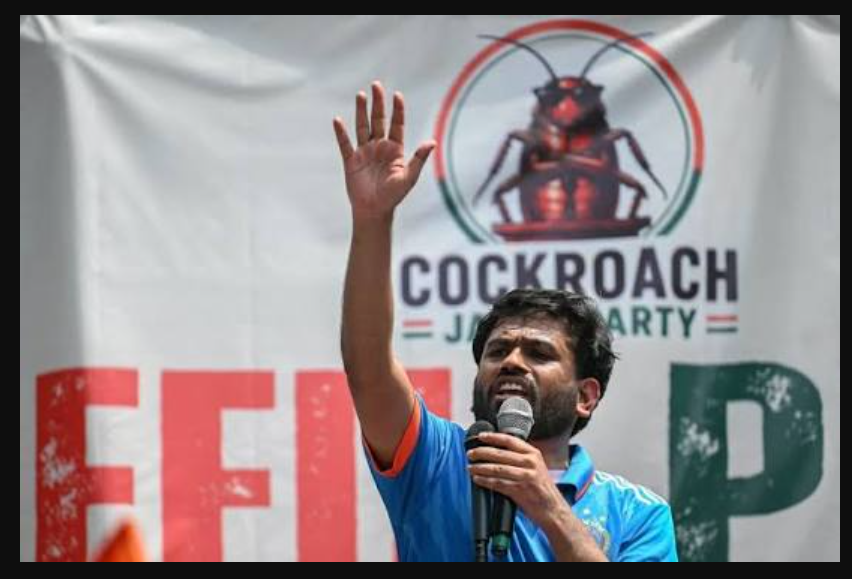

A single social media post has transformed Abhijeet Dipke from a political communications strategist into the face of what many describe as India’s first major Gen Z-led protest movement. The 30-year-old activist now stands at the center of demonstrations that have drawn tens of thousands of people to New Delhi, where protesters continue demanding the resignation of Education Minister Dharmendra Pradhan over the alleged medical entrance examination paper leak.
The protests have become one of the biggest public challenges to Prime Minister Narendra Modi’s government since it came to power in 2014. At the heart of the movement are growing frustrations over youth unemployment, repeated examination paper leaks, and increasing demands for greater government accountability. As the campaign continues to gain momentum, Dipke has emerged as its most recognizable public face.
A Six-Word Post That Changed Everything
The movement began with a brief post that Dipke shared on X on May 16. Frustrated by the public discussion surrounding unemployed youth, he wrote, “What if all cockroaches come together?”
What if all cockroaches come together?
— Abhijeet Dipke (@abhijeet_dipke) May 16, 2026
The remark came after Supreme Court judge Surya Kant compared unemployed young people to “cockroaches” during a speech. Although the judge later clarified that his comments had been misunderstood, Dipke’s response had already captured nationwide attention.
Within days, the post spread rapidly across social media and inspired the creation of a satirical platform called the Cockroach Janta Party (CJP). What initially started as an online joke soon evolved into a powerful youth movement. Millions of young Indians, already frustrated by unemployment and repeated examination controversies, found a common platform to voice their concerns and demand political accountability.
Student Anger Turns Into Mass Demonstrations
The movement gathered further momentum after allegations surfaced that the medical entrance examination paper had been leaked before the test. The controversy affected nearly two million students and has been linked to several reported student suicides. Consequently, public anger intensified, prompting thousands of students and supporters to gather in New Delhi.
During the past several days, protesters have demanded the resignation of Education Minister Dharmendra Pradhan while calling for greater transparency in the country’s examination system. Similar demonstrations have also appeared in other cities, including Mumbai, showing that dissatisfaction extends well beyond the national capital. Throughout these protests, Dipke has continued encouraging participants to remain peaceful while maintaining pressure on the authorities.
Leaving Boston Behind to Lead the Movement
Until early June, Dipke was living in Boston, where he was pursuing a master’s degree in public relations. However, as the movement rapidly expanded, he returned to India and established a protest site near Delhi’s historic Jantar Mantar. Since his arrival, he has remained a constant presence, addressing supporters, speaking to the media, and coordinating demonstrations.
His public profile grew even further after police action against protesters sparked widespread criticism. Dressed simply in a T-shirt and jeans, Dipke regularly urges demonstrators to remain disciplined and peaceful despite rising tensions. His consistent presence at the protest site has strengthened his image as the movement’s leading voice.
A Background That Shaped His Politics
Dipke was born in Aurangabad, Maharashtra, into a Dalit family that faced significant financial hardship. Speaking about his upbringing, he said, “My father comes from a very humble background. He grew up in extreme poverty. My grandfather was just a farmer.” His personal experiences have played an important role in shaping his political outlook.
When he arrived in Delhi to join the protests, Dipke carried a copy of “My Autobiography” by BR Ambedkar, widely regarded as the architect of India’s Constitution and a leading advocate for Dalit rights. The gesture reflected his continued association with Ambedkar’s ideals and highlighted the social values that continue to influence his activism.
Controversy Follows Growing Popularity
As Dipke’s influence expanded, controversy also followed. During one public gathering, a woman threw blue ink at him while he addressed supporters. She later accused the Cockroach Janta Party of insulting Lord Ram, one of Hinduism’s most revered deities.
Rather than allowing the incident to distract from the movement, Dipke later shared a video online with the caption, “Blue is my colour.” The statement appeared to reference the blue colour traditionally associated with the Ambedkarite movement. Despite criticism and public attacks, he has continued leading demonstrations while urging supporters to stay focused on their demands.
From Political Messaging to National Recognition
Dipke’s political journey began long before the protests. In 2020, he joined the social media team of the Aam Aadmi Party (AAP), where he developed a communication style built around satire, memes, and humour. Although he is no longer associated with the party, AAP and several other opposition parties have publicly supported the ongoing student movement.
Later, in 2023, Dipke moved to the United States to pursue higher education. Even while studying abroad, he remained closely connected to developments in Indian politics. His return to India marked a turning point, as he shifted from commenting on political issues online to leading one of the country’s largest youth-led protest campaigns.
Social Media Turned a Protest Into a Movement
The campaign received another major boost after Delhi-based content creator Meghnad S noticed Dipke’s viral post. Together with a friend, he used artificial intelligence tools to build a satirical website announcing the formation of the Cockroach Janta Party.
Reflecting on the idea, Meghnad said, “I saw the page and thought it was damn hilarious.” The movement’s Instagram page soon attracted millions of followers, eventually growing to around 25 million. Speaking about its rapid expansion, he added, “That’s how organic it was.” The remarkable online response helped transform a humorous social media post into a nationwide political movement.
Dipke Says the Fight Is Far From Over
Despite receiving threats directed at both himself and his family, Dipke chose to remain in India and continue leading the demonstrations. Explaining the purpose behind the campaign, he said, “This is a movement to change the political discourse of India. The youth of India has largely vanished from the mainstream political discourse.”
He has repeatedly stated that he will stay with the protesters until students receive justice. Addressing supporters during the latest demonstration, Dipke reaffirmed that commitment by saying, “Let me make it clear — we will also not stop until we win.” As thousands continue gathering in New Delhi, those words have become a defining message for a movement that began with only six words but has now grown into one of India’s most closely watched youth-led protests.

