
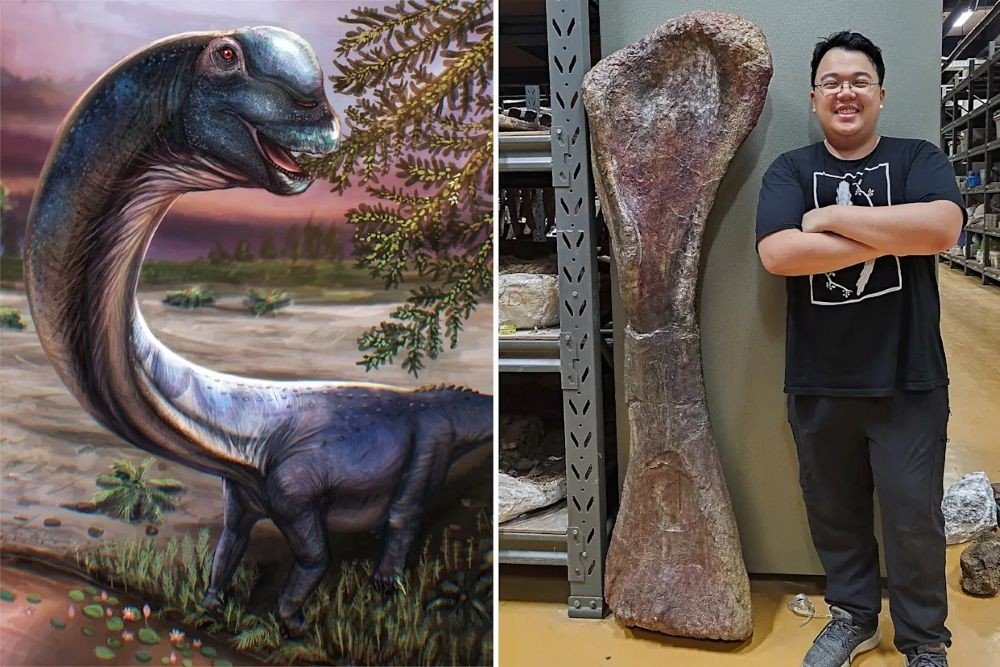

Scientists Identify Largest Dinosaur Ever Found in Southeast Asia
Scientists have identified a massive new dinosaur species in Thailand, marking one of the most important prehistoric discoveries in the region. Researchers say the enormous creature is the largest dinosaur ever discovered in Southeast Asia.
According to findings published in Scientific Reports, the dinosaur measured approximately 27 metres in length and weighed nearly 27 tonnes. Experts estimate its weight was comparable to nine adult Asian elephants.
The dinosaur belonged to the sauropod group, a family of giant long-necked herbivores known for their enormous size and plant-based diet.
Researchers believe the creature lived between 100 and 120 million years ago in what is now modern-day Thailand during the Early Cretaceous period.
The discovery has generated excitement among paleontologists because it provides new insight into dinosaur evolution and prehistoric ecosystems in Southeast Asia.
Scientists involved in the research described the find as one of the most significant dinosaur discoveries made in the region in recent decades.
Newly Named Species Reveals Unique Features
The dinosaur has been officially named Nagatitan chaiyaphumensis. The name combines references to Southeast Asian serpent folklore, Greek mythology, and Chaiyaphum province, where the remains were discovered.
Lead researcher Thitiwoot Sethapanichsakul explained that the dinosaur displayed several unique skeletal features that distinguished it from previously known sauropod species.
Although some parts of the fossil resembled other giant herbivorous dinosaurs, researchers concluded the remains represented an entirely new species due to specific anatomical differences.
The first fossil remains were reportedly discovered nearly a decade ago by local residents in northeastern Thailand. However, excavation and scientific analysis continued for years before researchers officially completed the study in 2024.
Scientists say the excavation site was located within one of the youngest rock formations in Thailand known to contain dinosaur fossils.
Because of this, researchers referred to the dinosaur as “the last titan,” suggesting it may have been among the final giant sauropods to live in the region before environmental changes transformed the landscape.
Experts believe the area later became a shallow sea, ending the era of large land-dwelling dinosaurs in that part of Southeast Asia.
Discovery Highlights Thailand’s Growing Importance in Paleontology
The discovery has strengthened Thailand’s reputation as an important location for prehistoric research and fossil exploration.
Paleontologists say Southeast Asia still contains many unexplored fossil sites that could reveal additional dinosaur species and ancient ecosystems in the future.
Researchers also noted that the size of the newly identified dinosaur exceeded several famous prehistoric giants already known to the scientific community.
Lead researcher Sethapanichsakul stated that the dinosaur likely weighed significantly more than the famous Diplodocus reconstruction once displayed at Natural History Museum in London.
A life-sized reconstruction of the dinosaur is now on display at the Thainosaur Museum in Bangkok, allowing visitors to experience the scale of the prehistoric giant.
Scientists say the discovery offers valuable information about ancient biodiversity, climate conditions, and dinosaur migration patterns across Asia millions of years ago.
The research team believes continued fossil exploration in Thailand may uncover even more prehistoric species that could reshape understanding of dinosaur history in the region.

