
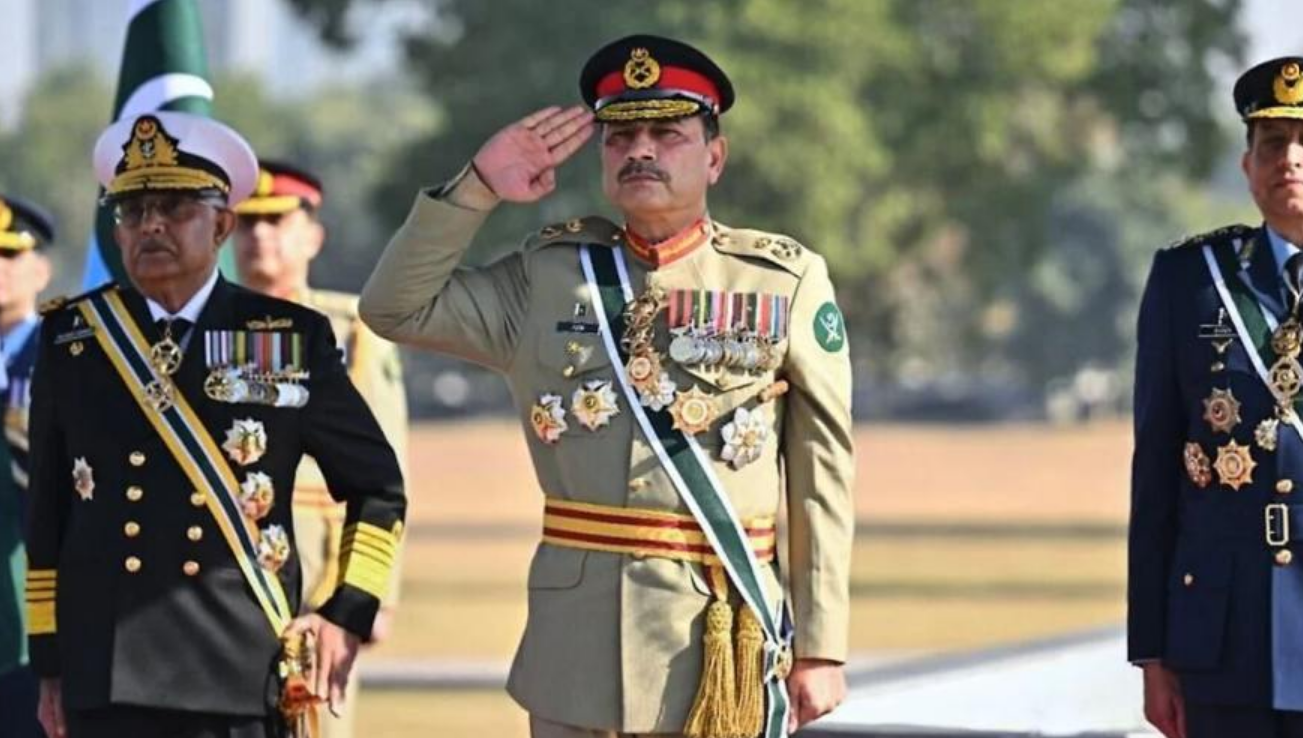

A special ceremony was held at General Headquarters (GHQ) in Rawalpindi to commemorate the first anniversary of the “Marka-e-Haq” victory.
The event honored the armed forces and remembered those who lost their lives during the military conflict with India in 2025. Senior military leadership attended the ceremony, while Chief of Defence Forces and Chief of Army Staff Field Marshal Munir participated as the chief guest.
The gathering reflected national remembrance and military solidarity. Moreover, it highlighted the sacrifices made during the conflict.
Senior Military Leadership Attends Ceremony
The ceremony featured top officials from Pakistan’s armed forces. Air Chief Marshal Sidhu and Admiral Ashraf also attended the event alongside Field Marshal Munir.
During the ceremony, the military leadership laid floral wreaths at the Yadgar-e-Shuhada monument. The tribute honored soldiers who lost their lives during the conflict.
In addition, contingents from the three armed forces presented a ceremonial salute. The tribute demonstrated unity among Pakistan’s military branches.
The event carried emotional significance for military families and officials. At the same time, it marked one year since the end of the conflict.
What Was “Marka-e-Haq”?
“Marka-e-Haq” refers to the 19-day military conflict between Pakistan and India from April 22 to May 10, 2025.
The conflict intensified after tensions rose following an attack on tourists in the Indian Illegally Occupied Jammu and Kashmir.
According to Pakistan’s official position, India launched an unprovoked attack on May 6 and 7 last year. The escalation triggered an 87-hour confrontation between the two neighboring nuclear powers.
The conflict remained one of the most serious military escalations in recent years. Consequently, regional tensions increased sharply during that period.
Pakistan’s Military Response During the Conflict
Pakistan responded with military operations during the confrontation. According to official claims, Pakistan downed eight Indian fighter jets during the conflict.
The aircraft reportedly included French-made Rafale jets. Pakistani officials also claimed that dozens of drones were destroyed during the operations.
The military confrontation continued for several days before diplomatic efforts intensified. Eventually, both countries moved toward a ceasefire agreement.
The war ended on May 10, 2025, after a ceasefire arrangement brokered by the United States.
Ceremony Focuses on Sacrifice and Remembrance
The anniversary ceremony placed strong emphasis on honoring martyrs and military personnel. Floral tributes and ceremonial salutes remained central parts of the event.
Moreover, the ceremony reflected the military’s focus on remembrance and national unity. Officials also highlighted the importance of honoring sacrifices made during the conflict.
The Yadgar-e-Shuhada tribute served as a symbolic moment during the gathering. It reminded attendees of the human cost of military confrontations.
At the same time, the event reinforced institutional solidarity among Pakistan’s armed forces.
Symbolic Importance of the Anniversary
The first anniversary of “Marka-e-Haq” carries symbolic importance for Pakistan’s military leadership. It represents remembrance, national resilience, and military coordination during a period of heightened regional tensions.
Furthermore, the ceremony demonstrated continued recognition of personnel who participated in the conflict. Military traditions such as ceremonial salutes and wreath-laying also reinforced the event’s significance.
The gathering at GHQ remained focused on commemoration rather than celebration. As a result, the tone of the event reflected solemn remembrance and institutional respect.
Final Thoughts
The GHQ ceremony marked one year since the “Marka-e-Haq” conflict between Pakistan and India. Senior military officials attended the event to honor martyrs and military personnel.
The ceremony included floral tributes, ceremonial salutes, and remembrance activities at Yadgar-e-Shuhada. It also reflected the military’s continued emphasis on unity, sacrifice, and national remembrance.
As regional tensions continue to shape South Asian security dynamics, the anniversary remains a significant moment in Pakistan’s recent military history.

